





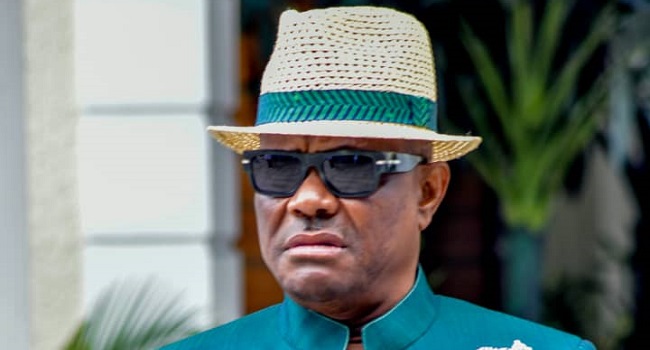
Nyesom Wike, the Minister of the Federal Capital Territory, has ignited a debate concerning the potential impeachment of Rivers State Governor, Siminalayi Fubara. During a live media chat, Wike asserted that if Governor Fubara had committed an impeachable offense, he should face the consequences, emphasizing that politics is not a game and the rule of law must be upheld. He criticized the governor’s inner circle, implying their actions were detrimental to good governance and due process. Wike’s comments underscore a deeper concern about adherence to legal procedures and the potential erosion of democratic principles. This stance positions him as a defender of constitutionalism and a critic of political maneuvering that undermines the rule of law.
Wike’s statement, “If he has done something to be impeached, let them impeach him,” clearly indicates his support for accountability in governance. He distinguishes between a criminal offense and an impeachable offense, suggesting that even if the governor’s actions don’t warrant criminal charges, they could still justify impeachment if they violate constitutional provisions or demonstrate gross misconduct. This distinction highlights the separate but equally important mechanisms for holding elected officials accountable. His forceful assertion that “politics is not play” underscores the seriousness of the situation and the need for all parties involved to act with integrity and responsibility.
Furthermore, Wike expressed strong disapproval of what he perceives as a disregard for legislative processes. He questioned the legitimacy of laws enacted by a small number of lawmakers, highlighting a potential abuse of power and a violation of democratic norms. His skepticism about the validity of such legislation was evident in his rhetorical question: “Do we need to go to work?” This implies that such actions undermine the very foundation of the legislative process, rendering the work of proper lawmaking meaningless. His critique extends to the Rivers State High Court, which he deemed the “worst” in the country, further emphasizing his concern about the erosion of legal and judicial integrity within the state.
Wike’s defense of due process and his critique of the Rivers State High Court highlight his commitment to upholding the principles of justice and fairness. He appears to be advocating for a system where legal proceedings are conducted with transparency and adherence to established rules. By characterizing the Rivers State High Court as the “worst”, he implies a lack of confidence in its ability to dispense impartial justice. This concern raises questions about the overall health of the judicial system in Rivers State and the potential for political interference in legal matters.
Beyond the specifics of the Fubara situation, Wike’s comments reflect a broader concern about the dynamics of power and respect within the political landscape. He stressed that elected officials, such as Speakers and Assembly members, should not be treated as subordinates but as equals. This emphasizes the importance of mutual respect and collaboration among different branches of government. He recounted a story about elder statesman Ferdinand Alabararba, who supported the election of an Ijaw governor only to be later disrespected by the same individual. This anecdote serves to illustrate Wike’s point about the importance of maintaining respectful relationships and acknowledging the contributions of those who helped pave the way for political success.
The anecdote about Alabararba reveals the importance of respecting those who have paved the way for others’ success. Wike’s point is that political power is transient and maintaining respectful relationships is crucial. He highlights the potential consequences of disrespecting those who hold influence and wisdom. The phrase, “These are the people who will call the family people,” underscores the importance of maintaining strong ties with influential figures who can provide support and guidance during challenging times. Wike’s comments, therefore, serve as a cautionary tale against hubris and a reminder of the importance of cultivating and maintaining respectful relationships within the political sphere. His overall message emphasizes the importance of accountability, due process, and mutual respect in maintaining a healthy democracy.








