









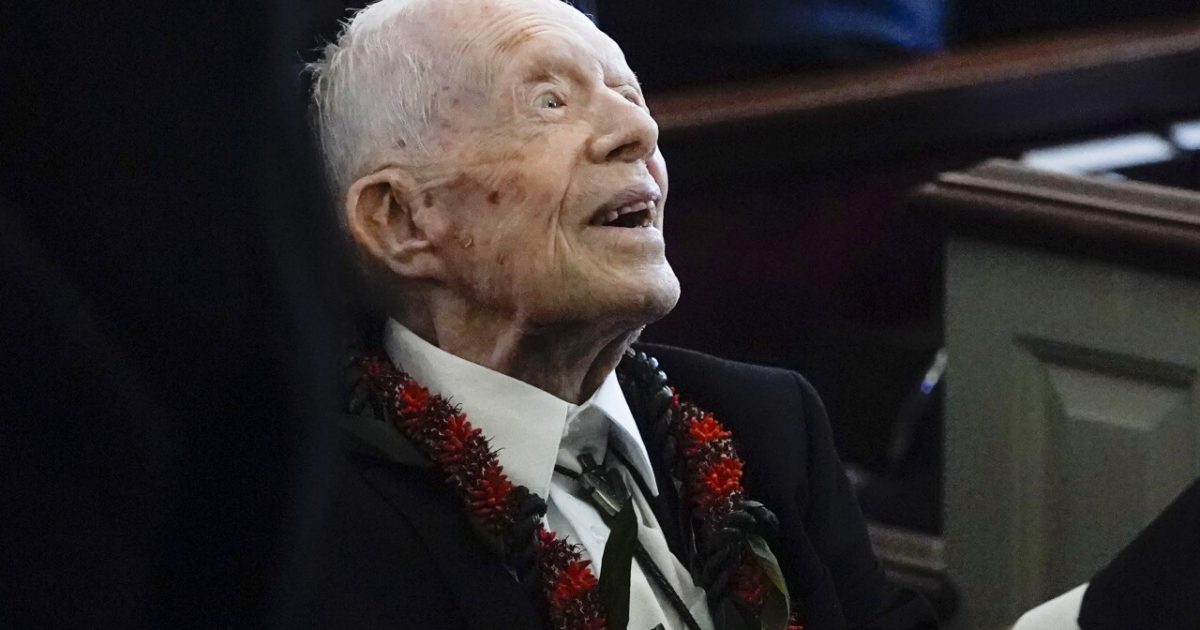
Jimmy Carter, the 39th President of the United States, passed away at the age of 100, leaving behind a legacy of humanitarianism, peacemaking, and unwavering dedication to democratic values. His post-presidential life, perhaps even more impactful than his time in office, saw him tirelessly championing global causes, mediating conflicts, and advocating for the rights of the vulnerable. From eradicating diseases in Africa to promoting fair elections worldwide, Carter’s commitment to service resonated globally, earning him the Nobel Peace Prize and the respect of leaders across the world. His passing prompted an outpouring of tributes, celebrating his profound impact on international affairs and his enduring commitment to a more just and peaceful world.
Current and former leaders from various nations offered heartfelt condolences and reflections on Carter’s life and work. Nigerian President Bola Tinubu praised Carter’s enduring influence, highlighting his efforts in strengthening US-Nigerian relations and his crucial role in combating diseases such as Guinea worm and river blindness in Nigeria. Former Nigerian President Olusegun Obasanjo echoed these sentiments, emphasizing Carter’s humility and lifelong dedication to humanity. He underscored the importance of leaders continuing to serve even after leaving office, using their experience and influence for the betterment of society. Obasanjo lamented the current global leadership deficit, urging contemporary leaders to emulate Carter’s commitment to a secure and prosperous world.
International figures also joined the chorus of tributes. Egyptian President Abdel Fattah el-Sisi acknowledged Carter’s significant contributions to peace and diplomacy, particularly his role in the Egypt-Israel peace agreement. Israeli President Isaac Herzog lauded Carter’s bravery and commitment to forging peace between nations, emphasizing the lasting impact of the Camp David Accords. Chinese President Xi Jinping recognized Carter’s instrumental role in establishing diplomatic relations between China and the United States. French President Emmanuel Macron highlighted Carter’s advocacy for the vulnerable and his tireless pursuit of peace.
British Prime Minister Keir Starmer paid tribute to Carter’s decades of selfless public service, emphasizing his dedication to social justice and human rights. He noted Carter’s transformative impact on the post-presidency, showcasing his continued involvement in global issues through The Carter Center and Habitat for Humanity. Ukrainian President Volodymyr Zelensky expressed gratitude for Carter’s support of Ukraine and his unwavering commitment to democratic values, highlighting the importance of global unity against threats to these principles. Canadian Prime Minister Justin Trudeau remembered Carter for his compassion, kindness, and lifelong service to others, both at home and abroad.
Brazilian President Luiz Inácio Lula da Silva praised Carter’s commitment to democracy and peace, recalling his advocacy for political prisoners in Brazil during the dictatorship and his later work on human rights and disease eradication in Africa and Latin America. He emphasized Carter’s significant post-presidency contributions, including mediating conflicts in Venezuela and Haiti, and establishing The Carter Center as a leading institution for democracy and human rights. Lula da Silva highlighted Carter’s critique of unilateral military actions and his belief that peace is essential for development, solidifying his enduring legacy as a champion for a more just and peaceful world.
The global outpouring of grief and respect underscores the profound impact of Jimmy Carter’s life and work. His commitment to peace, human rights, and democracy transcended national boundaries, inspiring generations of leaders and activists. Carter’s post-presidency showcased the transformative power of continued service, demonstrating that true leadership extends beyond the confines of elected office. His legacy serves as a powerful reminder of the importance of compassion, humility, and unwavering dedication to building a better future for all.
Carter’s life exemplified a deep commitment to human rights, democracy, and global peace. From mediating international conflicts to combating diseases in developing nations, his post-presidency was marked by tireless efforts to improve the lives of others. He established The Carter Center, a non-governmental organization dedicated to advancing human rights and alleviating human suffering, which played a crucial role in eradicating Guinea worm disease and promoting fair elections worldwide. His unwavering commitment to these causes earned him the Nobel Peace Prize in 2002, a testament to his enduring legacy as a global humanitarian.
Carter’s presidency, while only a single term, was marked by significant achievements. He successfully brokered the Camp David Accords, a historic peace agreement between Israel and Egypt, a landmark achievement that reshaped the political landscape of the Middle East. He also established diplomatic relations with China, a pivotal moment in US foreign policy that opened doors for greater cooperation and engagement between the two nations. Despite facing economic challenges and the Iran hostage crisis, Carter remained committed to his principles of human rights and peace, setting the stage for his impactful post-presidency work.
The numerous tributes from world leaders underscore the breadth and depth of Carter’s influence on global affairs. His legacy extends beyond his time in office, inspiring generations to dedicate themselves to public service and the pursuit of a more just and peaceful world. His passing marks the end of an era, but his unwavering commitment to humanity will continue to inspire and guide future generations. Jimmy Carter’s life serves as a powerful testament to the transformative power of service and the enduring impact of a life dedicated to making the world a better place.









