





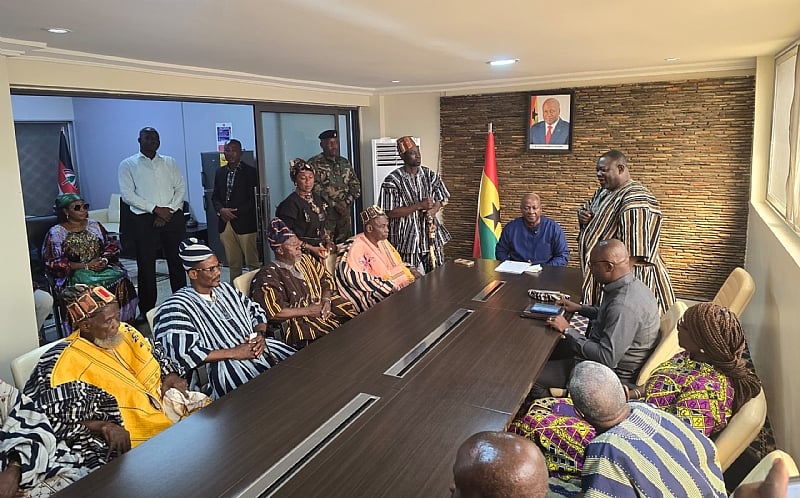
The Overlord of Gonjaland, Yagbonwura Bii-Kunuto Jewu Soale I, embarked on a significant journey to Accra, the capital city of Ghana, to extend his heartfelt congratulations to the newly inaugurated President John Dramani Mahama. This visit, imbued with tradition and respect, underscored the deep-seated connection between the presidency and the traditional leadership of the Gonja Kingdom. Accompanied by a distinguished retinue of paramount chiefs and religious leaders from his realm, the Yagbonwura’s presence at the inauguration ceremony itself, held at the historic Independence Square on January 7th, further amplified the importance of this symbolic gesture. The delegation included prominent figures such as Damongowura Kelly Seidu Boresa I, Mankpanwura Achode Borenyi I, Kulawwura Kotokyi Borewunche I, and Kekpandewura Shaibu Baba Mumuni Kanyiti I, representing the various chiefdoms within the Gonja Kingdom. Also present were Sheik Alhaji Abdulai Kassim, the Yagbon Imam, or Supreme Imam of the Gonja Kingdom, and Sulemana Adam, the Yagbonwura’s Linguist, further emphasizing the diverse representation within the delegation.
The courtesy call, taking place at President Mahama’s private office, provided an intimate setting for the exchange of goodwill and blessings. The Yagbonwura, demonstrating his paternal connection to the President, offered not only his congratulations but also his unwavering support and blessings for President Mahama’s tenure. This gesture symbolized the traditional authority’s endorsement of the new leadership and its commitment to the success of the presidency. The Yagbonwura’s blessings carried weight, invoking prosperity and guidance for the President as he embarked on the challenging task of leading the nation. His presence served as a powerful reminder of the interconnectedness between traditional authority and modern governance in Ghana.
President Mahama, deeply touched by the Yagbonwura’s gesture, expressed his profound gratitude for the honor bestowed upon him. He acknowledged the significant impact of the Yagbonwura’s presence at his inauguration, highlighting the profound respect and recognition it brought to the ceremony. The President further emphasized the importance of maintaining a strong connection with his roots and expressed his intention to return to the Gonja Kingdom to pay his respects and seek further guidance from the Yagbonwura. This reciprocal gesture underlined the importance of maintaining a strong link between the presidency and traditional leadership. He viewed this future meeting as an opportunity to receive invaluable advice that would not only contribute to the success of his presidency but also ensure peace and progress for all Ghanaians.
The President’s acknowledgment of the Yagbonwura’s graceful presence at the inauguration underscored the importance of traditional leadership in Ghana’s political landscape. The ceremony, witnessed by the nation, served as a powerful symbol of unity and continuity, bridging the gap between traditional authority and modern governance. President Mahama’s commitment to seeking guidance from the Yagbonwura further cemented the relationship between the presidency and the Gonja Kingdom. This interaction highlighted the significance of traditional values and wisdom in shaping the political discourse of the nation.
The visit of the Yagbonwura and his delegation represents a significant cultural and political event. It demonstrates the enduring influence of traditional leadership within the framework of modern Ghana. The exchange of blessings and support symbolizes the interconnectedness of traditional authority and the presidency, emphasizing the importance of maintaining harmony and collaboration between these two vital institutions. The Yagbonwura’s presence at the inauguration, witnessed by the entire nation, underscores the enduring relevance of traditional leadership in national affairs.
In essence, the Yagbonwura’s visit and the subsequent exchange between him and President Mahama serve as a testament to the rich tapestry of Ghanaian culture and politics. It highlights the vital role that traditional leaders play in national life, providing a bridge between the past and the present. The mutual respect and recognition displayed by both the Yagbonwura and President Mahama underscore the importance of maintaining a strong bond between tradition and modernity in the pursuit of national unity and progress. This interaction serves as a powerful example of how tradition and modernity can coexist and collaborate for the betterment of the nation.








