









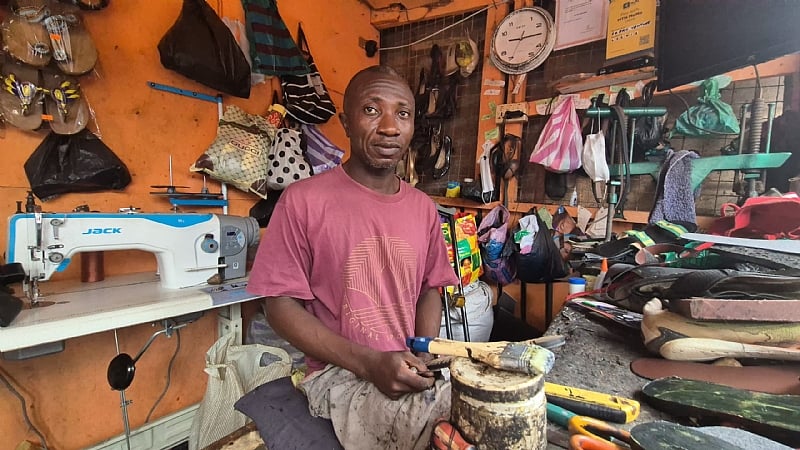
Mr. Eric Mensah, a shoemaker from Tema Community One, has expressed concern over the trend among Ghanaian youth who increasingly favor internet fraud and betting over traditional skill acquisition. As a physically disabled individual himself, Mensah’s perspective carries weight, particularly as he observes firsthand the decline in apprenticeship enrollment. He notes that a significant number of young people are reluctant to engage in legitimate work, often preferring illicit activities that promise quick financial gain. This troubling shift raises questions about the values and ambitions of the new generation, particularly as the country struggles with economic challenges.
Mensah highlights a prevalent issue in the apprenticeship system in Ghana, noting that many youths abandon their training prematurely. He emphasizes that once they acquire basic skills, they tend to overestimate their abilities and seek to take orders without fully mastering their trade. This behavior not only undermines their personal development but also negatively impacts the overall quality of products they produce. The consequence is a growing skepticism regarding the reliability of Ghanaian-made items, which further harms the country’s reputation in local and international markets.
In his interview, Mensah urges the youth to consider the long-term benefits of completing their training programs. He advocates for a more patient and dedicated approach to skill acquisition, emphasizing that mastery takes time and effort. He contrasts the transient allure of internet fraud with the sustainability of legitimate work, arguing that investing in skills will provide more rewarding and stable future opportunities. By encouraging the youth to value their education and training in skilled trades, he hopes to help them recognize the potential for a brighter future.
Mensah’s message also extends to individuals with disabilities, whom he encourages to pursue trades rather than resorting to begging. He points out that there is dignity in labor, and that those with disabilities can find support through programs like the Disability Common Fund. Rather than relying on charity, he believes that taking charge of their own livelihoods through skill acquisition can empower persons with disabilities and elevate their status in society. His advocacy signals a need for greater awareness of available resources that can help marginalized groups contribute positively to the economy.
The shoemaker’s call to action is grounded in a desire to shift mindsets and foster a culture of work ethic among the youth. He envisions a future where young people not only respect traditional trades but also take pride in developing their skills to contribute to Ghana’s economic growth. By emphasizing the value of craftsmanship and the importance of quality in production, Mensah hopes to inspire a generation that sees working diligently as a path to success, rather than being lured by fleeting monetary temptations.
In conclusion, Mr. Eric Mensah’s insights bring to light the critical issue of youth engagement in skill acquisition versus illegal activities. His personal testimony underscores the need for a collective effort to promote education, ethical work practices, and the dignity that comes with earning a living through honorable means. As Ghana navigates its economic challenges, cultivating a workforce that values sustainable skills over quick fixes could be key to building a more prosperous and resilient future.









