





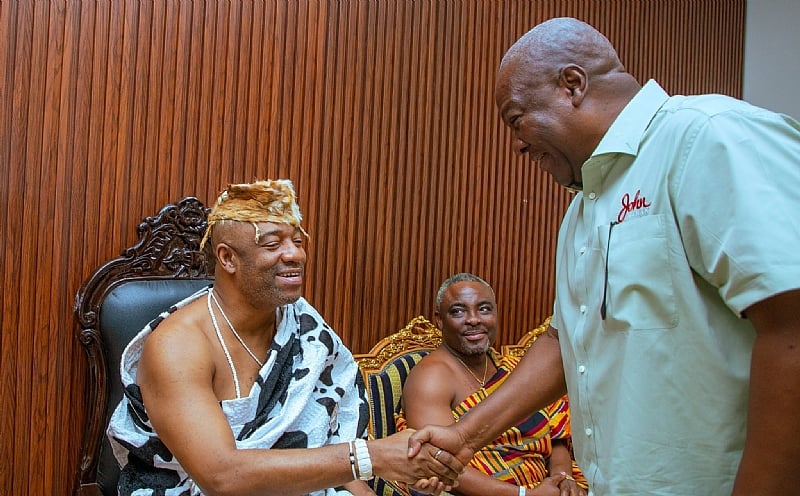
John Dramani Mahama, the flagbearer of the National Democratic Congress (NDC), has articulated a vision centered on the promotion of Ghana’s rich heritage festivals, pledging to work closely with chiefs and traditional authorities if elected president in 2024. During his recent visit to the Ga Mantse’s palace on November 29, Mahama engaged with the Ga Traditional Council as part of his #Mahama4Change2024 campaign, highlighting the importance of cultural celebrations. He posited that these festivals are vital for more than mere celebration; they are crucial opportunities for boosting cultural tourism, invigorating local economies, and showcasing Ghana’s rich and diverse heritage to an international audience.
In a follow-up social media post, Mahama underscored his commitment to partnering with traditional leaders to enhance the prominence of cultural festivals. He noted that these events can serve as a platform for promoting cultural tourism, which in turn can provide economic benefits to local communities. By leveraging the significance of these festivals, Mahama believes that Ghana can cultivate a stronger cultural identity and attract tourists, thereby fostering a greater appreciation of the nation’s vast cultural assets. His emphasis on cultural tourism reflects a broader understanding of heritage as not just a source of pride but also a potential driver of economic development.
Furthermore, Mahama’s vision includes a promise to elevate the role of traditional authorities within Ghana’s decentralized governance structure. He advocates for increasing their representation, believing that their insights and contributions are vital for creating policies that resonate with the needs and dreams of local populations. This approach aligns with Mahama’s long-held belief in the power of traditional leaders to positively influence governance. By facilitating greater involvement of such leaders, he aims to create a more inclusive political system that respects and honors the cultural roots of the Ghanaian people.
As part of his strategy, Mahama expressed enthusiasm about the potential for collaboration with traditional leaders throughout Ghana. He recognized these figures as vital custodians of culture and history who can significantly contribute to national development agendas. He emphasized that traditional leaders are not only responsible for preserving cultural practices but can also play a role in driving community development initiatives. Mahama’s vision calls for a symbiotic relationship where culture and development go hand-in-hand, respecting traditions while pursuing progressive policies.
The importance of cultural heritage and festivals extends beyond mere celebration; they serve as critical mechanisms for uniting communities, fostering a sense of belonging, and nurturing national pride. Mahama’s approach aims to tap into this potential by reinvigorating interest in Ghana’s cultural identity on both a national and global stage. By harnessing the vibrancy of these festivals, he believes that the country can create economic opportunities that benefit local populations, ultimately leading to sustainable development.
In summary, Mahama’s campaign reflects a holistic understanding of the intersection between culture and governance. His commitment to collaborate with traditional authorities and empower them within the political landscape shows his recognition of their crucial role in community development. By prioritizing the enhancement of cultural festivals as a strategic avenue for economic growth and national pride, Mahama sets out a vision for a Ghana that respects its heritage while aspiring towards modern development, fostering unity and inclusivity across diverse communities. His approach ultimately seeks to integrate Ghana’s rich cultural tapestry into a broader narrative of progress and national identity.








