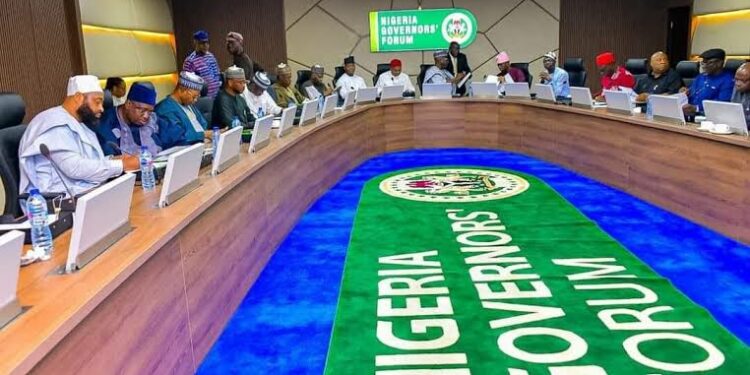
In the proposed budgets for the 2025 fiscal year, Nigerian governors across 13 states have allocated approximately N3.87 trillion for recurrent expenditure, emphasizing the importance of administrative costs while simultaneously directing substantial resources toward capital projects. This focus is reflective of a broader commitment to improve infrastructure within these states, as the overall proposed budget totals N9.07 trillion. The allocation of recurrent expenditure plays a critical role by covering day-to-day governmental operations and the provision of essential services, thereby ensuring that governance functions effectively. Meanwhile, capital expenditure, totaling around N5.845 trillion, indicates a strong emphasis on long-term developmental projects aimed at fostering economic growth.
The data regarding these budget allocations has been compiled from documents submitted by state governors to their respective State Houses of Assembly, with reports made publicly available on official state websites. Recurrent expenditure is defined as the ongoing costs associated with the operation of the government, which includes salaries, benefits, and overhead costs for public services. Conversely, capital expenditure encompasses funds designated for long-term asset acquisition or construction, which are crucial for enabling future growth and improvements in public infrastructure.
For instance, in Lagos State, Governor Babajide Sanwo-Olu proposed a budget of N3.005 trillion, with a recurrent expenditure of N1.24 trillion (41.23% of the total budget), alongside an impressive N1.76 trillion designated for capital projects, thereby reflecting a strong infrastructural focus. Similarly, Bauchi State’s Governor Bala Mohammed presented a budget of N465.09 billion, with recurrent expenditure making up 39.3% of the total budget, signaling a commitment to development initiatives. This pattern is mirrored across various states including Bayelsa, Osun, Oyo, and Anambra, each showcasing a prioritization of capital expenditure to enhance infrastructure and stimulate economic growth.
However, concerns about the sustainability and effectiveness of these budgets have surfaced. Economists and financial analysts have pointed out that high recurrent expenditures often limit the availability of funds for capital projects, leading to what is termed capital investment rationing. Charles Sanni, CEO of Cowry Treasurers Limited, emphasized that inadequate capital expenditure budgets imply a lack of significant growth contribution to the Gross Domestic Product (GDP). He suggested that states could enhance their financial health through cost optimization and increased internally generated revenue by fostering public-private partnerships and engaging diasporas for special projects funding.
Vincent Nwani, an economist, echoed similar sentiments by describing the overall budget size as inadequate for substantial development, likening it unfavorably to budgets of individual universities. He criticized the misallocation of funds toward non-productive expenditures, asserting that resources should be strategically invested in long-term projects conducive to economic growth. Furthermore, he stressed the pressing need for states to improve revenue generation in the face of existing financial obligations and previous borrowing.
Overall, the proposed budgets reflect a blend of emphasis on recurrent expenditures and long-term capital projects, highlighting both a commitment to governance and a desire for infrastructural advancement in Nigeria. However, the challenges surrounding budgetary constraints, lack of transparency, and corruption remain pertinent issues that must be addressed to foster meaningful economic growth and ensure that financial resources are effectively utilized for the benefit of the populace. Economic stakeholders have also suggested that the overly ambitious assumptions underlying the projected N47.9 trillion budget for 2025 may result in underperformance, leaving key questions about the feasibility and impact of these budgets on the future economic landscape of Nigeria.