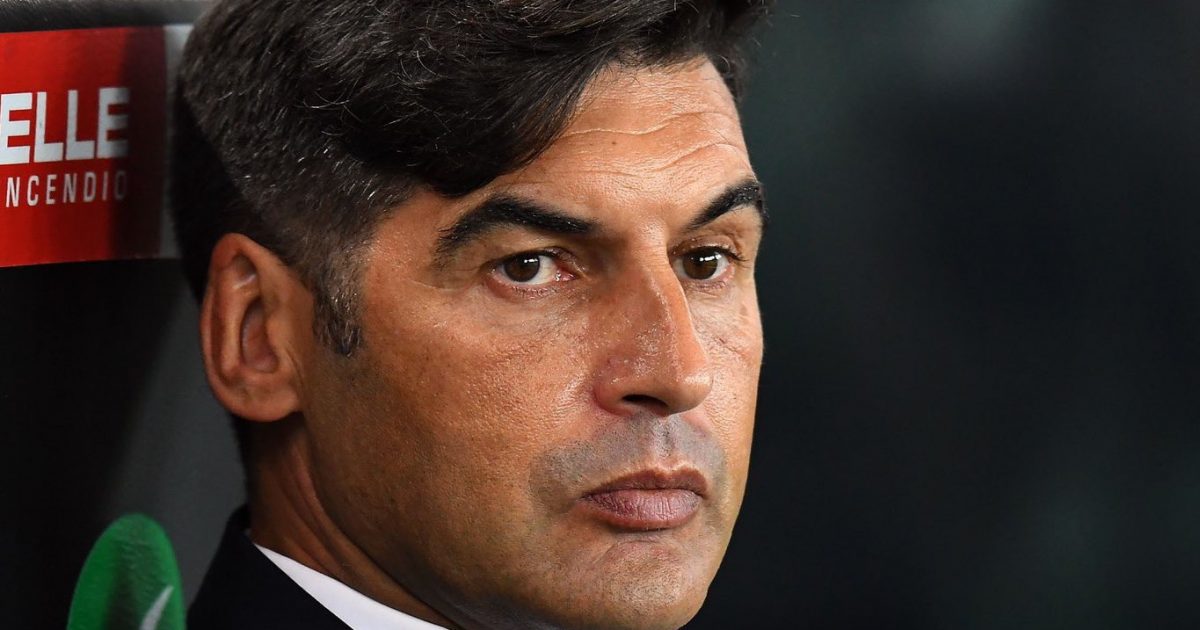
AC Milan’s dismissal of Paulo Fonseca after a mere six-month tenure underscores the club’s ongoing struggles to reclaim its former glory in Serie A. Fonseca’s departure, following a string of underwhelming performances culminating in a 1-1 draw against AS Roma, highlights the deep-seated issues plaguing the seven-time European champions. Milan’s seventh-place standing in the league, a significant eight points adrift of the Champions League qualification spot and a gaping 12 points behind title contenders Inter Milan, sealed Fonseca’s fate. The club’s official statement expressed gratitude for Fonseca’s professionalism, but the underlying message was clear: his brief reign had failed to deliver the desired results.
Fonseca’s time at the helm was characterized by inconsistent team performance, escalating tensions with key players, and mounting fan discontent. Publicly questioning the commitment of his squad, particularly targeting Portuguese compatriot and star winger Rafael Leao, further exacerbated the situation. His decision to bench French full-back Theo Hernandez in favor of a teenage academy player during a goalless draw with Genoa drew sharp criticism and fueled speculation about his eroding authority within the dressing room. These internal conflicts, coupled with the team’s inability to consistently perform at a high level, created a volatile atmosphere that ultimately led to Fonseca’s dismissal.
The club’s decision to replace Fonseca with Sergio Conceicao, a former Porto manager with Serie A playing experience, suggests a desire for a more experienced and perhaps firmer hand at the helm. Conceicao’s seven-year stint at Porto, where he achieved considerable success, makes him a seemingly suitable candidate to navigate the challenges facing AC Milan. His familiarity with Italian football, combined with his proven track record of managing high-profile players, could potentially bring the stability and direction that the Rossoneri desperately need. However, inheriting a squad grappling with internal divisions and facing immense pressure to deliver immediate results will undoubtedly test Conceicao’s managerial acumen.
Beyond the managerial change, the unrest at AC Milan extends to the ownership level, with growing fan dissatisfaction directed at RedBird, the US investment fund that controls the club. The club’s 125th-anniversary celebrations, intended as a moment of pride and reflection, were overshadowed by poor on-field performance, the conspicuous absence of club legend Paolo Maldini, and vocal protests from supporters demanding RedBird’s divestment. The fans’ frustration stems not only from the team’s current struggles but also from a perceived lack of ambition and investment in building a squad capable of competing for major honours. The protests outside a private anniversary party, targeting players with banners criticizing the club’s lack of ambition, further underscore the fractured relationship between the fanbase and the ownership.
The challenges confronting AC Milan are multifaceted, encompassing on-field performance, player morale, managerial instability, and fan dissent. Fonseca’s dismissal, while addressing the immediate issue of leadership, does not resolve the deeper underlying problems. Conceicao’s appointment represents a gamble, albeit a calculated one, on his ability to galvanize the squad, improve performance, and restore a sense of unity within the club. However, his success will depend not only on his tactical prowess and man-management skills but also on the ownership’s commitment to providing the necessary resources and stability to rebuild a winning culture.
The road ahead for AC Milan remains uncertain, fraught with challenges and expectations. The club’s rich history and passionate fanbase demand a return to competitiveness and a renewed pursuit of silverware. Conceicao’s task is to navigate the turbulent waters of internal strife, fan pressure, and the demands of Serie A, transforming a disjointed squad into a cohesive unit capable of challenging for top honours. The success or failure of this endeavor will not only determine Conceicao’s legacy at the club but also shape the future direction of AC Milan, a club yearning to reclaim its place among European football’s elite.