









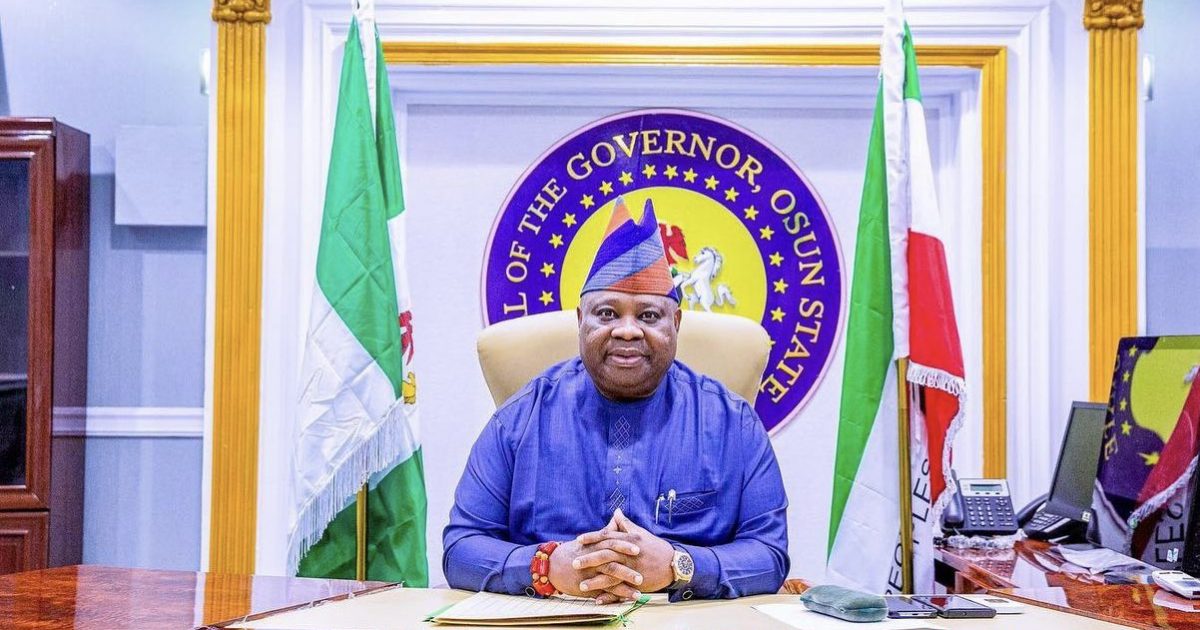
At the recent seventh edition of the St. Moses Orimolade Memorial Lecture in Lagos, Osun State Governor Ademola Adeleke and Dr. David Bob-Manuel, Prelate of the Eternal Sacred Order of the Cherubim and Seraphim, delivered a powerful message urging the church to take an active role in promoting good governance in Nigeria. The lecture was centered on the theme “The Church as a Catalyst for Good Governance in Nigeria.” Both leaders emphasized the importance of the church’s voice in speaking out against the failings of governance in the country, making it clear that silence is no longer an acceptable stance.
Governor Adeleke underscored the imperative of the church to address critical issues that undermine effective governance. Highlighting the moral obligations of religious institutions, he asserted that the church should advocate for free and fair elections, uphold the dignity of all human beings, and prioritize public good above personal interests. He expressed a strong belief that the church must not shy away from condemning autocracy, dictatorship, corruption, or any form of governance that does not respond to the aspirations of the populace. He noted that his own governance is guided by a moral framework influenced by his faith, stating that the fear of God should be the guiding principle in decision-making.
Echoing Adeleke’s sentiments, Prelate Dr. Bob-Manuel pointed to the crucial role of the church in instilling social and moral principles as a foundation for fostering better leadership. He emphasized that the church should actively contribute to the moral fabric of society, suggesting that character development and ethical teachings are vital to shaping societal values. He remarked on the essential nature of leadership continuity within organizations and insisted that the church has a pivotal part to play in leading social transformations. According to him, the church is designed to instill morals and positively influence society through its teachings.
The nature of good governance, according to the leaders, rests heavily on the involvement of religious institutions which can act as agents of change. The Christian Association of Nigeria President, Dr. Daniel Okoh, who served as the guest speaker at the event, reiterated the capacity of the church to fulfill its role effectively. He called upon the church to awaken to its responsibilities in steering society away from spiritual darkness. Okoh advocated for a governance model that places people at its core, stressing that public interest should always guide policy-making processes.
Furthermore, Okoh argued that leaders must strive for liberation from “spiritual blindness” to truly serve the society. He reiterated the call for the church to actively participate in shaping governance frameworks that prioritize ethical standards and accountability. His assertions align with the broader message from both Governor Adeleke and Dr. Bob-Manuel that a concerted effort from religious institutions is essential for addressing the systemic issues that contribute to poor governance in Nigeria.
In conclusion, the discussions at the Memorial Lecture underscored the need for collaboration between the church and government to drive home the principles of good governance in Nigeria. Both Governor Adeleke and Dr. Bob-Manuel, along with Dr. Okoh, conveyed a collective vision wherein religious bodies actively engage in advocacy for integrity in leadership. Their insights underline the belief that the church has a vital role in leading societal change and promoting a governance framework that respects human dignity, legal supremacy, and the interests of the people it serves.









