









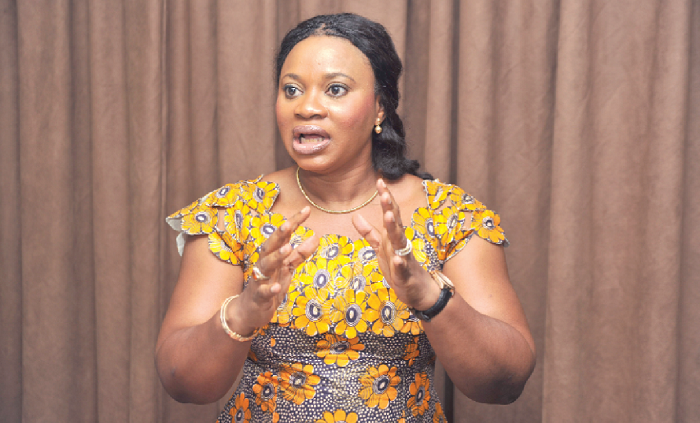
Hopeson Adorye, a prominent figure within the Movement for Change, has sparked controversy with his recent allegations concerning the politicization of Ghana’s Electoral Commission (EC). Adorye asserts that the petition leading to the dismissal of former EC Chairperson Charlotte Osei was not a grassroots initiative but rather a calculated maneuver orchestrated within the walls of Jubilee House, the seat of the Ghanaian presidency. This claim comes amidst a new petition filed on January 27, 2025, seeking the removal of the current EC Chair, Jean Mensa, and her two deputies. This latest petition accuses the current leadership of constitutional breaches, incompetence, and partisan bias, mirroring the accusations that led to Charlotte Osei’s removal. The recurring nature of these petitions raises fundamental questions about the independence and integrity of the Electoral Commission, a body crucial for upholding democratic processes in Ghana.
Adorye’s contention hinges on the argument that the politicization of the EC began under the New Patriotic Party (NPP) government. He claims that Charlotte Osei, appointed during the National Democratic Congress (NDC) administration, was targeted by the NPP through a fabricated petition originating from Jubilee House. This, he argues, contrasts sharply with the tenure of Dr. Kwadwo Afari-Gyan, a long-serving EC Chair who remained in office until his retirement without facing such petitions. Adorye posits that this difference in treatment reveals a pattern of political interference aimed at controlling the EC. He advocates for the appointment of a neutral figure, someone akin to a university lecturer without overt political affiliations, who could serve a full term, insulated from partisan pressures, and ensuring continuity and stability within the Commission.
The recent petition against Jean Mensa and her deputies, filed by Ofosu-Appiah Daniel, echoes the concerns raised about Charlotte Osei’s removal. The petition cites Article 146 of Ghana’s 1992 Constitution, which outlines grounds for the removal of high-ranking public officials, including gross misconduct, human rights violations, and incompetence. The petition alleges that the current EC leadership has engaged in actions that undermine public trust in the institution, potentially jeopardizing the fairness and credibility of electoral processes. This renewed call for removal, regardless of its merit, underscores the persistent anxieties surrounding the EC’s impartiality and its vulnerability to political manipulation.
Adorye’s call for a neutral, non-partisan EC Chair resonates with the broader need for an independent and impartial electoral body. He implores President John Dramani Mahama to appoint an individual who can serve a complete term, thereby fostering stability and preventing the frequent leadership changes that have characterized the Commission in recent years. This frequent turnover, arguably driven by political motivations, undermines the institutional memory and expertise of the EC, potentially weakening its ability to effectively manage elections and maintain public confidence. The ongoing controversy highlights the urgent need for reforms that safeguard the EC’s independence and impartiality, ensuring that it functions as a neutral arbiter of the electoral process.
Further bolstering his claims of bias, Adorye points to specific incidents in Ablekuma North, alleging that Jean Mensa’s purported ties to the NPP influenced the declaration of results at the district collation center. This accusation, if substantiated, would reinforce the perception of partisan influence within the EC, raising concerns about the integrity of electoral outcomes. These allegations, coupled with the formal petition for removal, paint a picture of an EC embroiled in controversy and struggling to maintain its neutrality amidst partisan pressures.
The ongoing debate surrounding the EC’s independence is critical for the health of Ghanaian democracy. A credible and impartial electoral body is the cornerstone of a functioning democracy, ensuring free and fair elections and fostering public trust in the electoral process. The accusations levelled against both past and present EC leadership underscore the fragility of this institution and the urgent need for reforms that insulate it from political interference, guaranteeing its independence and impartiality, and ultimately safeguarding the democratic principles upon which Ghana is built. The future stability and legitimacy of Ghana’s electoral processes hinge on addressing these concerns and ensuring that the EC functions as a truly neutral and independent body.









