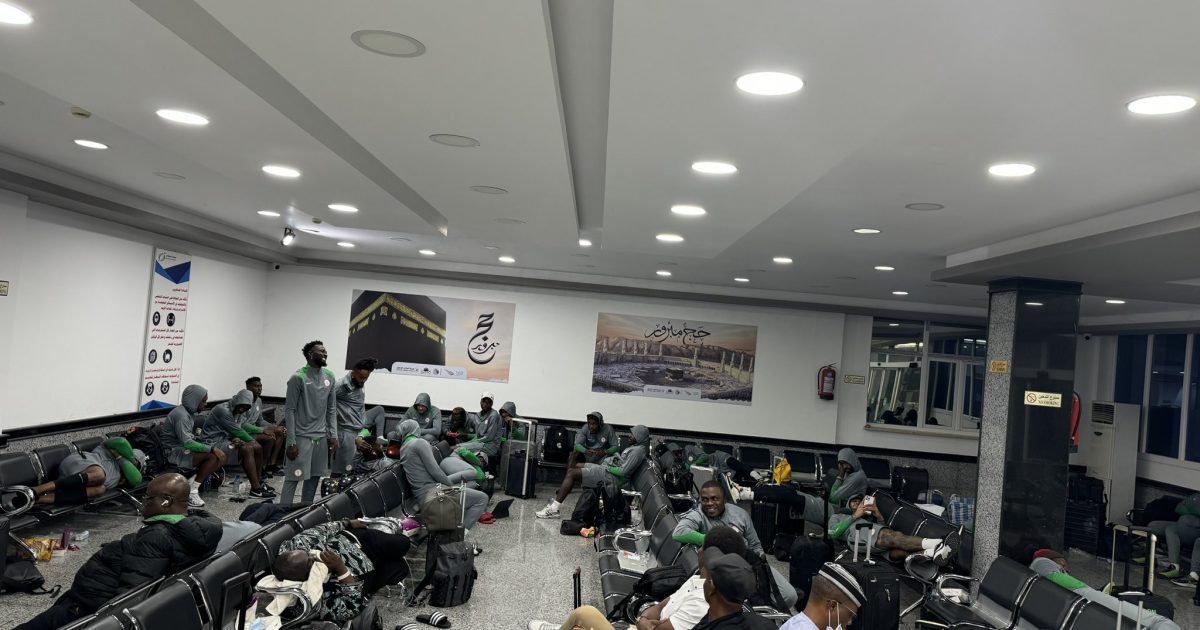
The Confederation of African Football (CAF) is set to announce its verdict on a controversial AFCON Group D qualifying match between Libya and Nigeria, which was initially scheduled for October 15 at the Benina Martyrs Stadium in Benina. The match, originally meant to take place at the Martyrs of February Stadium in Benghazi, was moved at the last minute following Nigeria’s 1-0 victory over Libya. The Nigerian team’s journey was marred by significant difficulties, including having their flight diverted to Al-Abraq Airport by Libyan authorities. They were detained for nearly 18 hours without food and water before their return to Nigeria, appearing fatigued and malnourished. This alarming incident prompted the Nigeria Football Federation (NFF) to lodge an official complaint with CAF, leading to the suspension of the match and its referral to the CAF Disciplinary Committee for further assessment.
CAF’s Executive Committee held a hearing in Ethiopia to gather insights from all parties involved, including representatives from both the Nigerian and Libyan football associations. Libya’s Football Association President, Abdul Hakim Al-Shalmani, addressed the committee, emphasizing the challenges faced by the Libyan team during their visit to Nigeria. He noted that despite these hurdles, Libya still managed to compete in the match and acknowledged the country’s hospitality shown to other African teams. However, Nigeria’s representatives, including Amaju Pinnick, a prominent figure in Nigerian football, accused Libya of misconduct that warranted serious sanctions. These accusations were supported by other African football officials who echoed concerns over Libya’s treatment of the Nigerian team and stressed the need for accountability.
As stakeholders anxiously await CAF’s ruling, there is a prevailing sentiment among Nigerian football officials that Libya should face severe penalties for their actions. Chief Victor Rumson Baribote, a notable figure in Nigerian football governance, stated that the evidence from the pilot’s account regarding the flight diversion gives Nigeria a strong case. He condemned Libya’s actions as a show of retaliation, forbidden in the realm of sports, and called for a robust response from CAF. His sentiments were mirrored by David Doherty, a UK-based football administrator who also called for significant sanctions against Libya, asserting that future matches should be relocated outside the country to ensure player safety and uphold sportsmanship.
Various respondents shared their opinions on the situation, with an overwhelming majority calling for decisive action from CAF. Kazeem Anjorin emphasized the necessity for serious disciplinary measures against Libya in order to ensure accountability and deter future misconduct. Meanwhile, other stakeholders expressed frustrations regarding Libya’s behavior, with some even questioning the nation’s place within the African football community. Statements reflecting a collective desire for fairness included calls for Nigeria to receive the three points or for the match to be rescheduled to a neutral location, ensuring no further risk or hardship for the players involved.
The anticipation surrounding CAF’s decision is palpable, as it carries not only sporting implications but also moral considerations regarding player safety and respect within the sport. With tensions higher than ever, stakeholders’ comments reflect a hope that CAF will act decisively and fairly. Observers are aware that the ruling will set a precedent for how incidents like this are addressed, impacting the relationship dynamics among African football associations and potentially influencing future interactions during international matches in the continent.
As the football community awaits the outcome, there is a collective sense of urgency for CAF to respond thoroughly to the incident. The call for accountability is not just a reflection of concern for the Nigerian team, but a broader demand for integrity and respect within the sport generally. The actions taken in the coming days will undoubtedly resonate throughout African football, shaping the governance and handling of future incidents, as stakeholders work to foster a culture of fairness and professionalism across the continent.