









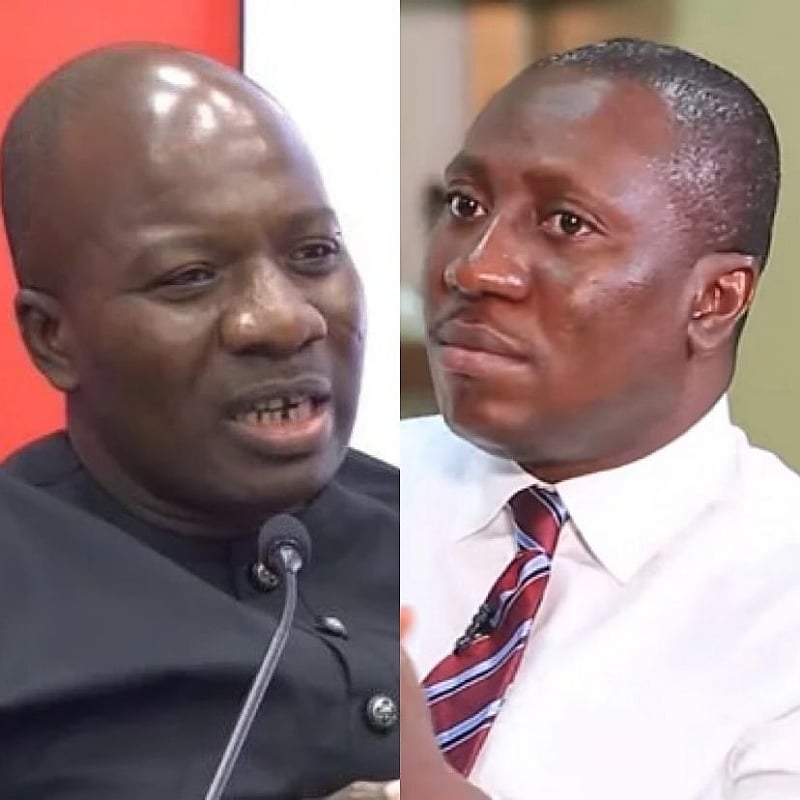
The ongoing tension in the Ghanaian Parliament took center stage following an incident on October 22, during which Bawku Central MP, Mahama Ayariga, publicly criticized Majority Leader, Hon. Alexander Afenyo-Markin. Ayariga accused Afenyo-Markin of failing to effectively manage his caucus members, leading to an abrupt adjournment of the parliamentary session. This incident emerged amid increasing debates between members of the New Patriotic Party (NPP) and the National Democratic Congress (NDC) about the rightful majority in Parliament. Speaker Rt. Hon. Alban Bagbin, during the session, recognized that while there were enough MPs present to engage in discussions, the quorum necessary for making decisions was not attained, ultimately resulting in the indefinite adjournment of proceedings.
In the aftermath of the adjournment, Afenyo-Markin directed criticism toward the NDC caucus, accusing them of squandering public funds through their role in causing the session’s premature end. Ayariga countered these accusations in an interview with Citi News, asserting that Afenyo-Markin’s lack of control over his party members was primarily to blame for the parliament’s inability to conduct its business. He remarked on the significant absence of NPP MPs, indicating that many were preoccupied with campaign work in their respective constituencies rather than fulfilling their parliamentary duties. This, he argued, underscored Afenyo-Markin’s ineptitude in rallying his own members on critical legislative matters.
Ayariga further emphasized that it was not the NDC’s lack of readiness that contributed to the disruption in parliamentary proceedings, but rather Afenyo-Markin’s struggle to maintain his leadership role. He posited that the Majority Leader was more focused on preserving his position than advancing legislative agendas or addressing the critical business of the government. By doing so, Ayariga suggested that Afenyo-Markin had betrayed the expectations of his constituents and fellow party members, allowing internal party dynamics to impede governmental functionality.
The criticism extended to a broader reflection on the state of governance, with Ayariga voicing concerns about the detrimental effects of internal party strife on legislative processes. He indicated that the NDC was fully prepared to contribute to parliamentary activities, ready to engage in discussions and decision-making as soon as Speaker Bagbin provided the necessary directive. This assertion highlighted the readiness of the opposition to fulfill their constitutional roles, contrasting it with the apparent inability of the ruling party to galvanize its members.
Moreover, Ayariga noted historical precedents and pointed out that previous leadership had established a pattern of effective parliamentary management, suggesting that Afenyo-Markin’s performance was an aberration from those expected standards. By referencing former Speaker Mike Oquaye’s tenure, Ayariga reinforced his point about the responsibilities of the Majority Leader to ensure consistent participation and organization within the party, particularly during critical sessions.
In conclusion, the events of October 22 symbolized deeper issues within the Ghanaian Parliament, where party cohesion and leadership effectiveness are under scrutiny. Ayariga’s critiques not only shed light on Afenyo-Markin’s perceived shortcomings but also illuminated the challenges faced by the NPP in maintaining operational unity. As the political landscape evolves, the dynamics within Parliament will likely continue to play a crucial role in shaping legislative outcomes, with both parties keenly aware of the implications of internal discord on their governance capabilities. The readiness of the NDC to engage constructively and the NPP’s internal challenges are indicators of a complex political environment requiring both reflection and strategic action moving forward.









