





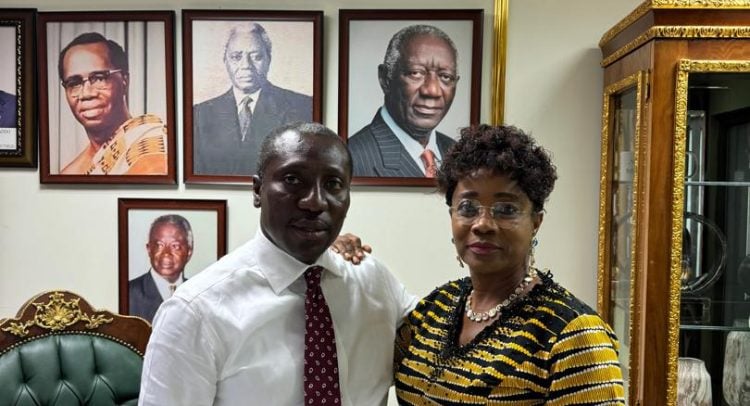
Alexander Afenyo-Markin, the Leader of the New Patriotic Party (NPP) in Parliament, has expressed concerns regarding the recent public statements of Agona West Member of Parliament (MP) Cynthia Morrison. During an interview on Okay FM, Afenyo-Markin urged Morrison to exercise more caution in her remarks, emphasizing that as a member of the ruling party, her words carry significant weight and should reflect that affiliation. The call for caution stems from certain private revelations Morrison has made during her public appearances, which Afenyo-Markin believes could lead to misunderstandings if not approached delicately. He recognizes the sensitive nature of matters pertaining to Agona West, where recent tensions have culminated in violent confrontations.
In the wake of these events, Afenyo-Markin’s message is one of unity and prudence. He noted that Morrison, while running as an independent candidate, still holds membership in the NPP and should honor the principles and image of the party in her public engagements. The delicate situation surrounding her campaign has drawn attention, particularly after an altercation involving her team and the NPP’s Parliamentary Candidate, which resulted in gunfire. This incident exemplifies the heightened emotions and stakes involved in the electoral contest, making it imperative for Morrison to communicate thoughtfully through the media.
Afenyo-Markin’s appeal resonates not only as a strategic political consideration but also as a reminder of the responsibilities that come with public office. He argued that public figures like Morrison have a duty to foster cohesion within their party, especially in volatile times. He has made it clear that the NPP’s collective image and success are interlinked with the behavior of its members; thus, Morrison’s remarks should ideally reflect a commitment to party unity, even as she navigates her independent campaign.
Further highlighting his stance, Afenyo-Markin alluded to the potential ramifications of unguarded statements, which could extend beyond personal implications to affect party dynamics and public perception. By airing out private matters publicly, he cautioned that Morrison risks not only her reputation but also that of the NPP. This warning serves as a focal point for the party’s leadership as they seek to maintain order and coherence within their ranks while facing external challenges.
In the larger scheme of Ghanaian politics, Afenyo-Markin’s comments serve as a microcosm of the tensions that can arise within political parties, particularly when members express divergent views or pursue independent paths. His assertion that Morrison must respect her party highlights the balancing act many politicians must perform as they seek to represent their constituents and adhere to party loyalty. The ongoing confrontation between Morrison and the NPP raises questions about the future of party solidarity, especially as elections approach.
Ultimately, the situation underscores the complexities politicians face in balancing personal convictions with party allegiance. Afenyo-Markin’s call for caution encapsulates a vital aspect of political discourse; members of a party must be mindful of how their public statements impact both their image and that of the organization they represent. It remains to be seen how Morrison will navigate this advice, the expectations of her constituents, and the broader political landscape as the elections draw nearer, but Afenyo-Markin’s intervention certainly sets a precedent for what is expected from NPP members in the heat of political competition.








