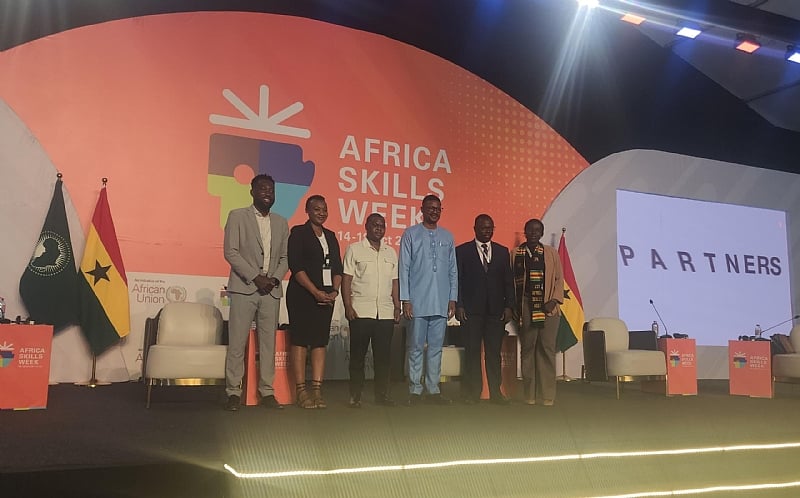
The Africa Skills Week Summit has commenced in Accra, uniting over 600 delegates from various countries across the continent to engage in discussions centered on skill development and youth empowerment. This year’s theme, “Skills and Jobs for the 21st Century: Quality Skills Development for Sustainable Employability in Africa,” underscores the critical need for enhancing the skill set of Africa’s young population. The summit, held from October 14 to 18, is organized by the African Union (AU) in partnership with the Government of Ghana and aims to align with the AU’s Agenda 2063, which envisions a transformative educational ecosystem across Africa. The event includes a youth summit and study tours aimed at equipping young Africans with essential skills necessary for driving economic growth and facilitating industrialization across the continent.
A major focus of the summit is addressing the burgeoning working-age population in Africa, projected to triple by 2050. Dr. Fred Kyei Asamoah, the Director General of the Council for Technical and Vocational Education and Training (CTVET), highlighted the urgency of this situation, emphasizing the need for strategic measures that align with the Continental Education Strategy for Africa (CESA) and UN Sustainable Development Goal 4. Statistics indicate that 70% of Africa’s population is under the age of 30, making youth empowerment critical for the continent’s future. Dr. Asamoah underscored the importance of developing relevant skills among young individuals, as today’s infants will be 26 by 2050, highlighting the pressing need for immediate action in equipping this demographic.
The role of collaboration among various stakeholders, including the private sector, was also a key theme. Hon. Sarjoh Aziz-Kamara, Deputy Minister for Technical and Higher Education in Sierra Leone, advocated for a joint approach to enhance both technical skills and leadership qualities among youth. He applauded Ghana’s collaboration with the International Labour Organization as a successful model that other nations should emulate. Aziz-Kamara stated that establishing strong public-private partnerships is essential for creating ecosystems that empower young people with not just technical skills but also entrepreneurial and leadership abilities. This marks a critical pivot in education, necessitating adjustments in curricula to align with the challenges and opportunities of the 21st century.
Furthermore, Mrs. Sophia Ashipla, Head of the Education Division at the African Union Commission, stressed the imperative of transforming Africa’s educational frameworks to meet the demands of the evolving labor market. She characterized the summit as a rallying cry for the youth of Africa to partake in constructive discussions aimed at narrowing the gap between education and employment. The pressing issues of unemployment and skills mismatches were acknowledged, urging stakeholders to devise solutions that not only promote economic viability but also reinforce community welfare. Ashipla’s remarks highlighted the urgency of unlocking the inherent potential of Africa’s youthful demographic as both a challenge and an opportunity.
The summit’s ultimate goal is to formulate a strategic plan geared towards equipping African youth with skills needed for success by the year 2063. Deliberations at the summit aim to transform current challenges into avenues for growth, striving for a prosperous, inclusive, and sustainable future across the continent. The collaboration amongst nations at the summit signals a growing recognition that a united effort is necessary to tackle the multifaceted issues plaguing the continent’s youth in relation to employment and skill acquisition.
This convergence of African nations at the Africa Skills Week Summit reflects a burgeoning realization of the necessity for skill development in fostering a sustainable future. By recognizing the significant role of youth and the potential that lies within them, the summit serves as a platform for dialogue, strategy formulation, and collaborative efforts among governments, educational institutions, and the private sector. The insights gained and partnerships established during the summit are expected to catalyze transformative changes in educational systems and vocational training frameworks across Africa, ultimately contributing to the economic empowerment of the continent’s youth.