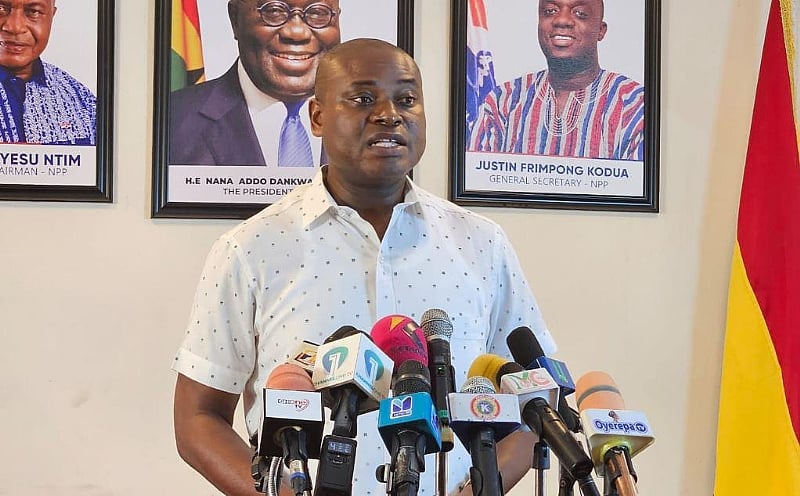
Richard Ahiagbah, the National Communications Director of the New Patriotic Party (NPP), has launched a scathing critique of the National Democratic Congress (NDC)’s performance since assuming power three months prior. Ahiagbah contends that the NDC’s tenure has been a “net loss” for Ghanaians, failing to deliver on its campaign promises to alleviate economic hardship and instead exacerbating the plight of the citizenry. He argues that the NDC’s actions contradict their pre-election rhetoric, which focused on criticizing the NPP’s economic management and promising a brighter future for Ghanaians.
Ahiagbah points to the rising cost of living as a key indicator of the NDC’s failure. He recalls the NDC’s campaign pronouncements about the high cost of living under the NPP and their pledges to reverse the trend. However, he asserts that the situation has worsened under the NDC, despite a 10% increase in the base pay. He argues that this increment is insignificant when juxtaposed against the substantial hikes in electricity and water tariffs, which have increased by 14.75% and 4.02%, respectively. In essence, Ahiagbah posits that the NDC’s policies have effectively negated any positive impact of the base pay increase, leaving Ghanaians worse off than before.
Furthermore, Ahiagbah criticizes the NDC for reneging on specific campaign promises, particularly the removal of the COVID-19 levy and the expiration of the special import levy. He questions the continued existence of the COVID-19 levy, highlighting the NDC’s previous assertions that the pandemic was no longer a significant threat. This, he argues, demonstrates the NDC’s inconsistency and lack of commitment to its pledges. The retention of these levies, according to Ahiagbah, adds further burden on Ghanaians, contrary to the NDC’s promises of economic relief.
Ahiagbah’s critique underscores a broader narrative of unfulfilled promises and escalating economic hardship under the NDC’s governance. He portrays the NDC as a party that capitalized on public discontent with the NPP’s economic management but failed to deliver on its own promises of improvement. The rising cost of essential utilities like electricity and water, coupled with the continued imposition of levies meant to address a receding pandemic, are presented as evidence of the NDC’s mismanagement and disregard for the well-being of Ghanaians.
The NPP communicator’s statements reflect the ongoing political discourse in Ghana, characterized by accusations and counter-accusations between the two major parties. Ahiagbah’s critique seeks to portray the NDC as incompetent and untrustworthy, contrasting their pre-election rhetoric with their post-election actions. By highlighting the perceived failures of the NDC government, Ahiagbah aims to bolster the NPP’s position and regain public trust in their ability to manage the economy effectively.
In conclusion, Ahiagbah’s assessment paints a bleak picture of the NDC’s performance, arguing that their tenure has been detrimental to the economic well-being of Ghanaians. He criticizes the NDC for not only failing to alleviate economic hardship but also for exacerbating it through increased utility tariffs and the retention of supposedly temporary levies. His arguments aim to discredit the NDC’s economic policies and portray them as a broken promise to the Ghanaian people, thereby bolstering the NPP’s standing and setting the stage for future political contests.