









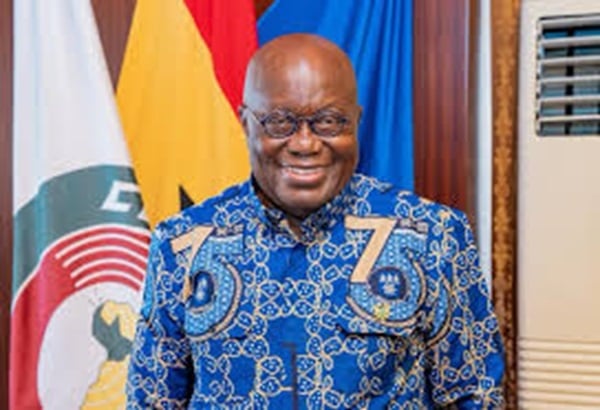
In a recent address during a tour of the Ahafo Region, President Nana Addo Dankwa Akufo-Addo criticized former President John Dramani Mahama, emphasizing that Mahama is Ghana’s only one-term president. The President contended that this distinction undermines Mahama’s credibility and political stature in the country, questioning his claims of superiority over others in the political landscape. This critique came in response to Mahama’s refusal to participate in a debate with the New Patriotic Party (NPP) candidate, Vice President Dr. Mahamudu Bawumia. By framing Mahama’s one-term presidency as a reflection of his leadership abilities, Akufo-Addo suggested that Mahama lacks the standing to dismiss Bawumia as being unworthy of debate.
During his campaign in Ningo Prampram, Mahama had expressed reluctance to engage in a debate with Bawumia, asserting that such an exchange would only serve to elevate the Vice President to his level. Mahama articulated that he felt no obligation to debate a sitting Vice President on policy issues. This refusal to confront Bawumia has been interpreted by some as an attempt to maintain a sense of superiority, which President Akufo-Addo directly challenged, contending that Mahama’s past as a one-term president inherently limits his claims to political dominance.
Reacting to Mahama’s comments, President Akufo-Addo pointed out that Mahama’s tenure as the only president in the Fourth Republic to serve just one term due to unsatisfactory performance undermines his position in the current political discourse. Therefore, the President urged supporters in the Ahafo Region to rally behind Dr. Bawumia, highlighting that Bawumia’s achievements and capabilities present a viable alternative for leadership in Ghana. The President’s remarks positioned Bawumia not only as a worthy opponent but also as someone whose contributions to the government reflect his readiness to assume higher responsibilities.
With historical context, President Akufo-Addo referred to the list of presidents since the Fourth Republic, noting that while multiple individuals have held the office, only Mahama has faced the electorate and been limited to a single term. The implication of Akufo-Addo’s comments is that Mahama’s legacy is marked by failure in the eyes of Ghanaians, which raises questions about his claims of political superiority. This critique of Mahama’s leadership is framed within a broader narrative of political accountability, where the judgment of voters is presented as a measure of personal and political merit.
The President’s sharp rebuke of Mahama not only emphasizes the perceived inadequacies of the former president but also serves as a rallying cry for the NPP and its supporters as they approach the upcoming elections. By underscoring the contrast between Mahama’s political past and Bawumia’s present contributions, Akufo-Addo aims to consolidate support for Bawumia, positioning him as a capable successor worthy of the presidency. This strategic framing attempts to highlight what the NPP sees as a clear choice for the electorate, reinforcing Bawumia’s credentials while diminishing Mahama’s standing in the political arena.
In conclusion, President Akufo-Addo’s remarks reflect a wider political narrative that seeks to emphasize results and accountability in leadership. By framing Mahama’s one-term presidency as a failure, the President aims to galvanize support for Dr. Bawumia and to challenge Mahama’s narrative of political superiority. The ongoing debate surrounding leadership effectiveness and the capacity to engage in meaningful political dialogue is crucial as Ghana prepares for its upcoming elections. Ultimately, these exchanges will shape the political landscape as the electorate weighs the viability of the candidates and their visions for the future of the nation.









