





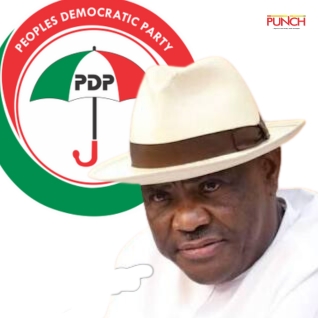
The internal turmoil within the People’s Democratic Party (PDP) continues to escalate, fueled by a power struggle between factions loyal to former Rivers State Governor, Nyesom Wike, and those aligned with the party’s 2023 presidential candidate, Atiku Abubakar. At the heart of the conflict is the position of acting National Chairman, Umar Damagum, whose appointment following the court-ordered removal of Senator Iyorchia Ayu has sparked controversy and division. Wike’s camp, which includes four governors, firmly supports Damagum’s continued leadership, while an opposing faction, comprising three governors and other prominent party members, advocates for his replacement. This fundamental disagreement has led to strategic maneuvering, accusations, and counter-accusations, further destabilizing the party.
The pro-Wike faction is accused of planning to consolidate its grip on the PDP by silencing dissenters through expulsions and suspensions, particularly targeting those perceived as loyal to Atiku Abubakar. This alleged purge is expected to target members at the state, local government, and ward levels, effectively neutralizing opposition and solidifying Wike’s influence. The faction’s alleged targeting of Ikenga Ugochinyere, a vocal critic of Wike and Damagum, serves as a prime example of this strategy. Ugochinyere’s purported expulsion, based on claims of anti-party activities, highlights the escalating tensions and the increasingly aggressive tactics employed by the warring factions. This internal conflict threatens to further fracture the PDP and hinder its ability to present a united front in future elections.
Compounding the internal strife is the repeated postponement of the party’s National Executive Committee (NEC) meeting. Originally scheduled for August 15, 2024, the meeting has been delayed multiple times, raising suspicions within the anti-Wike camp that these postponements are a deliberate tactic to protect Wike’s interests and maintain his control over the party machinery. The repeated delays prevent crucial decisions, such as the appointment of a substantive National Chairman, from being made, leaving the party in a state of limbo and fueling distrust between the opposing factions. While the PDP Governors Forum has instructed the National Working Committee (NWC) to convene the NEC by February 2025, the ongoing power struggle casts doubt on whether this deadline will be met.
The North Central zone, tasked with nominating a replacement for Damagum, finds itself caught in the crossfire. While the Board of Trustees has reaffirmed the zone’s responsibility in selecting a new National Chairman, the ongoing conflict and the Wike faction’s alleged maneuvering complicate the process. The zone faces the challenge of navigating the competing interests and ensuring a fair and transparent selection process, a task made more difficult by the deep divisions within the party. The delay in convening the NEC meeting further hinders this process, prolonging the uncertainty surrounding the party’s leadership.
Amid the internal turmoil, some NWC members have reportedly disengaged from regular meetings, reflecting the growing disunity and dysfunction within the party. These members are seemingly adopting a wait-and-see approach, anticipating the formation of a National Elective Convention planning committee next year. This disengagement further weakens the party’s ability to address critical issues and effectively manage the ongoing crisis. The lack of a fully functioning NWC exacerbates the power vacuum and allows the conflict between factions to escalate unchecked.
Despite the escalating tensions and accusations, some within the PDP maintain a more optimistic outlook. They believe that the party is resilient enough to overcome its internal challenges and emerge stronger. They emphasize the PDP’s history of navigating internal crises and express confidence in its ability to find a path towards reconciliation and unity. However, the depth of the current divisions and the increasingly aggressive tactics employed by the warring factions suggest that achieving unity will be a significant challenge. The party’s future hinges on its ability to bridge these divides and present a cohesive front. The success of this endeavor will largely depend on the willingness of both factions to engage in constructive dialogue and compromise. The upcoming NEC meeting, if it indeed takes place, could provide a crucial opportunity for the party to address its internal issues and chart a course towards reconciliation and stability.








