





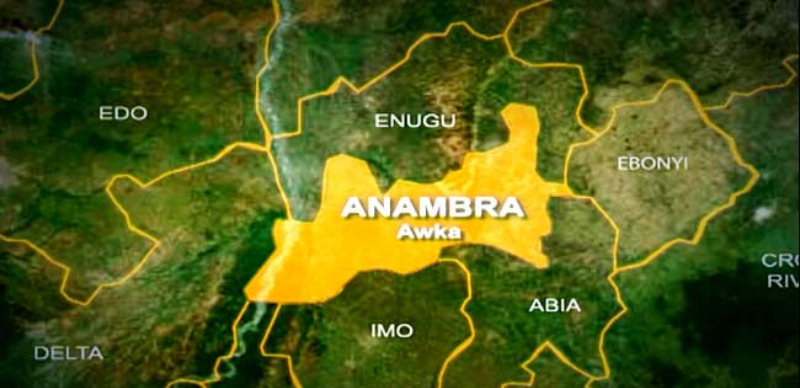
The political landscape in Anambra State is heating up as the 2025 governorship election draws closer, with the All Progressives Grand Alliance (APGA) asserting its dominance and dismissing the ambitions of the All Progressives Congress (APC). APGA, through its National Chairman, Sly Ezeokenwa, and his predecessor, Victor Oye, has confidently declared that there is “no vacancy” in the Anambra Government House, signaling their unwavering belief in securing a continued hold on the state’s leadership. This declaration comes as the APC, under the leadership of its National Chairman, Abdullahi Ganduje, prepares to launch its state secretariat in Awka, a move interpreted as a strategic step towards strengthening its presence and challenging APGA’s dominance. Ganduje’s previous pronouncements about replicating the APC’s electoral success in Edo and Ondo in Anambra, Abia, and Enugu have further fueled the political discourse, setting the stage for a potentially fierce contest in the upcoming election.
APGA’s confidence stems from its deep roots and historical stronghold in Anambra State. Ezeokenwa, in his assessment of the political dynamics, categorically dismissed the APC’s presence, characterizing it as non-existent and lacking any meaningful structure or elected representation within the state. He emphasized APGA’s established presence and influence, contrasting it with what he perceives as the APC’s lack of grassroots support. This sentiment was echoed by Oye, who directly addressed Ganduje’s optimistic predictions, dismissing them as wishful thinking. Oye underscored APGA’s continued popularity and Governor Chukwuma Soludo’s strong performance, expressing unwavering confidence in Soludo’s re-election. He attributed Soludo’s governorship to divine anointment, further solidifying APGA’s narrative of its divinely ordained leadership in Anambra.
In contrast to APGA’s assertions, the APC maintains its commitment to contesting and winning the Anambra governorship. Nze Duru, the Deputy National Organising Secretary of the APC, responded to APGA’s pronouncements with amusement, highlighting the recent court-ordered reinstatement of APGA’s leadership. He suggested that APGA’s focus should be on consolidating its internal stability rather than engaging in premature political posturing. Duru emphasized the APC’s robust presence across all 21 local governments and 326 wards in Anambra, pointing to established offices and active party structures. He confirmed Ganduje’s upcoming visit to Anambra to inaugurate the new state secretariat and engage with political stakeholders, underscoring the APC’s commitment to building momentum and preparing for the election.
The differing perspectives of APGA and APC reflect the intensifying competition for political control in Anambra State. APGA, relying on its historical dominance and perceived popular support, exudes confidence in retaining power. The party frames its leadership as divinely sanctioned and portrays Governor Soludo’s performance as a testament to its effective governance. Conversely, the APC, despite acknowledging APGA’s historical advantage, projects an image of growing strength and grassroots mobilization. The party emphasizes its organizational efforts and strategic investments in building its presence across the state, aiming to challenge APGA’s dominance and present a viable alternative to the electorate.
The upcoming Anambra governorship election, scheduled for November 8, 2025, promises to be a significant political event. APGA, as the incumbent party, faces the task of defending its stronghold and maintaining the support of the electorate. The party’s strategy appears to be centered on highlighting its historical achievements, emphasizing Governor Soludo’s performance, and projecting an image of stability and continuity. The APC, on the other hand, aims to disrupt APGA’s dominance by showcasing its growing organizational strength, mobilizing support at the grassroots level, and presenting a compelling alternative vision for the state. The clash between these two major political forces is likely to shape the political landscape of Anambra State in the coming years.
The election’s outcome will not only determine the next governor but also significantly impact the political balance of power within the South East region. APGA’s success would solidify its position as a dominant regional force, while an APC victory would mark a significant breakthrough for the party in a traditionally APGA-controlled state. The election will also serve as a barometer of public opinion regarding the performance of both parties and their respective visions for the future of Anambra. As the campaign unfolds, the interplay of political strategies, public perception, and ultimately, the choices of the electorate, will determine the course of Anambra’s political trajectory.








