









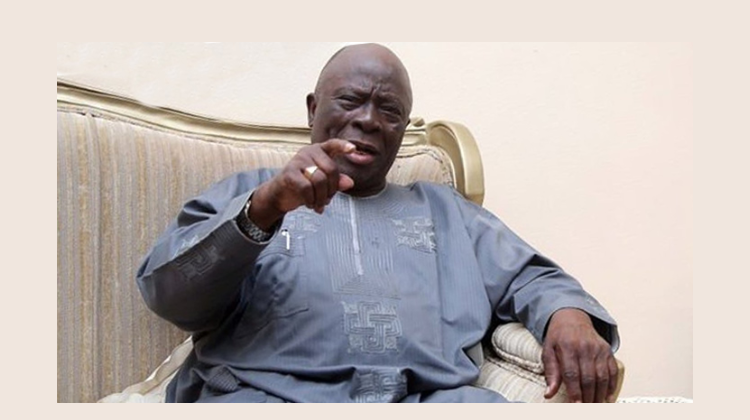
Pa Ayo Adebanjo, the revered Afenifere leader and elder statesman, passed away at the age of 96, leaving behind a legacy of unwavering commitment to democracy, unity, and good governance. His death has elicited an outpouring of tributes from across Nigeria, with prominent figures emphasizing his indelible contributions to the nation’s socio-political landscape. Adebanjo’s life was a testament to his steadfast belief in a just and equitable Nigeria, a vision he pursued tirelessly throughout his long and impactful career. His passing marks the end of an era, but his principles and ideals continue to resonate, inspiring hope for a better future for the country he loved so deeply.
Adebanjo’s impact on Nigeria’s political trajectory is undeniable. From his early involvement in the struggle for independence to his later years as a vocal advocate for democracy and restructuring, he consistently championed the rights of all Nigerians. He was a fearless critic of injustice and inequality, often challenging the status quo and demanding accountability from those in power. His unwavering commitment to principle earned him the respect of both allies and adversaries, solidifying his position as a moral compass for the nation. He believed in a Nigeria where every citizen, regardless of their background or ethnicity, could thrive and enjoy the full benefits of citizenship. His legacy as a champion of the masses will undoubtedly endure for generations to come.
Tributes poured in from across the political spectrum, reflecting the widespread admiration for Adebanjo’s character and contributions. Senator Orji Kalu lauded him as a “patriotic leader, strong advocate for democracy, and a symbol of national unity,” highlighting his significant role in shaping Nigeria’s political discourse. Former Commonwealth Secretary-General, Chief Emeka Anyaoku, described Adebanjo as a “champion of equity and inclusiveness” and a “foremost nationalist,” emphasizing his unwavering belief in Nigeria’s potential for unity and development. These accolades underscore the profound impact Adebanjo had on the nation’s political consciousness.
Afenifere leader, Dr. Ebun Sonaya, offered a poignant perspective on Adebanjo’s influence, describing him as a “big motivator, a strong-willed person who loved this country.” Sonaya emphasized Adebanjo’s loyalty and devotion to Nigeria’s progress, highlighting his role as a successor to the legendary Chief Obafemi Awolowo. He expressed hope that Adebanjo’s passing could serve as a catalyst for unity among South West politicians, suggesting that his legacy might inspire a healing process and a renewed commitment to common goals.
The outpouring of grief and respect following Adebanjo’s death is a testament to the profound impact he had on Nigeria’s political and social landscape. His unwavering commitment to justice, equity, and good governance served as an inspiration to countless Nigerians, particularly within the Yoruba community and the Afenifere socio-political group. His courage in speaking truth to power, even in the face of adversity, solidified his reputation as a man of integrity and principle. He leaves behind a legacy of service and dedication to the betterment of his nation, a legacy that will continue to inspire future generations of leaders.
Adebanjo’s passing marks the end of an era, but his contributions to Nigeria’s political development will not be forgotten. His life was a testament to the power of conviction and the importance of standing up for what is right. He will be remembered as a fearless advocate for democracy, a champion of unity, and a tireless fighter for the rights of all Nigerians. His legacy will continue to inspire those who strive for a more just and equitable society, ensuring that his fight for a better Nigeria lives on. His residence in Lagos became a place of pilgrimage for those wishing to pay their respects, demonstrating the deep affection and admiration held for him by people from all walks of life. His memory will serve as a constant reminder of the values he championed and the principles for which he stood.









