









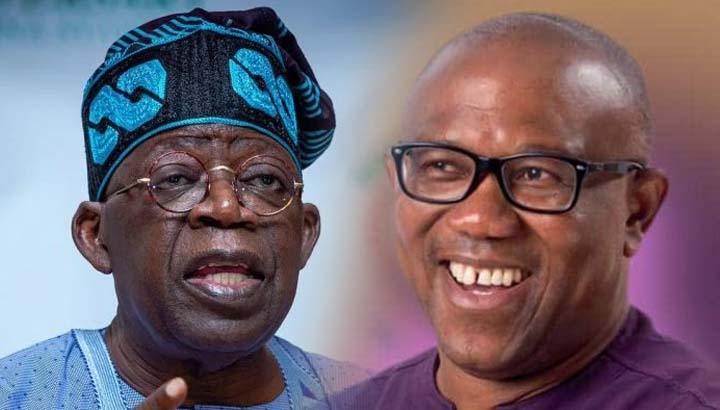
Peter Obi, the Labour Party’s presidential candidate in the 2023 Nigerian elections, has publicly urged President Bola Tinubu to prioritize the use of Nigeria’s healthcare system for his medical needs rather than seeking treatment abroad. Obi argued that such a move would not only demonstrate confidence in the nation’s medical facilities but also inspire public trust and potentially curb the prevalent practice of medical tourism among Nigerians. He specifically suggested that President Tinubu utilize institutions like the National Hospital in Abuja or any of the Federal Medical Centers across the country for his next medical checkup, allowing him to directly assess their condition and make informed decisions about necessary upgrades and improvements. Obi’s call for domestic healthcare utilization comes amidst reports of President Tinubu’s frequent international travels, sparking speculation about the purpose of some of these trips, particularly those to France.
Obi’s appeal extends beyond healthcare, encompassing a broader call for President Tinubu to engage more directly with the realities facing Nigerians. He suggested that the President undertake road trips across the country to personally experience the state of the nation’s highways, citing his own experience as governor of Anambra State when he accompanied former President Olusegun Obasanjo on a road trip that led to immediate road improvements. Obi proposed specific routes, such as Calabar to Uyo and Benin to Warri, emphasizing the value of firsthand observation in prompting effective action. He further recommended visits to tertiary institutions to evaluate the utilization of resources and the overall state of the education system. These recommendations, according to Obi, are crucial for understanding the challenges and formulating effective solutions.
The backdrop to Obi’s pronouncements includes President Tinubu’s extensive foreign travel record. In the first 18 months of his administration, Tinubu and Vice President Kashim Shettima have collectively undertaken 42 trips across 27 countries, spending over 180 days abroad. Tinubu himself has spent 124 days out of the country on 29 trips to 16 different nations. This frequent travel has fueled speculation, particularly regarding trips to France, with some suggesting they are related to medical treatment. Obi’s call for Tinubu to utilize Nigerian healthcare facilities directly addresses this speculation, placing it within a larger context of leadership accountability and responsiveness to local needs.
The ruling All Progressives Congress (APC) has responded sharply to Obi’s criticisms, accusing him of attempting to incite public sentiment against President Tinubu. The APC, through its National Publicity Secretary, Felix Morka, dismissed Obi’s New Year’s message as misleading and opportunistic, aimed at scoring political points. Morka defended the Tinubu administration’s economic performance, claiming steady progress despite initial challenges. He further criticized Obi’s record as governor of Anambra State, questioning his authority to critique the current administration and attributing his pessimism to the perceived threat Tinubu poses to his political relevance. The APC maintained that the “Renewed Hope Agenda” is yielding positive results and urged Nigerians to remain optimistic about the future.
Obi’s public statements also touched upon political alignments, specifically addressing rumors of a merger with the Peoples Democratic Party (PDP) or the New Nigeria People’s Party (NNPP). He clarified that no formal agreement exists with either party, emphasizing his focus on uniting all proponents of democracy to challenge the APC in the 2027 elections. This clarification follows earlier denials by NNPP’s presidential candidate, Senator Rabiu Kwankwaso, of any such pact. Obi’s statement aims to dispel speculation about his political maneuvering and underscore his broader commitment to democratic principles.
The exchange between Peter Obi and the APC underscores the ongoing political dynamics in Nigeria. Obi’s critiques, focusing on healthcare, infrastructure, and education, aim to highlight perceived shortcomings in the Tinubu administration’s performance. The APC’s response, characterizing Obi’s comments as politically motivated and highlighting their own economic achievements, reflects a defensive posture against opposition criticism. This public back-and-forth underscores the continuing political debate surrounding the direction of the country and the effectiveness of the current government’s policies. The contrasting narratives presented by Obi and the APC frame the ongoing political discourse in Nigeria, with each side vying for public support and attempting to shape the narrative around the nation’s progress and challenges.









