





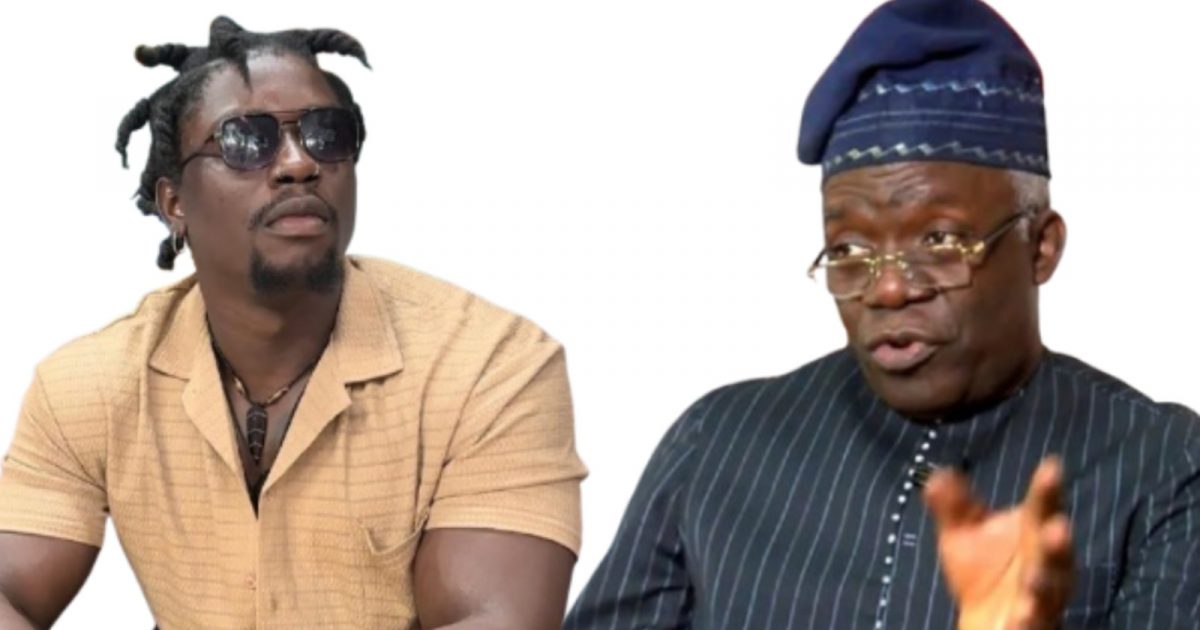
Martins Otse, widely recognized as VeryDarkMan, is a controversial figure in social media criticism, and he is currently embroiled in a legal battle following a ruling in favor of human rights lawyer Femi Falana and his son, Folarin Falana, popularly known as Falz. On October 14, 2024, the Lagos State High Court, under the judgment of Justice M.O. Dawodu, ruled in favor of the Falanas in a defamation lawsuit brought against VeryDarkMan. The lawsuit stemmed from an alleged defamatory social media post concerning their involvement in a conversation with the well-known cross-dresser Bobrisky, who faced legal consequences related to naira abuse claims. The Falana family sought retraction of statements involving claims that Falz helped orchestrate a presidential pardon for Bobrisky amid accusations regarding his financial dealings and requests for assistance.
In their legal action, the Falanas provided context that Bobrisky had reached out to Falz for substantial financial support, purportedly requesting N3 million to secure favorable treatment while imprisoned. The conversation, initially reported to involve Bobrisky seeking both legal counsel and financial aid, ultimately became the focal point of controversy after VeryDarkMan published comments about it that the Falanas contend were unfounded and damaging. Falz and his father’s request for a retraction arrived alongside a formal demand for the removal of what they characterized as defamatory statements made by VeryDarkMan regarding their characters.
On the aforementioned October date, Justice Dawodu mandated that VeryDarkMan and his affiliates remove the controversial video and any related comments regarding the Falanas, which had been published on September 24, 2024. The ruling also imposed restrictions on VeryDarkMan, prohibiting him from further disseminating any defamatory content concerning the Falanas while the legal matter awaited resolution. This decision sparked a notable discussion surrounding accountability in the age of social media and the scrutiny public figures endure regarding potentially misleading or harmful statements made online.
Constrained by the court’s ruling, VeryDarkMan has since filed two motions seeking permission to appeal Justice Dawodu’s decision, citing significant reasons for his request. His motions, which include one directed toward Falz and another involving Femi Falana as the respondent, are marked under codes ID/8584/GCM/2024 and ID/8586/GCM/2024, respectively. He contends that the court’s ruling was based primarily on the respondents’ affidavits without adequately addressing the full context or merits of his defense against the defamation claims. VeryDarkMan’s legal team posits that the interlocutory nature of the ruling necessitates judicial permission to appeal, underscoring the legal principle that such permissions should be granted judiciously to uphold the tenets of justice and ensure beneficial outcomes for all parties involved.
In his application for leave to appeal, VeryDarkMan stresses that a failure to grant this request could lead to significant judicial implications, not just for the individuals involved but for the legal system’s broader integrity. He emphasizes the necessity for an appellate review to provide clarity and potential corrections to trial court decisions, which plays a crucial role in the overall judicial framework. This assertion highlights the vital checks and balances within the judiciary, wherein appellate courts serve to refine and rectify trial-level judgments that may have misapplied legal standards or overstepped in their rulings.
Supporting VeryDarkMan’s application, legal practitioner Oladimeji Joseph submitted an affidavit acknowledging the need to seek the court’s permission within a fourteen-day window following the original ruling. He asserts that such leave must be granted before any appeal can be formally considered, reinforcing the procedural necessity for compliance with legal protocols. The emergence of this case has opened broader discussions about the dynamics between social media commentary, public accountability, and the legal frameworks governing defamation, leaving many eager to see how the court will navigate the complexities involved moving forward.








