









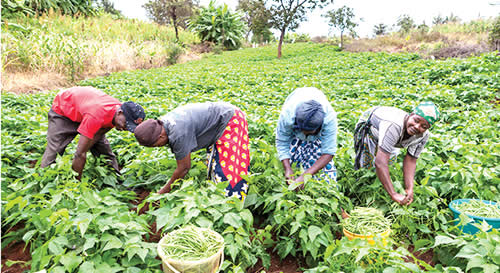
Iliyasu Gital, the Special Adviser to the Governor of Bauchi State on Agriculture, is advocating for farmers to prepare adequately for the impending dry season as the harmattan season approaches. In a recent interview, Gital highlighted the critical nature of early preparations and the necessity for infrastructural development to boost agricultural productivity and tackle ongoing food security challenges in the region. He expressed concern about the current agricultural landscape, suggesting that farmers need to adopt proactive strategies that would enable them to sustain crop production even during dry spells. This readiness is deemed not merely beneficial but essential for the survival and sustainability of farming practices in Bauchi State.
Gital emphasized the government’s crucial role in enhancing food security through the empowerment of farmers. He underscored the importance of developing additional irrigation infrastructure, including boreholes and comprehensive water management systems, as pivotal measures for facilitating dry season farming. By investing in such infrastructure, Gital believes that farmers will be better equipped to manage crop production throughout challenging weather conditions, leading to heightened productivity. This proactive approach could significantly mitigate the food shortages currently faced by farmers, which he attributes to a combination of poverty and inadequate resources.
The agricultural potential of Bauchi State was another focal point of Gital’s message. He identified the state’s substantial arable land, particularly in its southern and northern regions, which benefit from fertile floodplains and river systems. Gital posited that, with the right infrastructural support, these fertile areas could play a transformative role in bolstering food production and addressing food insecurity in the state. His call for resource development is not just an infrastructural enhancement; it’s a vision aimed at unlocking the inherent agricultural capabilities of the land, emphasizing the need for a strategic approach to land and resource management.
Transforming the mindset of farmers from subsistence agriculture to a more commercially viable model was a key point in Gital’s advocacy. He encouraged farmers to view their agricultural activities as a form of business rather than merely a means of self-sustenance. This shift in perspective is critical for cultivating an environment where farming is seen as a viable source of income, thereby enhancing both individual and national food security. Gital also cautioned against reliance on government support, urging farmers to become more self-sufficient while advocating that they refrain from selling subsidized inputs for profit, an act that undermines the essence of agricultural assistance programs.
As the dry season farming preparations commence, Gital stressed the importance of adhering to established production guidelines to ensure successful harvests. He highlighted that efficient use of agricultural inputs and strategic land resource management would be paramount for achieving desired outcomes. By focusing on these principles, he asserted that farmers could maximize their productivity and contribute significantly to the agricultural sector of Bauchi State.
In his concluding remarks, Iliyasu Gital reaffirmed the government’s commitment to supporting farmers through the provision of necessary infrastructure and advisory services. He mentioned collaborations with institutions like the Bauchi State Agricultural Development Programme and the local media to enhance outreach and support for farmers. He called upon farmers to take full advantage of these resources to prepare responsibly for the upcoming seasons, instilling a sense of collective responsibility towards achieving food security in the state. Through these concerted efforts, Gital envisions a more resilient agricultural sector capable of meeting the challenges posed by climatic changes and economic pressures.









