





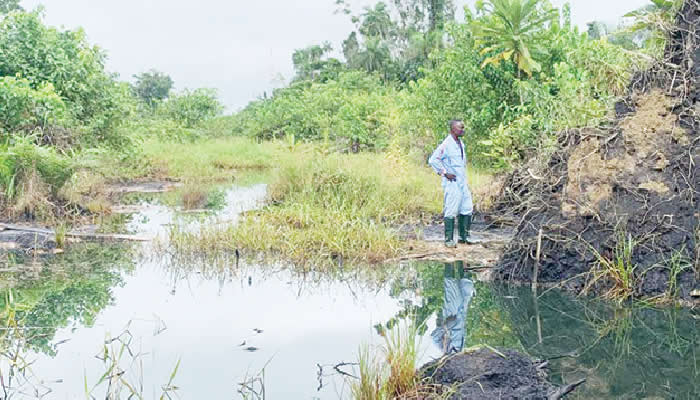
The Bayelsa State Government, led by Governor Douye Diri, has taken a decisive step toward addressing the extensive oil pollution plaguing the region for over sixty years by resolving to sue international oil companies (IOCs) operating within its jurisdiction. This announcement came during an expanded State Executive Council meeting where the final report of the Bayelsa State Oil and Environment Commission was presented. Governor Diri emphasized the significance of the report, titled “An Environmental Genocide: Counting the Human and Environmental Cost of Oil in Bayelsa, Nigeria,” stating that it effectively encapsulates the struggles faced by residents and offers viable pathways toward addressing the environmental devastation caused by oil extraction. He remarked that the insights generated from the commission’s findings will guide the government towards actionable solutions aimed at restoring dignity and opportunities for the people of Bayelsa.
In his address, Governor Diri highlighted key principles guiding environmental responsibility, specifically referencing the “polluter pays” and “no fault liability” doctrines prevalent in advanced industrialized nations. These principles underscore the notion that those who operate oil extraction facilities should bear the responsibility for any resulting pollution damage, irrespective of fault. Diri suggested that the Bayelsa State Government might pursue legal avenues outside Nigeria to seek redress, a move that could challenge the IOCs’ claims that 90% of leaks in the area are due to sabotage. He asserted that this rationale would likely not hold weight in international jurisdictions, which bolsters the state’s ability to seek legal recourse on a global scale.
The report outlines alarming figures regarding the extent of oil pollution in Bayelsa, noting that the state accounts for an estimated 25% of Nigeria’s oil pollution. Past studies indicated that oil spills in Nigeria were linked to more than 16,000 additional neonatal deaths in 2012 alone, emphasizing the devastating human cost of oil pollution in the region. Governor Diri painfully noted the scale of contamination, estimating that each resident of Bayelsa has been affected by approximately one and a half barrels of oil spills, with some areas like Southern Ijaw experiencing as much as six barrels for every person living there. This severe environmental degradation, according to Diri, has left the residents of Bayelsa in a precarious situation, constantly facing health risks and existential threats due to the relentless oil pollution.
Financially, the devastation extends to the economic revenue generated from oil, with the state contributing an estimated one trillion dollars to Nigeria’s oil revenue between 1970 and 2014. Since 2006, oil production in Bayelsa has yielded over $150 billion for the federal government and significant profits for the IOCs. Despite these figures, the local population has suffered immensely, with their environment rendered toxic and unsustainable. The governor indicated that the annual oil revenue from Bayelsa stands at roughly $10 billion for the government, raising questions of equity and environmental justice given the environmental havoc wrecked upon the state’s ecosystems and communities.
During the final report’s presentation, Archbishop John Sentamu, chair of the Bayelsa State Oil and Environment Commission, echoed the governor’s sentiments, asserting that while oil has been a financial boon for the federal government, it has simultaneously proved to be a significant curse for the land and its residents. He highlighted the ecological impacts caused by oil-related activities, such as a staggering loss of about 40% of mangrove forests due to pollution, reflecting on the dire state of the environment within the region. Other commission members reiterated the urgent need for the Bayelsa State Government to act swiftly in pursuit of environmental justice and recovery for the affected communities.
The commission has proposed a robust recovery and cleanup plan to address the overwhelming environmental devastation, recommending the establishment of a $12 billion recovery fund over a twelve-year period. It also called for the creation of a Bayelsa Recovery Agency and modernized compensation schemes for impacted residents. Central to the recovery effort is the introduction of a new legal framework and dispute resolution mechanisms to hold IOCs accountable and ensure the state’s interests are adequately represented. This comprehensive proposal also emphasizes the need for transparency and improved community engagement by IOCs, further advocating for legally binding regulations governing decommissioning and legacy issues, demonstrating a nuanced approach to fostering environmental accountability and sustainability in Bayelsa.








