









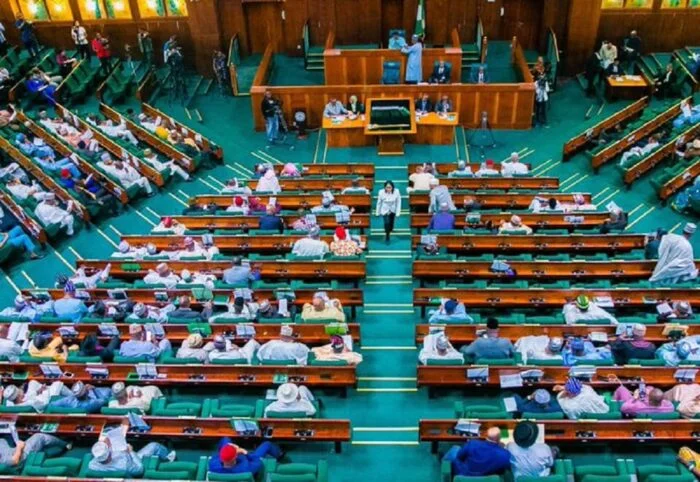
The House of Representatives has addressed the public regarding the $150 million bribery allegation against three of its members, Ginger Onwusibe, Philip Agbese, and Peter Akpanke, by cryptocurrency giant Binance. The House advised the public to rely on verified information before forming opinions and cautioned against being swayed by what it termed “recycled claims” targeting Nigerian institutions and public servants. This bribery allegation, which surfaced publicly through Binance’s head of financial compliance, Tigran Gambaryan, implicates the lawmakers in demanding the sum to prevent Gambaryan’s arrest and prosecution for alleged financial crimes. The House emphasized that the allegations are directed at individual members and not the institution itself.
The House’s statement further clarified the individual responses of the accused lawmakers. Both Agbese and Onwusibe have publicly denied the allegations and expressed their intent to pursue legal action to clear their names. The House encouraged the third member, Akpanke, to take similar steps to defend his reputation and seek justice. By highlighting the individual nature of the accusations and the lawmakers’ denials, the House seeks to distance itself from the controversy and emphasize that any potential wrongdoing rests with the individuals, not the legislative body as a whole.
Importantly, the statement underscores the involvement of both the Nigerian and United States governments in addressing the broader issues connected to the allegations. This involvement signifies the seriousness of the claims and elevates the matter to an intergovernmental level. The House revealed that the Nigerian government has prioritized national interest over external commercial pressure, including rejecting financial settlement offers from Binance. This detail suggests a complex interplay of financial interests and potential diplomatic ramifications, highlighting the gravity of the situation beyond the immediate bribery accusations.
Furthermore, the House’s statement characterizing the allegations as “recycled claims” implies that these accusations are not new and may have been circulated previously. This suggests a potential prior attempt to discredit the lawmakers or exert influence. The fact that these claims have resurfaced adds another layer of complexity to the situation and raises questions about the timing and motivation behind their re-emergence. The House’s emphasis on verifying information underscores the need for careful consideration of the source and context of these allegations.
The House’s communication strategy underscores a multi-pronged approach: distancing the institution from the individual actions of its members, emphasizing the members’ denials and pursuit of legal recourse, and highlighting the Nigerian government’s firm stance in prioritizing national interests. By portraying the issue as a matter concerning individual members and highlighting the government’s involvement, the House aims to protect its institutional integrity and maintain public trust. The mention of rejected settlement offers from Binance further strengthens this narrative, positioning the Nigerian government as resistant to external influence and committed to upholding the rule of law.
In conclusion, the House of Representatives has taken a proactive stance in addressing the bribery allegations against its members, carefully crafting a message that seeks to protect its institutional image while acknowledging the seriousness of the accusations. By urging the public to rely on verified information and highlighting the ongoing legal and governmental processes, the House attempts to navigate a complex situation involving individual misconduct, international implications, and potentially recycled claims. The statement’s emphasis on national interest, coupled with the disclosure of rejected settlement offers, further reinforces the government’s commitment to transparency and accountability in the face of international pressure.









