





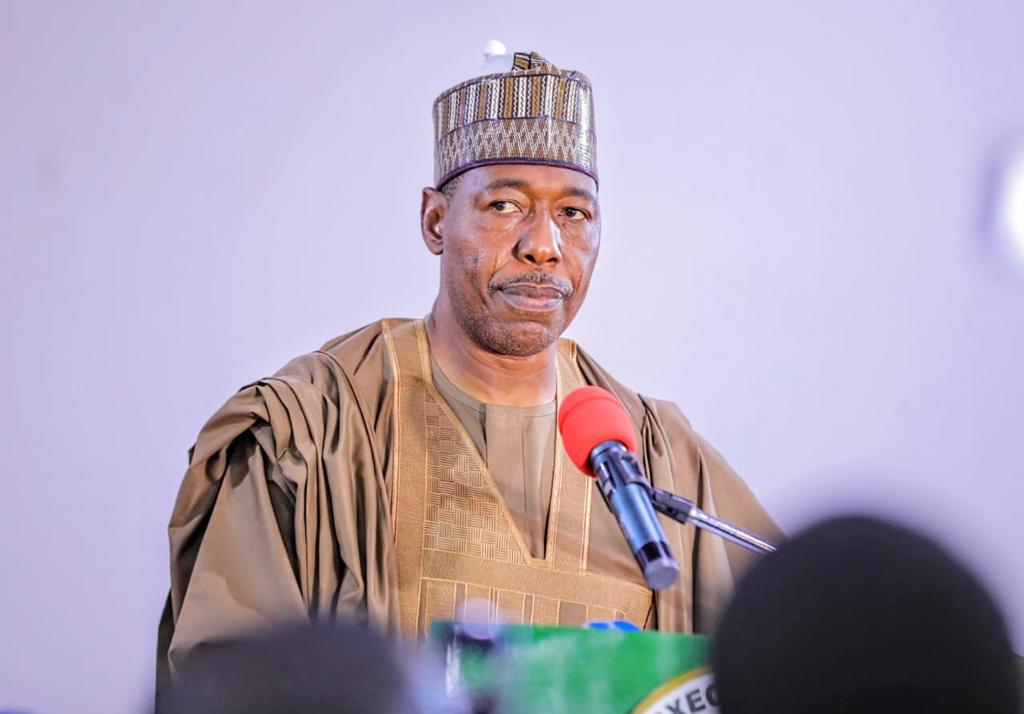
Governor Babagana Zulum of Borno State has initiated the distribution of Federal Government palliatives to assist residents severely affected by recent flooding in the region. His efforts began with visits to some of the most impacted areas, including Gamboru Ngala, to evaluate the extensive damage wrought by the floods. According to Borno Community Watch, the governor’s trip was aimed at delivering essential relief materials for the communities that endured significant hardships due to the disaster. The floods had isolated Gamboru Ngala and other affected areas for four months, leading to substantial destruction of homes, infrastructure, and agricultural land vital to the community’s sustenance.
During his visits, Governor Zulum expressed profound sympathy for the residents, recognizing the dire challenges they have faced due to the floods. The situation was further exacerbated by the destruction to farmlands, caused not only by flooding but also by elephants rampaging through crops. This compounded the difficulties for many families who were already struggling to maintain their livelihoods. Acknowledging these compounding issues, the governor underscored the urgent need for immediate aid while also advocating for sustainable long-term solutions that would empower residents to enhance their agricultural productivity.
On the second day of his visit, the governor oversaw the distribution of 100 packs of assorted grains—including maize, millet, and sorghum—provided by the Federal Government. This distribution aimed to address the immediate food scarcity in Gamboru Ngala, which had resulted from the floods. Zulum expressed his gratitude to President Bola Tinubu’s administration for their timely intervention and acknowledged the efforts of various organizations, including the Federal Ministry of Agriculture and the National Emergency Management Agency, which have played crucial roles in disaster response.
While emphasizing the importance of immediate humanitarian assistance, Governor Zulum highlighted that such relief efforts are only temporary measures and do not present a long-term solution. Instead, he conveyed the necessity of empowering local communities to regain their independence and rebuild their livelihoods. To this end, the governor noted that his administration is prioritizing initiatives like irrigation farming, which will facilitate consistent agricultural practices throughout the year, ultimately providing a sustainable path for food security in the region.
To effectively address the long-term needs of the flood-impacted communities, the Borno State government has commenced the implementation of irrigation projects in areas such as Ngala. These projects are designed to help restore food security and strengthen economic resilience, enabling residents to recover from the disaster’s impacts and reduce future vulnerabilities. Zulum reassured the residents of Gamboru Ngala of his administration’s commitment to their recovery and expressed confidence that collaborative efforts between state and federal governments, along with support from key agencies, would empower the community to overcome the challenges they face.
Governor Zulum’s proactive approach in addressing both the immediate and long-term needs of his constituents illustrates a dedication to improving the welfare of Borno State residents. By focusing on sustainable agricultural practices and infrastructure development, Zulum aims to not only aid recovery from the flooding but also to foster resilient communities capable of thriving despite future adversities. His administration’s commitment to working hand-in-hand with both the federal government and local agencies promises a collaborative path to recovery, strengthening the hope that the residents of Gamboru Ngala will rebuild and emerge from this crisis even more robust than before.








