The Ghanaian Parliament has taken a decisive step towards modernizing its boundary management framework by passing the Ghana Boundary Commission Bill, 2024. This new legislation repeals the existing Act 795 of 2010, which had become inadequate in addressing the country’s evolving boundary and security challenges over the past 14 years. The passage of the bill, expedited under a Certificate of Urgency, followed rigorous deliberations by the Committee on Lands and Natural Resources and a bipartisan winnowing committee, demonstrating a concerted effort to strengthen Ghana’s territorial integrity. The bill now awaits presidential assent to become law.
The 2010 Act established the Ghana Boundary Commission with the mandate to negotiate, determine, and demarcate Ghana’s land and maritime boundaries. However, several critical shortcomings hampered its effectiveness. These included inadequate funding, the absence of crucial leadership positions like a Commissioner-General, and a limited scope of authority for the governing body. These deficiencies hindered the Commission’s ability to effectively address emerging boundary disputes and safeguard national interests. The new bill directly addresses these challenges, aiming to equip the Commission with the necessary tools and resources to perform its functions optimally.
The 2024 Bill introduces substantial improvements to the existing framework. It expands the Commission’s mandate to include the delimitation of maritime and airspace boundaries, a crucial addition in an era of increasing complexity in international relations and resource management. The bill also establishes clearer mechanisms for resource mobilization, including the utilization of internally generated funds (IGF), providing the Commission with greater financial autonomy and sustainability. This will reduce its reliance on external funding and enable it to proactively address boundary issues. Furthermore, the legislation emphasizes enhanced inter-agency collaboration, specifically with the Lands Commission, to ensure a coordinated and efficient approach to boundary management.
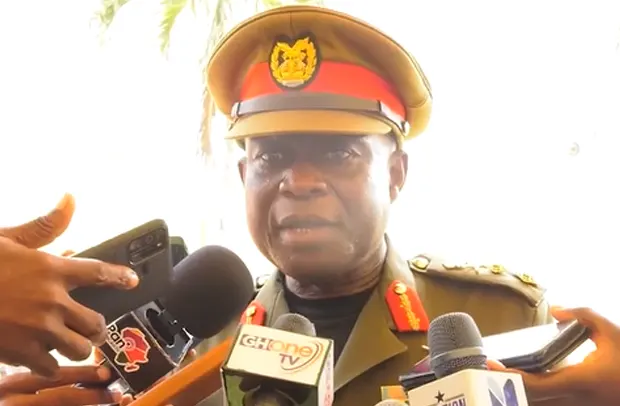
The passage of the bill is seen as a landmark achievement in Ghana’s efforts to secure its territorial sovereignty and foster regional collaboration. Major General Dr. Emmanuel Wekem Kotia, Commissioner-General of the Ghana Boundary Commission, lauded the new legislation as a significant step towards modernizing the country’s boundary management system. He emphasized the importance of the bill in empowering the Commission to effectively address Ghana’s boundary challenges and secure the nation’s interests in a complex geopolitical landscape. The updated legal framework is expected to contribute significantly to regional stability by providing a clear and robust mechanism for resolving boundary disputes.
The comprehensive nature of the 2024 Bill reflects a proactive approach to boundary management. It acknowledges the dynamic nature of boundary issues and provides the Commission with the flexibility and authority to respond effectively to emerging challenges. The inclusion of provisions for maritime and airspace boundary delimitation demonstrates a forward-looking perspective, recognizing the growing importance of these domains in national security and economic development. The emphasis on resource mobilization and inter-agency collaboration further strengthens the Commission’s ability to fulfill its mandate effectively.
By repealing the outdated 2010 Act and establishing a more comprehensive legal framework, Ghana has taken a significant stride towards enhancing its boundary management capabilities. The 2024 Bill not only addresses the shortcomings of the previous legislation but also aligns Ghana’s boundary management system with international best practices. This proactive approach will contribute to greater stability and security for the nation, while fostering stronger regional cooperation and promoting peaceful resolution of boundary disputes. The bill’s passage signals Ghana’s commitment to safeguarding its territorial integrity and its proactive engagement in international boundary management.