





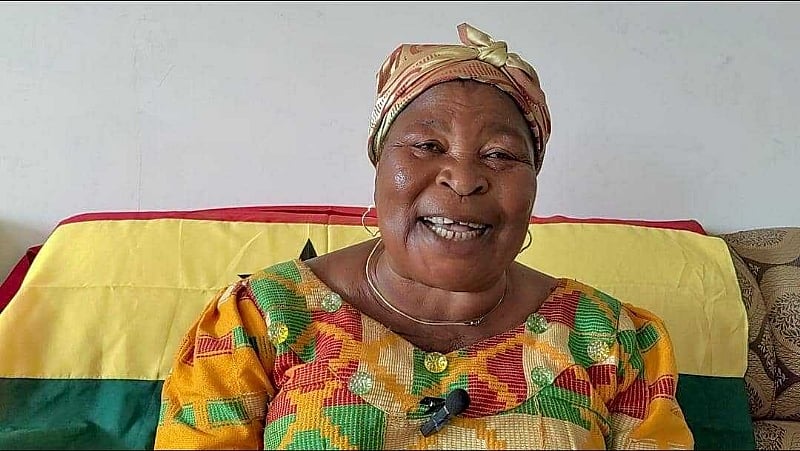
Akua Donkor, the founder and flagbearer of the Ghana Freedom Party, has passed away at the age of 72. Her death occurred on Monday night at 10 PM while she was receiving treatment at the Greater Accra Regional Hospital, also known as Ridge Hospital. At this time, the exact cause of her death has not been disclosed. Born in February 1952, Donkor hailed from the Afigya Kwabre District in the Ashanti Region of Ghana, where she worked as a cocoa farmer. Despite lacking formal education, she made significant strides in Ghanaian politics, demonstrating her ambition and determination.
Donkor’s political journey began with her election as an assemblywoman for the Herman constituency, marking an important step towards her aspiration of becoming the President of Ghana. Her entry into the political arena gained momentum in 2012 when she emerged as an independent candidate, drawing attention for her unique approach and determination in a male-dominated field. Her unexpected candidacy allowed her to capture public interest and contribute to the evolving landscape of Ghanaian politics.
Over the years, Akua Donkor became known for her vibrant personality and unconventional political style. She often emphasized the importance of grassroots involvement in governance and advocated for the rights of farmers and ordinary citizens. Her commitment to improving the lives of the people in her community, particularly those engaged in agriculture, resonated with many, allowing her to establish a faithful following. Donkor’s platform and policies were primarily focused on promoting local agriculture, empowering women, and advocating for economic equality.
Despite facing various challenges throughout her political career, Donkor remained undeterred in her pursuit of political relevance and influence. She believed in the power of dialogue and participation in democracy, relentlessly pushing for her vision of a just society where the voices of the marginalized could be heard. Her candidacy as the president of the Ghana Freedom Party illustrated her belief in the necessity of multiple political perspectives in Ghana’s democratic processes.
Her political endeavors not only showcased her resilience but also inspired a new generation of women in Ghana’s politics. Akua Donkor’s contributions to political discourse, coupled with her insistence on the importance of inclusivity, defined her legacy and potential influence on future female leaders. With her passing, Ghanaian politics has lost a distinctive voice that represented unique grassroots perspectives and aimed at bridging the gap between leaders and ordinary citizens.
In conclusion, while Akua Donkor’s life was marked by her struggles and triumphs as a cocoa farmer and a politician, her impact on Ghanaian society continues to resonate. Her relentless quest for justice and representation amplified the discourse around women’s roles in politics, leaving lessons for future generations. As she is mourned by many, it is essential to recognize her contributions to democracy in Ghana and the inspiration she provided for those who dare to dream of political change, regardless of their educational background or societal status.








