





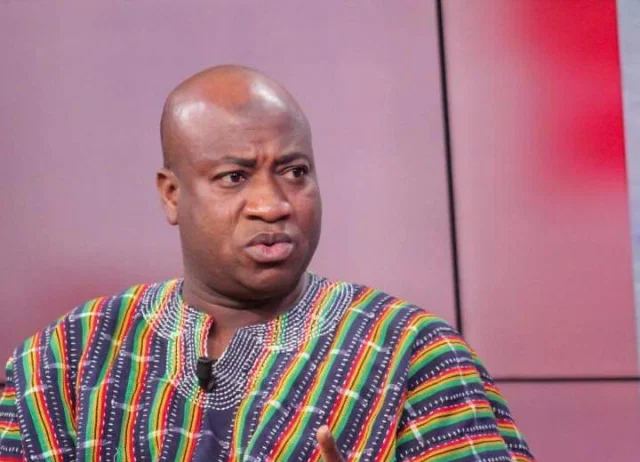
Ibrahim Murtala Muhammed, the Member of Parliament (MP) for Tamale Central, has vehemently criticized the Nana Addo Dankwa Akufo-Addo administration, alleging rampant corruption within the Flagstaff House, Ghana’s seat of government. He expressed his belief that the edifice has become a hub of corrupt practices and requires spiritual cleansing through prayers and sanctification upon the New Patriotic Party’s (NPP) exit from power. Muhammed proposed employing prayer warriors to conduct these purification rituals, seeking divine forgiveness for the alleged corruption that has transpired within its walls. His comments reflect a deep-seated concern over the perceived moral decay within the highest levels of government.
Muhammed’s pronouncements coincide with the backdrop of the National Democratic Congress’s (NDC) projected victory in the 2024 General Election. He interprets this electoral outcome as a resounding rejection of the Akufo-Addo government by the Ghanaian populace, a clear indication of their disapproval of the administration’s performance. This perceived mandate, according to Muhammed, underscores the fact that the citizens of Ghana can no longer be disregarded or taken for granted by those in power. The election results, in his view, represent a powerful statement from the electorate, demanding accountability and a change in governance.
The Tamale Central MP further asserts that the NDC’s victory signals a turning point in Ghanaian politics, emphasizing the importance of listening to the voice of the people. He portrays the election results as a powerful message from the citizenry, expressing their discontent with the current administration and their desire for a new direction. This message, as interpreted by Muhammed, signifies a shift in the political landscape, where the electorate is asserting their power to hold their leaders accountable and demanding a government that genuinely serves their interests.
Looking ahead to the future, Muhammed expressed confidence in John Dramani Mahama’s commitment to tackling corruption upon his anticipated inauguration as President in January 2025. He believes that Mahama’s leadership will usher in an era of renewed focus on combating corruption and promoting good governance. This commitment, according to Muhammed, will be instrumental in transforming the nation and ensuring that the benefits of development reach every citizen. He envisions a Ghana where integrity and accountability are restored to public office, fostering trust and confidence in the government.
Muhammed’s statements offer a glimpse into the political climate of Ghana, highlighting concerns about corruption, the desire for change, and the hope for a more accountable government. His call for purification of the Flagstaff House symbolizes a deeper yearning for a cleansing of the political system, a restoration of ethical values, and a commitment to serving the interests of the Ghanaian people. The upcoming transition of power, in his perspective, presents an opportunity to address these critical issues and pave the way for a more just and prosperous future.
This transition, as envisioned by Muhammed, represents a chance for a fresh start, a departure from the perceived corruption of the past, and a renewed focus on the needs of the people. It signifies a moment of hope and anticipation for a more transparent and accountable government, one that prioritizes the welfare of all citizens. Muhammed’s words encapsulate the aspirations of many Ghanaians for a brighter future, free from the shadows of corruption and guided by principles of integrity and service. He paints a picture of a revitalized nation, where the government works hand-in-hand with the people to build a more prosperous and equitable society.








