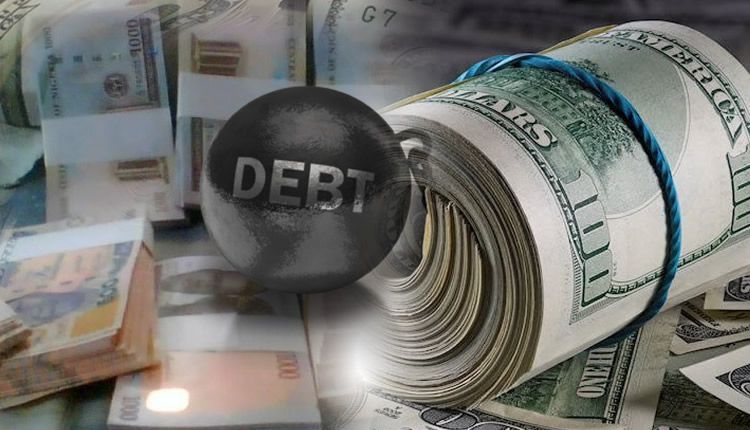
The Federal Government of Nigeria’s expenditure report for the first eight months of 2024 reveals alarming figures highlighting the substantial burden of debt servicing on the nation’s finances. Between January and August 2024, Nigeria spent N7.41 trillion on debt servicing, surpassing the pro-rata budget of N5.51 trillion by 34.4%. This expenditure accounted for a staggering 89.6% of the total N8.27 trillion project for debt servicing in this fiscal year, with expectations that spending will likely exceed the previous year’s level of N8.56 trillion. Such results indicate a growing trend of overspending, particularly in domestic debt servicing, which alone reached N5.03 trillion compared to its budgeted N3.92 trillion. In contrast, capital expenditures remain critically low, with only N3.65 trillion spent out of a planned N13.77 trillion as of August, reflecting deep inefficiencies and challenges in funding crucial developmental projects.
The Medium-Term Expenditure Framework (MTEF) reports a troubling escalation in Nigeria’s debt profile. For instance, the ongoing trend shows domestic debt servicing slightly aligned with expectations but the foreign debt servicing has far surpassed the budgeted amount, owing largely to a depreciating naira that inflates dollar-denominated debts. This situation has led to increasing concerns among economists regarding the impact of burgeoning external debt obligations that are draining the nation’s foreign reserves and hindering financial capacity to fund essential development initiatives. Figures even reveal that the government allocated N6.55 trillion for debt servicing in 2023, but actual spending increased significantly, echoing fears of unsustainable financial management practices.
The expenditure report shines a light on the severe shortfalls in capital expenditures, pivotal for fostering economic growth and development. With a mere N3.65 trillion utilized against a pro-rata target of N9.18 trillion, the government is falling short by 60.3%. Strikingly, only N95.31 billion was spent by government-owned enterprises, indicating a dismal 82.6% deficit compared to the budgeted amount, raising grim assertions about the government’s capacity to implement infrastructure-driven projects effectively. Furthermore, allocations towards multilateral and bilateral loans destined for infrastructural projects saw zero utilization, reflecting a troubling trend regarding Nigeria’s planning and execution capabilities in tackling pressing infrastructural needs.
At a recent economic summit, Minister of Budget and Economic Planning, Abubakar Bagudu, reiterated the government’s commitment to addressing economic stability through three distinct budgets, which encompass a supplementary budget and amendments facilitating the Renewed Hope Infrastructure Fund. This plan highlights national priorities including agriculture, infrastructure, human capital development, and social investments. Nevertheless, existing data reveals that overall government spending on capital projects has decreased this fiscal year, exacerbating concerns over economic stagnation fueled by persistent prioritization of debt servicing over developmental investments. As pointed out by experts, the current trajectory of budget allocations could significantly impair Nigeria’s growth prospects, restricting funding available for essential sectors.
The gravity of the situation is amplified by the government’s constrained revenue base, which cannot keep pace with the escalating costs of debt obligations. Future projections reveal that Nigeria’s debt servicing might escalate from N15.38 trillion in 2025 to N19.49 trillion in 2027—a noteworthy growth of 26.7% in just a span of three years. By contrast, capital expenditures are expected to show minimal growth, illustrating a worrying disparity where the government may spend 2.98% more on servicing debts than on essential infrastructure projects over this period. Such a scenario paints a gloomy picture of fiscal sustainability and poses severe risks to economic stability and developmental ambitions.
Experts assert that the prioritization of debt repayment over capital expenditures can lead to crippling long-term effects for Nigeria’s economy. By allocating an expected N50.39 trillion for debt servicing against N48.93 trillion for capital expenditures between 2025 and 2027, the government highlights a concerning tendency that could further compromise investment in infrastructural projects essential for development. Economists emphasize that high debt servicing costs divert resources from critical sectors, hindering overall progress. Prof. Adeola Adenikinju, President of the Nigerian Economic Society, voiced a stark perspective, underlining that servicing debts hardly generates tangible benefits for economic growth, as it fails to enhance infrastructure or stimulate economic improvement.
In conclusion, Nigeria’s current financial trajectory underlines the urgent need for a re-evaluation of budgetary priorities, focusing substantially on productive expenditures rather than the mounting obligations arising from excessive debt servicing. The nation stands at a critical juncture, poised to either innovate sustainable budgetary practices that prioritize capital development or risk financial oblivion in the face of systemic inefficiencies and debt mismanagement. With indicators pointing to deepening economic strains, stakeholders must advocate for strategic fiscal policies that enhance revenue generation and increase investments in vital sectors, ensuring that Nigeria can navigate its way towards sustainable economic growth, avoiding the pitfalls of historical mismanagement that have plagued its past.