





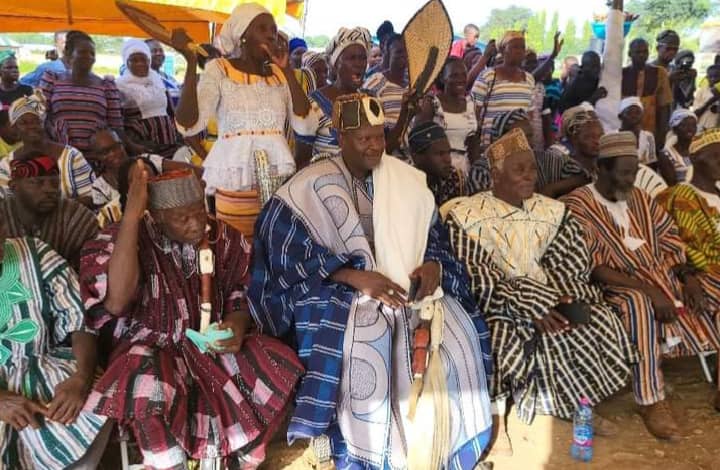
Naba Bilea Namaal-Tinga Caeser A. Afegera III, the Paramount Chief of the Zuarungu Traditional Area, has delivered a significant message to political aspirants, urging them to refrain from spreading campaign messages that encourage violence among their supporters. He stressed the importance of focusing on development for the living rather than engaging in activities that could tarnish their reputations. During his remarks at the annual N’daakoya festival in Zuarungu-Tua, he cautioned supporters of the National Democratic Congress (NDC) and the New Patriotic Party (NPP) against being swayed into committing acts of violence or self-harm on behalf of politicians. His emphasis was clear: political aspirations should uplift communities and promote peace rather than incite discord or unrest.
The N’daakoya festival serves not only as a cultural celebration but also as a platform for community leaders to advocate for peace and development. This year’s theme, “The role of indigenes and social partners for peace, security, and development of Zuarungu,” reflects the critical need for collaborative efforts in creating a safe and prosperous environment. Naba Afegera III highlighted that political party supporters should not allow manipulative messages to lead them into destructive behavior that ultimately harms their community and contradicts the very ideals of progress that their leaders claim to represent. His call to action resonated strongly with the festival’s attendees, emphasizing a collective responsibility to safeguard their community’s peace and integrity.
Further strengthening this message, Dr. Dominic Akuritinga Ayine, the Member of Parliament for Bolgatanga East, voiced his commitment to achieving a peaceful election. He encouraged his supporters to prioritize peace over contentious actions. This assertion aligns with the chief’s sentiments about the imperative need for a tranquil environment leading up to the elections. Politicians and their followers must strive for dialogues that prioritize development rather than division, fostering an atmosphere conducive to constructive engagement rather than conflict. Ayine’s remarks underscore the role of political leaders in setting a positive example and guiding their supporters towards peaceful electoral conduct.
In discussing the government’s role, Dr. Hafiz Bin Salih, the Upper East Regional Minister, reiterated the administration’s commitment to ensuring peace before, during, and after the elections. He urged party supporters to move away from combative rhetoric, promoting instead discussions that would lead to sensible and beneficial dialogue for the country’s advancement. The minister pointed out the relationships between development and security, stating that without a secure environment, developmental endeavors would be severely undermined. His acknowledgment of ongoing conflicts in the region, particularly those related to land and chieftaincy, reflects a broader concern about the stability required for effective governance and community development.
Moreover, Dr. Bin Salih highlighted the importance of chieftaincy institutions in maintaining peace and order. He appealed to traditional leaders to engage in the codification of succession plans to mitigate conflicts arising from traditional leadership disputes. By addressing these issues proactively, traditional authorities can contribute to fostering greater social cohesion and preventing unnecessary violence. This dialogue between politicians and traditional leaders illustrates the interconnectedness of culture, governance, and security in the context of Zuarungu and its surrounding areas.
In conclusion, the messages delivered during the N’daakoya festival underscore a unified vision for peace and development within the Zuarungu community. Auxiliary efforts by political leaders, traditional chiefs, and community members are vital in promoting an environment free from electoral violence and division. The focus on constructive discourse, coupled with a shared commitment to peace, can pave the way for sustainable progress. As the region approaches critical elections, the importance of collaboration between all stakeholders remains vital in ensuring that the legacies of leadership reflect dedication to the community and its future well-being.








