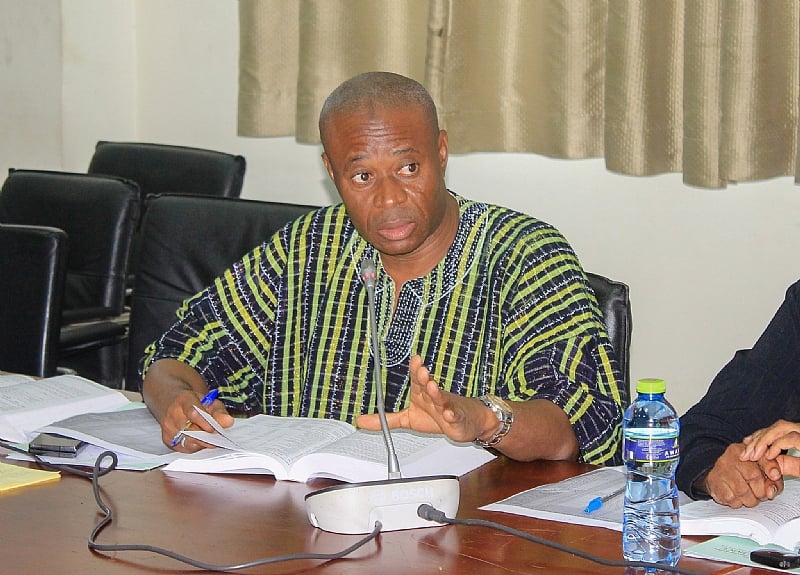
Yusif Sulemana, the Member of Parliament for Bole-Bamboi, has expressed serious reservations regarding the Supreme Court’s recent intervention in parliamentary matters, specifically its ruling on the status of four MPs whose seats were declared vacant by the Speaker, Rt. Hon. Alban Bagbin. On October 18, 2024, the Supreme Court stayed this decision, allowing the affected MPs to retain their positions. Sulemana cautioned that such judicial rulings on matters deeply entrenched in political dynamics could threaten the sanctity and independence of Parliament, highlighting the delicate balance of power between legislative and judicial branches. His comments underscore a growing apprehension that frequent judicial overreach could disturb the legislative process and undermine Parliament’s authority.
In the wake of the Supreme Court’s ruling, Speaker Bagbin found it necessary to adjourn Parliament indefinitely, as the session set to address legislative business could not proceed due to insufficient attendance. This adjournment reflects escalating tensions within the legislative body and raises urgent concerns about the implications of the Speaker’s decision on critical legislative agendas. Notably, the Parliament sought to deliberate on the revocation of L.I. 2462 during this session, yet the dynamics shifted unfavorably, particularly for the ruling New Patriotic Party (NPP). In a striking display of dissent, NPP caucus members staged a walk-out, exacerbating the tumultuous atmosphere within Parliament.
The walk-out by NPP members highlights the strategic maneuvering occurring within Parliament, where the Speaker’s declaration of vacant seats inadvertently contributed to the National Democratic Congress (NDC) gaining a numerical advantage. As a result, tensions flared over which party held the majority in the House—the NDC or the NPP—a question that became contentious and contentious. This situation nods to the broader implications of such politically sensitive decisions and the role of parliamentary strategy in navigating the complexities of governance within a parliamentary democracy.
Sulemana articulated his concerns about the judiciary’s involvement in parliamentary matters during an interview on The Big Issue, asserting that this could potentially open Pandora’s box for outside interventions in the legislative process. He vehemently emphasized that such judicial actions undermine the autonomy of Parliament and cautioned against the potential for future encroachments on parliamentary rights and responsibilities. According to him, safeguarding parliamentary independence is crucial in maintaining a functional democracy, as it prevents unwarranted influences that may distort legislative intent or policy formulation.
Moreover, Sulemana criticized the NPP for what he perceives as a show of entitlement in the wake of these developments, suggesting that their reluctance to adapt to changing dynamics within Parliament reflects a broader issue of political adaptability and responsiveness. The Bole-Bamboi MP’s remarks hint at an evolving political landscape where parties may need to recalibrate their strategies and attitudes to function effectively within the Assembly. This might include recognizing changing power dynamics, fostering collaboration across party lines, and ultimately focusing on the needs and interests of their constituents.
In conclusion, the unfolding events within Parliament highlight critical issues surrounding the separation of powers, the potential for judicial overreach, and the importance of maintaining legislative independence. Sulemana’s warnings serve as a call for prudence and restraint among judicial authorities while encouraging political parties to adapt and engage constructively within the parliamentary framework. As the situation continues to develop, it remains to be seen how Parliament will navigate these challenges and whether the increasing tensions can be resolved to ensure a stable and effective legislative process in the face of such politically sensitive matters.