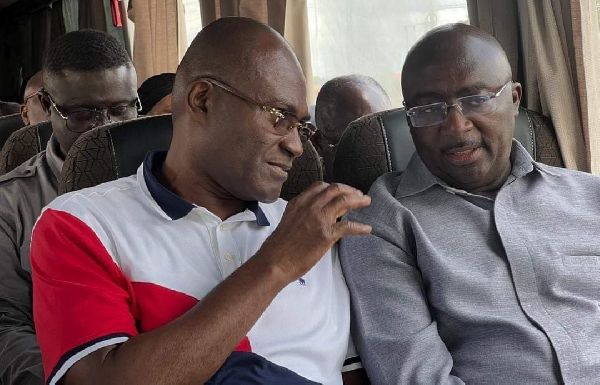
The race for the New Patriotic Party’s (NPP) flagbearer position is heating up, with two prominent figures, Kennedy Agyapong and Vice-President Dr. Mahamudu Bawumia, emerging as frontrunners. A key battleground in this contest has become the garnering of support from within the party’s parliamentary ranks, with both camps claiming a significant majority of endorsements from NPP Members of Parliament (MPs). The public pronouncements and counter-claims have injected a palpable sense of competition into the early stages of the race, highlighting the importance of perceived momentum and internal party support. This internal jostling for parliamentary backing underscores the crucial role MPs play in influencing party delegates and shaping public perception of the candidates.
The Agyapong camp, through Dr. Palgrage Boakye-Danquah, a member of the campaign team, asserted that 50 MPs have openly declared their support for the former Assin Central MP. This claim is accompanied by a broader assertion that Agyapong enjoys substantial grassroots support, estimated at 37%, and needs only a 13% increase to secure the nomination. This projection, if accurate, paints a picture of a candidate with a strong foundation of support, poised to make a significant push for the nomination. The Agyapong campaign also emphasizes the candidate’s ability to unify both MPs and grassroots members, contrasting this with the purported fragmentation within the Vice-President’s camp due to the emergence of other contenders like Bryan Acheampong and Dr. Yaw Osei Adutwum. This narrative seeks to portray Agyapong as a unifying force within the party, capable of bridging the gap between the parliamentary and grassroots levels.
In a swift rebuttal, Krobea Kwabena Asante, an aide to Dr. Bawumia, challenged the claims made by the Agyapong camp. Asante asserted that Dr. Bawumia, currently the Vice-President, enjoys the support of a more substantial number of MPs, placing the figure at 67 out of approximately 88 NPP MPs in Parliament. This figure represents a significantly larger proportion of parliamentary support than the 50 claimed by the Agyapong camp. Asante’s statement further categorized the remaining MPs, indicating that eight remain undecided while the rest are either supporting other candidates or themselves. This strategic breakdown aims to minimize the perceived strength of other contenders and reinforce the narrative of Bawumia’s dominance within the parliamentary caucus. The conflicting claims highlight the ongoing battle for narrative control and the importance of projecting an image of strength and momentum in the early stages of the campaign.
The contrasting claims from both camps create an atmosphere of uncertainty regarding the true level of parliamentary support enjoyed by each candidate. It is important to note that these are claims made by campaign representatives, not independently verified figures. The discrepancies could be attributed to different methodologies of assessing support, including public declarations versus private commitments. This underscores the need for caution in interpreting these numbers and the importance of waiting for more concrete indicators of support as the race progresses. The public nature of these competing claims, however, serves to highlight the competitive nature of the race and the strategic importance of parliamentary endorsements.
The backdrop to this unfolding contest is the recently announced date for the NPP presidential primaries, set for January 31, 2026. This date, decided at the National Executive Council meeting on June 17, 2024, effectively sets the stage for the upcoming campaign season and formalizes the timeline for the party’s internal selection process. The date also signifies the official start of the race, allowing candidates to openly campaign and solicit support. The early jockeying for parliamentary endorsements demonstrates the importance of building momentum and establishing a strong base of support within the party structure well in advance of the primaries.
Beyond the two frontrunners, the field of potential contenders is taking shape. Several other prominent figures within the NPP are expected to join the race, including former Education Minister Dr. Yaw Osei Adutwum, Abetifi MP Bryan Acheampong, and former NPP General Secretary Kwabena Agyei Agyapong. The presence of these additional candidates adds complexity to the race and could potentially influence the dynamics of the contest between Agyapong and Bawumia. Their entry could also lead to further fragmentation of support, making it even more crucial for the leading candidates to consolidate their bases and build broad coalitions within the party. The coming months will likely see an intensification of campaigning efforts as candidates seek to differentiate themselves and secure the support of party delegates.