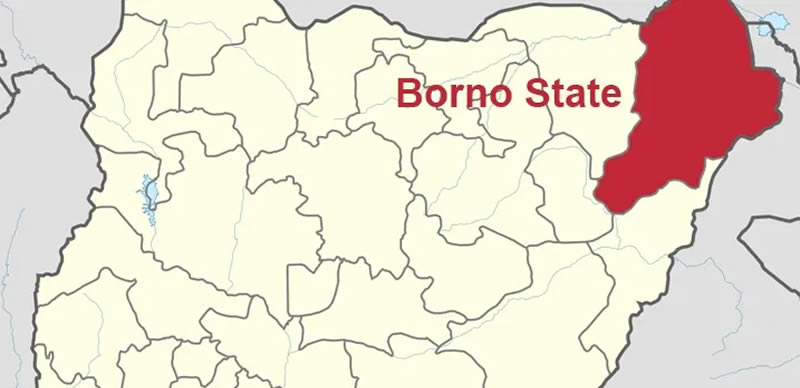
The Nigeria Customs Service’s Operation Whirlwind Zone A has highlighted the severe challenges posed by insecurity in Borno State, notably affecting their ability to combat smuggling activities, specifically involving Premium Motor Spirit (PMS), commonly referred to as petrol. During a press conference in Ikeja, the National Coordinator of Operation Whirlwind Zone A, Hussein Ejibunu, who also serves as a Customs Area Controller, detailed these issues while presenting seized petrol kegs to journalists. Ejibunu’s insights shed light on the extent of operations affected by the prevailing safety conditions, emphasizing that the region’s instability hampers customs enforcement.
In addition to the insecurity in Borno, the Nigeria Customs Service faces significant challenges regarding manpower. Ejibunu articulated that the operations are conducted with limited personnel, making effective intervention more complex. He acknowledged that while all operations face obstacles, the primary challenge remains insufficient manpower, reiterating a reliance on existing resources to fulfill their mandate. “It’s a lean operation, but there are still a couple of places we have not been able to reach,” he stated, indicating that certain areas remain untouchable due to security threats.
The operational strategies of Operation Whirlwind are largely intelligence-based rather than established checkpoints or traditional customs practices. Ejibunu explained that intelligence gathering is paramount, allowing the team to engage effectively with smuggling networks without revealing their operational intentions. “We don’t have checkpoints. All we know is that we gather intelligence, we work through intelligence gathering, we act on it, and we bring the success story,” he said. This tactical approach sees operatives quickly retreating after conducting successful interventions, maintaining operational secrecy to enhance future efficacy.
Recently, the team successfully intercepted a total of 849 kegs of petrol, each containing 25 liters, along with two vehicles used for transportation. This sum culminated in a total of 30,225 liters of petrol, which the authorities valued at approximately N30.2 million in duty payments. These seizures took place in various locations within Zone A, covering both Lagos and Ogun States. This accomplishment illustrates the ongoing efforts of the Nigeria Customs Service to curtail illegal operations in the face of adversities that pose risks to personnel and overall public safety.
The methods employed by smugglers, according to Ejibunu, have evolved as they seek to evade detection and arrest. Smugglers often leverage bush paths to transport contraband, abandoning goods temporarily while seeking transport options. Ejibunu pointed out that effective combating strategies rely heavily on intelligence, enabling the customs service to pinpoint areas of interest and carry out search and evacuation operations accordingly. Arrests made during such interventions underscore the continuous cat-and-mouse game between customs operatives and smugglers.
One notable incident involved the arrest of a fuel station that had been caught dispensing petrol into jerry cans, marking a significant enforcement action in the ongoing clampdown on illegal fuel distribution. Following this incident, the fuel station was referred to the Nigerian Midstream and Downstream Petroleum Regulatory Authority for appropriate sanctions to be imposed. Ejibunu’s remarks on the subject reinforce the customs service’s commitment to upholding regulations and prosecuting those who engage in illegal fuel dispensing, showcasing their broader goal of preserving economic integrity within the fuel distribution sector in Nigeria.