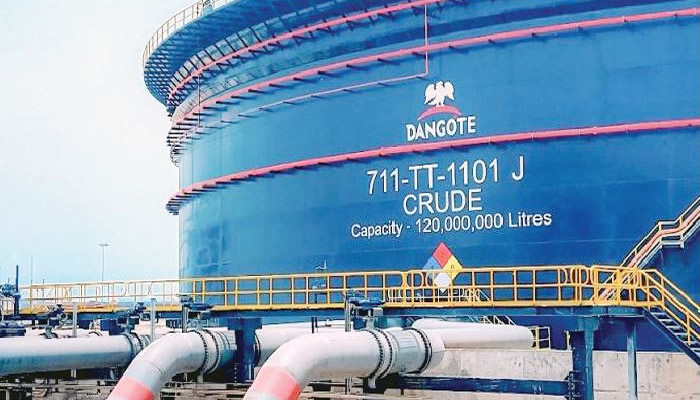
The Dangote Petroleum Refinery has announced a reduction in the price of Premium Motor Spirit (PMS) from N990 to N970 per litre, the price at which marketers will purchase the fuel. This adjustment, disclosed by Anthony Chiejina, Group Chief Branding and Communications Officer of the Dangote Group, aims to express gratitude to Nigerians for their support and to acknowledge government efforts towards enhancing domestic enterprise as the year concludes. Chiejina emphasized the refinery’s commitment to maintaining high-quality, environmentally friendly petroleum products while increasing production capacity to meet national fuel demands, thereby addressing any concerns about supply shortages.
The price adjustment comes amid competitive market dynamics following the deregulation of Nigeria’s downstream oil sector, where independent and major marketers have begun to notice a decrease in petrol prices across various regions. According to Chinedu Ukadike, spokesman for the Independent Petroleum Marketers Association of Nigeria (IPMAN), the collaboration between IPMAN and Dangote is fostering competition, leading to price reductions of about N10 to N15 per litre. Ukadike indicated that direct procurement from the refinery, rather than intermediaries, is enabling independent marketers to lower their prices further, suggesting that ongoing trends could result in even lower rates before year-end.
Marketers have expressed support for the Dangote refinery’s prices reduction, interpreting it as a positive outcome of the deregulated market system and a reaction to decreasing global fuel prices. IPMAN has observed that as Dangote and other producers lower their prices, individual marketers will also adjust their prices accordingly to remain competitive. This shift in the retail pricing landscape is attributed to heightened market competition, enabling marketers to improve profit margins while offering consumers more favorable prices. The development is seen as beneficial for the overall market structure since, historically, fuel prices have remained high due to monopolistic tendencies from major players in the market.
Discussions surrounding the Dangote refinery’s capacity have intensified, especially lately, as it is purportedly finalizing an agreement with the Nigerian government and the Nigerian National Petroleum Company Limited (NNPCL) to supply 28 million litres of PMS daily to local markets. The Petroleum Products Retail Outlets Owners Association of Nigeria revealed that discussions among stakeholders on November 13 established a framework for local marketers to procure significant quantities of fuel from the refinery, reinforcing the notion that the refinery would prioritize domestic needs over exports.
This agreement has generated optimism among sector players, as emphasized by PETROAN’s representation. According to them, fulfilling this supply commitment should stabilize local petroleum product availability, mitigate price fluctuations, and enhance collaboration between key industry stakeholders. The agreement would also dictate supply logistics, including establishing fixed delivery windows for marketers. This initiative underscores the collaborative strides aimed at integrating domestic refineries into the national fuel distribution framework to enhance overall efficiency and market stability.
However, the NNPCL has disputed claims regarding the agreement for the Dangote refinery’s daily fuel supply, labeling them as unverified. NNPCL spokesman Olufemi Soneye directly refuted claims echoing such arrangements, while Chiejina from Dangote expressed uncertainty about the supposed resolutions announced by PETROAN. The disconnect between these entities highlights possible underlying tensions and challenges in aligning interest among stakeholders in Nigeria’s oil sector. Nonetheless, the ongoing interactions among these key players are critical for navigating the complexities of the downstream oil market, particularly as the nation seeks to balance local procurement, pricing strategies, and production capacity to meet national energy demands.