





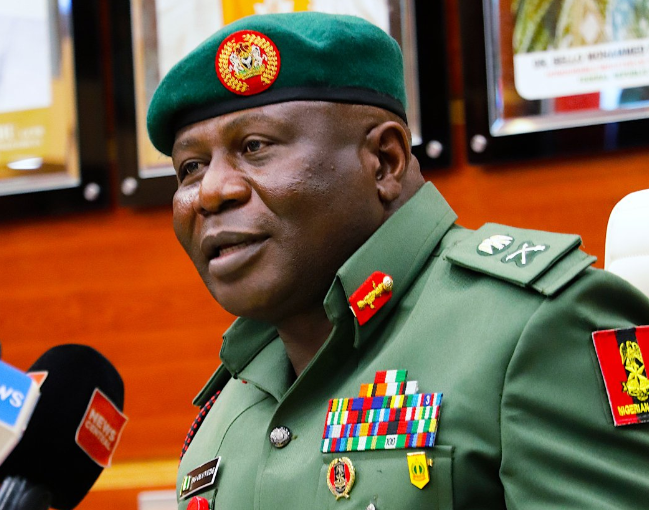
In 2024, the Nigerian military achieved significant successes in its fight against terrorism and criminal activities across the country. A comprehensive report presented by the Director, Defence Media Operations, Major General Buba, revealed that over 8,000 terrorists were neutralized and nearly 12,000 apprehended during various operations conducted throughout the year. Furthermore, the military rescued over 6,000 hostages, demonstrating a strong commitment to protecting civilian lives. These operations also targeted economic crimes, leading to the recovery of a substantial quantity of stolen crude oil valued at over ₦57 billion, along with significant amounts of illegally refined petroleum products. This multi-pronged approach, focusing on both counter-terrorism and economic security, underscores the military’s comprehensive strategy to stabilize the nation.
The successful operations also yielded a vast cache of weaponry and ammunition, disrupting the operational capabilities of terrorist and criminal groups. The recovered items included thousands of AK-47 rifles, locally fabricated guns, Dane guns, and pump-action guns. The sheer volume of recovered ammunition, including various calibers of bullets and cartridges, highlights the scale of the threat neutralized by the military’s efforts. This disruption of weapon supply chains is crucial in limiting the firepower available to these groups and reducing their ability to carry out attacks. The meticulous documentation of these recoveries provides valuable intelligence for understanding the sources and flow of weapons within the country, aiding future preventative measures.
Major General Buba emphasized the military’s unwavering commitment to maintaining pressure on criminal elements across the country. Ongoing operations are designed to disrupt terrorist activities and create an environment where citizens can live without fear. The continuous evaluation of operational effectiveness and the adaptation of strategies remain central to the military’s approach. This dynamic strategy not only addresses immediate threats but also aims to anticipate and mitigate future risks, contributing to long-term stability. The military’s focus on continually improving its tactics reflects its dedication to enhancing security and protecting the populace.
Parallel to the operational updates, the Chief of Army Staff, Lieutenant General Olufemi Oluyede, underscored the importance of leadership development within the army. During the inauguration of the Nigerian Army Resource Centre Leadership and Strategic Studies Course, he urged operational commanders to cultivate strategic leadership skills essential for navigating complex security challenges. This emphasis on leadership development signifies the army’s recognition that effective leadership is crucial for translating operational successes into long-term security gains. By equipping its commanders with the necessary skills and knowledge, the army aims to enhance its ability to strategize, adapt, and respond effectively to evolving threats.
The comprehensive curriculum of the leadership course covers a wide range of topics relevant to national security, including leadership and management, policy and strategy, research methodology, psychology, defense economics, military history, war studies, entrepreneurship, peace support operations, and logistics planning. This broad spectrum of subjects highlights the multi-faceted nature of modern security challenges and the need for a holistic approach. By integrating these diverse areas of expertise, the course aims to develop well-rounded leaders who can effectively analyze complex situations and formulate appropriate responses.
The Director General of NARC, retired Major General Garba Wahab, emphasized the importance of bridging the gap between combatant and non-combatant officers in leadership training. He stressed that security challenges affect all officers, regardless of their specific roles, and therefore require a unified and comprehensive training approach. This inclusive strategy ensures that all officers are equipped to contribute to national security, recognizing that effective security requires collaboration and shared understanding across all branches of the military. By fostering a cohesive and well-trained officer corps, the Nigerian Army aims to strengthen its ability to address the complex and multifaceted security landscape.








