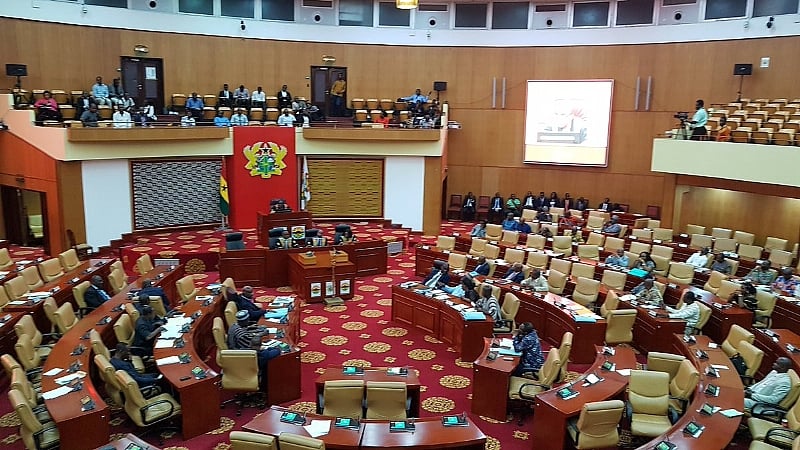
Prof. Smart Sarpong has voiced his discontent regarding the behavior of Members of Parliament (MPs) from the National Democratic Congress (NDC) during the parliamentary session on October 22. The session was marked by significant turmoil following Speaker Alban Bagbin’s announcement of four vacant parliamentary seats, which subsequently altered the balance of power, allowing the NDC Caucus to claim a majority in the House. This shift in parliamentary dynamics provoked a rapid response from NDC MPs, who hastily occupied the Majority side, which Prof. Sarpong criticized as an impulsive action lacking respect for constitutional processes.
Prof. Sarpong’s criticisms were particularly pointed regarding a Supreme Court ruling that had suspended the Speaker’s decision to declare the seats vacant. He underscored the importance of adhering to judicial authority, emphasizing that the actions exhibited by the NDC MPs represented a worrying trend of disregarding legal protocols. In his appearance on Peace FM’s Kokrokoo morning show, he expressed concern that such conduct undermines the integrity of the Judiciary, which holds the constitutional power to adjudicate disputes within the parliamentary sphere. According to him, the disrespect shown towards the Supreme Court indicates a broader unwillingness within Parliament to recognize the judiciary’s crucial role in maintaining democratic order.
The professor lamented the apparent readiness of the NDC MPs to prioritize political power over the principles of governance and rule of law. He urged MPs to reflect on their duties to their constituents and the broader implications of their actions. Having been duly elected to represent the interests of the people, MPs should carry out their responsibilities with the utmost seriousness, rather than engaging in activities that may detract from the public’s trust in democratic institutions. Prof. Sarpong emphasized the necessity for legislative leaders to be mindful of their actions and the messages they send to the electorate who depend on them for representation and advocacy.
Drawing attention to the overarching theme of accountability, he implored the NDC MPs to consider the repercussions of their actions on their constituents, urging them to realize that their positions are a privilege designed to serve the public good. In times of political strife and uncertainty, maintaining respect for judicial decisions becomes paramount. He argued that the legislature’s actions should not operate in a vacuum but should exist in harmony with the established legal frameworks that govern the country.
Prof. Sarpong’s remarks resonate deeply within the context of Ghana’s political landscape, where respect for institutions is critical to safeguarding democracy. The actions of the NDC MPs, as observed, not only threaten the balance of power within Parliament but also risk eroding the public’s confidence in their elected officials and the broader judicial system. By dismissing the Supreme Court’s authority, the NDC risks setting a dangerous precedent that might encourage further disregard for legal boundaries in the future.
In conclusion, Prof. Sarpong’s admonition serves as a critical reminder to all MPs about the significance of their roles as public servants. He advocates for a return to decorum and respect for the judicial process, elevating the discourse in Parliament beyond mere partisan interest. For the future of Ghana’s democracy, it is vital that all elected officials uphold the tenets of the legal system and recognize their responsibilities to the people they serve, fostering an environment of collaboration and mutual respect among the various branches of government.