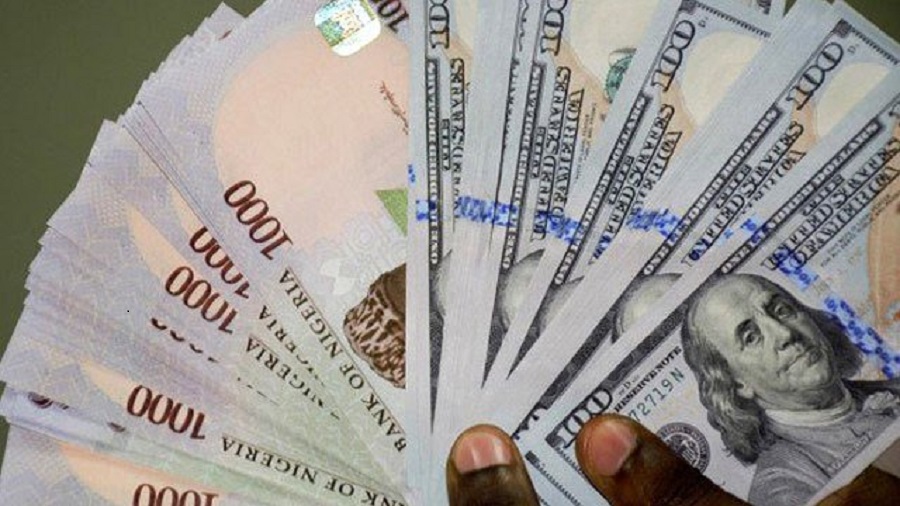
The Nigerian economy is currently under immense pressure as the naira continues to struggle against the dollar amid forecasts of further depreciation. The recent Medium Term Expenditure Framework (MTEF) proposed by the Federal Government, which sets the naira at N1,400 to a dollar, has been met with skepticism by economists and financial analysts. They view this number as overly optimistic, especially considering that the projected budget for 2025 stands at N47.9 trillion, aligning with Nigeria’s ambition of achieving a $1 trillion economy by the decade’s end. However, analysts equate these proposals to unrealistic financial goals given the country’s economic trajectory, particularly following significant changes in fiscal policy such as the removal of fuel subsidies and adjustments in the foreign exchange market.
The naira, which had been maintained at a high artificial level, witnessed a dramatic decrease in value after the Central Bank of Nigeria (CBN) announced the harmonization of foreign exchange (FX) market segments in June 2023. Before this shift, the naira had already been facing challenges from the elimination of fuel subsidies upon President Bola Tinubu’s inauguration, increasing the economic pressure. By the end of 2023, Bloomberg reported a depreciation of about 55 percent to N1,043 per dollar in the official market, positioning the naira as one of the world’s worst-performing currencies. As projections for 2024 unfold, analysts suggest that the naira may face further depreciation fueled by ongoing market volatility and external influences, such as potential declines in crude oil prices resulting from increased local production policies in the U.S. under President Trump.
In an industry meeting, Governor Olayemi Cardoso of the CBN indicated that recent foreign exchange reforms were yielding positive outcomes, claiming the naira briefly emerged as the best-performing currency globally, driven by investments from important international institutions. Yet the naira continued to lose ground, closing at N1,668.97 by September 2024. Volatility persisted in October as the naira traded significantly above the N1,600 threshold despite CBN interventions. Analysts emphasize the disconnect between optimistic CBN narratives and the ground reality in the currency market. Fitch Ratings expressed caution in assessing Nigeria’s FX market stabilization amid several economic measures but determined that further fiscal flexibility remains uncertain.
Stears Business’ recent forecast on currency evaluation projected that by 2027 the naira might surpass N2,000 to a dollar, a shift from earlier estimates. This prediction couples rising risks related to government revenue deficits, sluggish oil production levels, and potential fiscal credit downgrades, which could undermine the naira’s value. Compounding this situation is the grim outlook for Nigeria’s inflation, which stands above 30 percent. Higher inflation rates exert additional pressure on the currency, while economists argue for re-evaluating optimistic fiscal assumptions, especially concerning oil pricing benchmarks and production targets. As government revenues fall well below projections, doubts abound concerning the viability of the ambitious fiscal budget.
Further complicating the economic landscape are the projections for the naira’s future from various analysts. While BMI anticipates a decline to approximately N1,993 by 2028, some economists predict a potential strengthening in early 2025 under certain conditions. Nonetheless, widespread agreement among analysts underscores the unrealistic nature of maintaining the naira at N1,400, especially in light of increasing debts and a deteriorating currency value. Critics warn that the fiscal policy decisions, particularly regarding constant borrowing, could exacerbate existing economic struggles. Analysts have highlighted this unsustainable debt behavior, elevating concerns over the currency’s purchasing power, which drastically impacts inflation and overall economic stability.
The optimism projected in the proposed 2025 budget also leads to skepticism, with various industry and financial analysts pointing out that the figures seem detached from the harsh realities facing the economy. Expectations of achieving the outlined goals in energy production, inflation rates, and foreign exchange rates draw criticism for their potential to escalate economic instability. The Lagos Chamber of Commerce and Industry (LCCI) emphasized the need for reassessment of the proposed budget parameters and identified the N1,400 exchange rate as unrealistic against its current standing. Without substantial changes in policy direction and improvements in the economic landscape, reaching these ambitious targets appears unlikely and may necessitate revisions by the National Assembly.
Given the gravity of the situation, future deliberations by the National Assembly regarding the MTEF may address the unrealistic assumptions proposed for the 2025 budget. These projections risk disconnecting from the tangible socio-economic indicators that are already contributing to inflationary pressures and declining currency values. With the Nigerian economy under scrutiny from both local and international observers, calls for more prudent economic management and policy responsiveness are essential for fostering stability and growth within the challenging foreign exchange context. The looming potential for adjustments to the budget not only highlights existing economic challenges but suggests urgent reconsideration of financial strategies aiming to stabilize the naira, create a favorable investment climate, and uphold national economic integrity.