









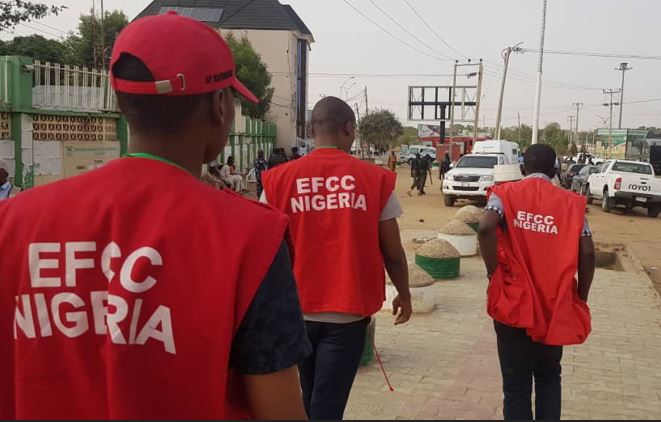
The Economic and Financial Crimes Commission (EFCC) has arrested Julius Anelu, the Accountant General of Edo State, along with two other state officials, amid suspicions of large-scale financial misconduct. The apprehensions occurred following allegations of substantial and unusual withdrawals from the state’s treasury. As of the latest reports, Anelu and his associates are detained while investigations unfold. Sources from the EFCC revealed that approximately N24.6 billion had been deposited into the state’s account, yet in a brief span of one week, nearly N14 billion was reportedly extracted, raising significant concerns regarding the management of state funds and accountability.
According to informants from the EFCC, the ongoing probe into the finances of Edo State has been an ongoing affair since 2022, primarily focusing on Governor Godwin Obaseki’s administration. This recent arrest is a reaction to the notable discrepancies identified in the state’s derivation account. The EFCC emphasized that their intention is to safeguard the state’s financial integrity rather than disrupt governance, countering claims that their actions could hinder ongoing state activities. The commission’s intervention indicates a strong commitment to clamp down on corruption and financial mismanagement, underscoring the broader goal of accountability in public office.
The situation has been further complicated by political undercurrents, as newly elected Edo State Governor, Senator Monday Okpebholo, has publicly condemned the prior administration. Okpebholo accused Governor Obaseki’s government of engaging in “last-minute borrowings and looting” as it approached the end of its term. In light of these accusations, the incoming governor has called upon various state institutions, including the EFCC, the police force, and the Department of State Services, to conduct thorough investigations into the alleged mismanagement of state resources during Obaseki’s tenure.
As this controversy unfolds, communication from the EFCC’s media office has been lacking. Attempts to reach Dele Oyewale, the EFCC Head of Media and Publicity, have proved futile, with messages and calls going unreturned. The absence of clear communication adds a layer of uncertainty to the situation, leaving the public and stakeholders seeking clarity on the commission’s investigations and the broader implications for Edo State’s governance and financial health.
This incident not only reflects the specific malfeasance alleged within Edo State but also underscores ongoing concerns about corruption in Nigeria as a whole. The EFCC’s decisive action may set a precedent for future government accountability and implicate wider issues of governance within the country. As investigations extend, the focus will likely shift to examining the official processes and safeguards in place, or the lack thereof, that allowed such significant financial irregularities to occur.
Moving forward, the EFCC’s findings will play a crucial role in shaping the narrative surrounding state financial management and could have repercussions for the state’s political landscape. If substantiated, the allegations could lead to stronger calls for reforms aimed at enhancing transparency and responsibility in public spending. The situation serves as a critical reminder of the importance of vigilant oversight and the necessity for public officials to remain accountable for their actions in service of democracy and the integrity of state finances.









