









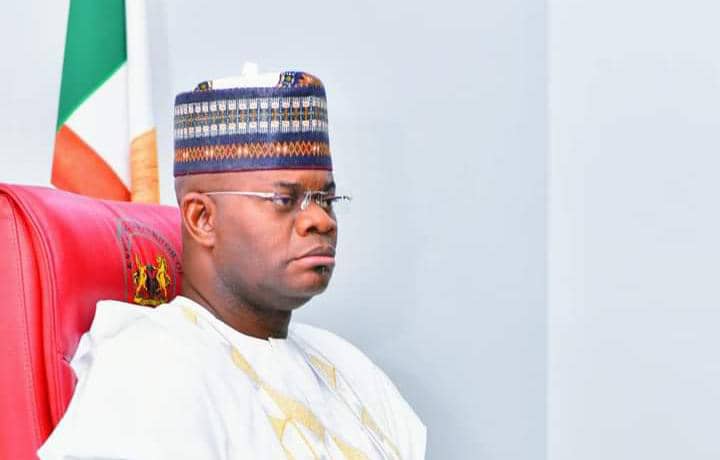
On Wednesday, the Economic and Financial Crimes Commission (EFCC) presented its case to Justice Emeka Nwite in the Federal High Court in Abuja concerning Yahaya Bello, the former governor of Kogi State. The EFCC’s counsel, Kemi Pinheiro (SAN), requested the court to enter a plea of not guilty on behalf of Bello, who was not present in the courtroom. During the proceedings, Pinheiro indicated that he had two applications: the first seeking a formal plea for the defendant and the second to call witnesses present in court. Pinheiro argued that even without Bello’s physical presence, the plea of not guilty could be entered in alignment with Section 276 of the Administration of Criminal Justice Act (ACJA). He stressed that the essence of the plea was to invite the prosecution to substantiate the charges against Bello.
In contrast, Bello’s legal representative, Michael Adoyi, strongly opposed Pinheiro’s application, stating it contradicted a standing court order which emphasized that the defendant must be present for his arraignment. Adoyi contended that the law guarantees the defendant’s right to be physically present in court for such proceedings, highlighting the importance of the rule of law in criminal trials. He suggested that the prosecution’s move could undermine the judicial process and claimed it was a misguided call for the court to assist the prosecution in carrying out its obligations. In his view, the application violated the essential principles that guide criminal proceedings, which are distinct from civil matters.
Adoyi further pointed out that the EFCC’s reliance on specific provisions of the ACJA to justify the plea in Bello’s absence was misplaced. He argued that those provisions do not eliminate the necessity for the defendant’s presence in court. Adoyi urged Justice Nwite to reject the prosecution’s application, cementing the point that any procedural move made without the defendant’s presence would set a dangerous precedent and potentially infringe upon Bello’s rights.
In reply, Pinheiro dismissed Adoyi’s counterarguments and sought the court’s ruling to proceed with entering a plea of not guilty for Bello. Meanwhile, Justice Nwite expressed his hesitation regarding the timeline for delivering a ruling, indicating that it might not take place within the current judicial year due to his recent appointment as a vacation judge. This uncertainty led to an agreement for the matter to be adjourned for a future date, with the judge suggesting January 21, 2025, as a possible date for consideration of the applications.
During the previous hearing on September 25, Adoyi had also informed the court of ongoing appeals at the Supreme Court concerning the defendant’s arraignment. He indicated that the legal proceedings should be on hold until the Supreme Court had issued its ruling to avoid any possible complications or contradictions in the legal process surrounding Bello’s case. Adoyi emphasized that waiting for the apex court’s decision would uphold the principles of justice and prevent any premature actions that could undermine the Supreme Court’s authority.
Yahaya Bello is facing serious allegations which include a 19-count charge concerning money laundering and the misappropriation of a staggering N80.2 billion. Moreover, there are additional fresh charges amounting to N110.4 billion, which are set to be deliberated before Justice Maryann Anenih. These developments underscore the gravity of the accusations against Bello and the complexities involved in navigating through the legal proceedings, reflecting ongoing tensions between the prosecutorial and defense strategies in a high-profile case. The outcome of these proceedings will have significant implications not only for Bello but also for the integrity of the judicial process in Nigeria.









