





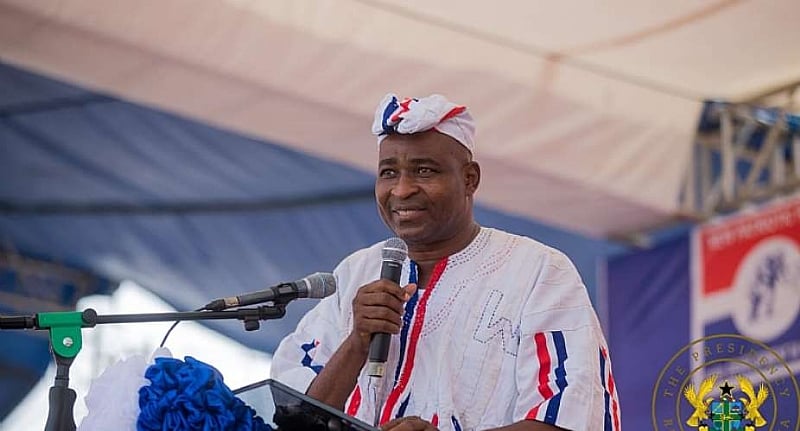
During a recent campaign event in the Subin Constituency, Ashanti Regional Chairman of the New Patriotic Party (NPP), Bernard Antwi Boasiako, popularly known as Chairman Wontumi, unveiled an ambitious initiative that promises to reshape higher education in Ghana. Wontumi announced that a future government led by Dr. Mahamudu Bawumia would implement a Free University Education policy, aimed at addressing access to education by eliminating financial barriers. This initiative is designed to facilitate student admissions to universities using only the Ghana Card, thereby streamlining the process and making higher education more accessible to all citizens.
Wontumi firmly placed the NPP’s education agenda at the forefront of his speech, underscoring the party’s dedication to enhancing educational opportunities in the country. He stated that a Bawumia-led government would not only maintain the existing Free Senior High School (SHS) program but would also expand it, ensuring that students transition smoothly from high school to university. This proposition reflects the party’s commitment to building on the successes of the Free SHS program, which has already benefited thousands of students throughout Ghana, allowing them to pursue their educational aspirations without financial hindrance.
In addressing potential opposition to these educational initiatives, Wontumi warned that the opposing National Democratic Congress (NDC) may resist the progress made in the education sector. He recounted the NDC’s historical tendency to repeal beneficial policies, citing the example of the free maternal healthcare initiative that was discontinued after being introduced by former President John Kufuor. Wontumi’s remarks suggested a strong belief that the current educational reforms could be jeopardized under an NDC administration, potentially rolling back much of the progress achieved by the NPP.
The emphasis on the Free University Education proposal reflects a wider strategic vision by the NPP to solidify its stance in the political landscape, particularly among the youth and their families. Wontumi articulated that the party’s goal is not just to provide immediate education reforms but to ensure that these reforms are safeguarded against policy reversals that could undermine their impact. His rhetoric served to rally support among constituents while drawing a stark contrast with the NDC’s past governance, thus appealing to voter sentiments regarding educational equity.
Supporting Wontumi’s vision, the NPP’s parliamentary candidate for Subin, Lawyer Kofi Obiri Yeboah, echoed these statements, emphasizing the necessity for constituents to demonstrate strong support for Dr. Bawumia in the upcoming elections. Yeboah’s call for a resounding 90% victory represents a strategy to consolidate power and maintain momentum for the NPP’s educational policies. He urged voters to recognize the importance of safeguarding the party’s achievements and advancing the agenda that fosters educational inclusivity and opportunity.
As the political atmosphere heats up in the lead-up to elections, the NPP’s commitment to educational reform, as articulated by Wontumi and Yeboah, is positioned as a key issue that could influence voter decisions. With a focus on free university education and the expansion of successful programs, the party aims to secure its legacy in the education sector while countering opposition narratives. The pledges made during this campaign not only seek to empower students across Ghana but also demonstrate the NPP’s strategic intent to mobilize support and reinforce its governance successes amidst a competitive political landscape.








