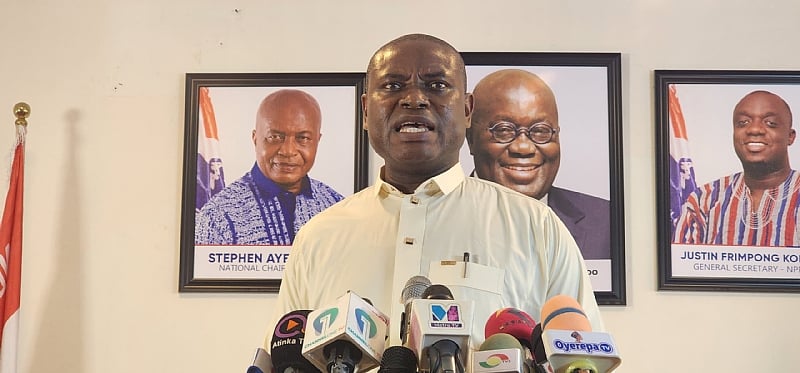
The New Patriotic Party (NPP) has recently leveled serious allegations against the opposition National Democratic Congress (NDC) concerning their purported manipulation of strategies aimed at winning the upcoming 2024 general elections. During a press conference held at the NPP headquarters, Communications Director Mr. Richard Ahiagbah unveiled an alleged leaked document that he claims outlines the NDC’s “desperate plans” for capturing power through dubious means. Accusing the NDC of engaging in “disruptive, unfair, and crude tactics,” Ahiagbah condemned these strategies as a misuse of public trust that undermines the country’s democratic framework. He called upon voters to hold the NDC accountable for these alleged treacherous actions and remain vigilant to ensure that the integrity of the upcoming elections is upheld.
In his statements, Ahiagbah commended the Majority Caucus of Parliament, which he believes has acted with maturity and legality despite provocations from the NDC minority. He mentioned that while the NPP aims to preserve peace and uphold the law, the NDC has resorted to chaos and disorder in their political dealings. The document allegedly prepared by the NDC reportedly spans eleven chapters and provides detailed directives on tactics for undermining the current government. He encouraged all Ghanaians, especially the youth, to familiarize themselves with this alleged document, as it allegedly reveals the unpatriotic intentions of the NDC. The crux of the document, as presented by Ahiagbah, is a clear strategy for gaining power through foul means rather than through legitimate and democratic processes.
According to Ahiagbah, the NDC had strategically planned to frustrate the government and its initiatives since 2021, an act that could lead to unnecessary hardships for Ghanaians. He stated that the document acknowledges the NDC’s defeat in the 2020 elections yet demonstrates a resentment towards democratic principles, particularly by failing to concede graciously. The NDC’s effort to control parliamentary dynamics to hinder the government’s legislative agenda is a prime focus of this leaked document. Ahiagbah argued that the NDC’s consistent obstructionism is motivated by a desire to politicize national challenges rather than provide constructive alternatives, ultimately harming the economy and the welfare of the Ghanaian people.
Highlighting the specific actions taken by the NDC in Parliament, Ahiagbah criticized their blockade of key revenue-generating bills, such as the E-levy, which he claims have directly contributed to the country’s economic downturn. The inability of Parliament to approve a budget due to the NDC’s disruptive tactics marked an unprecedented moment in Ghanaian politics, one that jeopardizes the governance process. Rather than engaging in meaningful political opposition aimed at enhancing governance, the NDC has resorted to strategies that betray public trust and harm the collective interest of the nation, which Ahiagbah argues sets a concerning precedent for future political behavior.
In his concluding remarks, Ahiagbah implied that the NDC’s recent actions may be fueled by desperation as they are anticipating losses in the upcoming elections. The NPP, on the other hand, believes they remain in a favorable position for victory due to economic recovery and strengthened public sentiment. He urged voters to recognize that the NDC’s actions have historically compromised democratic processes and governance and therefore must be punished at the polls. He emphasized that it is essential for Ghanaians to make informed choices, rejecting those who have betrayed the public trust in favor of the NPP’s vision for the country’s future.
The tone of the press conference reflected a broader NPP strategy to frame the NDC not only as a political opponent but as a party that threatens the very fabric of democracy and public welfare in Ghana. Mr. Ahiagbah’s statements were a clarion call for voters to consider the implications of entrusting power to a party that has allegedly resorted to manipulative and ultimately damaging tactics. The upcoming election on December 7 is positioned as a crucial moment for Ghana, with the potential to either uphold democratic values or usher in a troubling era of political sabotage and instability should the NDC regain power. Ultimately, Ahiagbah’s call to action for the electorate underscores the need for active civic engagement in the preservation of Ghana’s democratic institutions.