





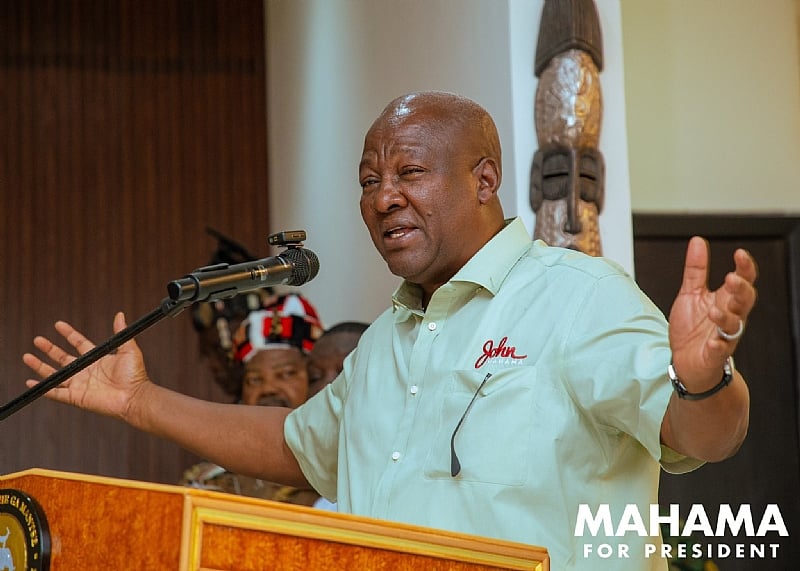
John Dramani Mahama, the flagbearer of the National Democratic Congress (NDC), is drawing on military imagery to illustrate his campaign for reelection in the upcoming general elections. Comparing himself to a “retired army general” who is called back into service during challenging times, Mahama spoke to Imams in the Ashanti Region as part of his political outreach. During his speech, he highlighted the current economic difficulties and governance issues facing Ghana, positioning himself as the experienced leader needed to guide the nation through these trying times. His reference to military service serves not only to evoke a sense of duty and readiness but also to reinforce his credentials as a capable leader in crisis situations.
Mahama’s campaign message is rooted in addressing the economic mismanagement that he believes has plagued the country under the current administration. He emphasizes his experience and past performance as a leader, suggesting that his return could provide the stability and direction that is sorely needed. By framing his candidacy in this manner, Mahama aims to reassure voters that he has the knowledge and skills essential for navigating Ghana through its present challenges. His commitment to effective governance and policy development is central to his campaign rhetoric, which is likely intended to inspire confidence among prospective voters who may be disillusioned by recent leadership.
Moreover, Mahama’s address includes promises specifically directed at the Islamic community, indicating his intention to recognize and legitimize Islamic marriage within the national legal framework. This commitment reveals his understanding of the diverse cultural and religious landscape of Ghana and highlights his focus on inclusive governance. By engaging with religious leaders and discussing legislative changes, Mahama aims to build a broad coalition of support that extends beyond traditional party lines. His acknowledgment of the Chief Imam’s requests further suggests a willingness to listen to community needs and prioritize them in his governance plan.
The backdrop of Mahama’s campaign is characterized by residual concerns from his previous tenure and the current government’s perceived failures. His call to action, likened to a general returning to the battlefield, suggests a sense of urgency in addressing economic and governance challenges. The imagery of the military not only serves to legitimatize his position as a leader but also evokes a patriotic sentiment among supporters, emphasizing the necessity of strong leadership in times of crisis. Mahama’s narrative aims to resonate with voters who value experience and the need for decisive action.
Through his campaign engagements, Mahama is strategically utilizing platforms such as gatherings with religious leaders to communicate his policies and garner support. As the election looms, the combination of addressing socioeconomic issues and promising inclusive legislation like the recognition of Islamic marriage illustrates his intent to connect with diverse groups within the electorate. This approach reflects a broader strategy of targeting various stakeholders to consolidate his base and extend his reach into new voter demographics.
In summary, John Dramani Mahama’s return to the political arena is marked by a call for experienced leadership amidst Ghana’s challenges. By positioning himself as a capable leader in crisis and committing to policies that reflect the needs of various constituencies, he aims to revitalize his support. His appeals to the Islamic community and his emphasis on policy reforms suggest a calculated effort to expand his appeal and address concerns within the electorate, showcasing his vision for a stable and prosperous Ghana under his leadership. As the campaign progresses, Mahama’s ability to effectively communicate his vision and rally support will be vital to his aspirations for the presidency.








