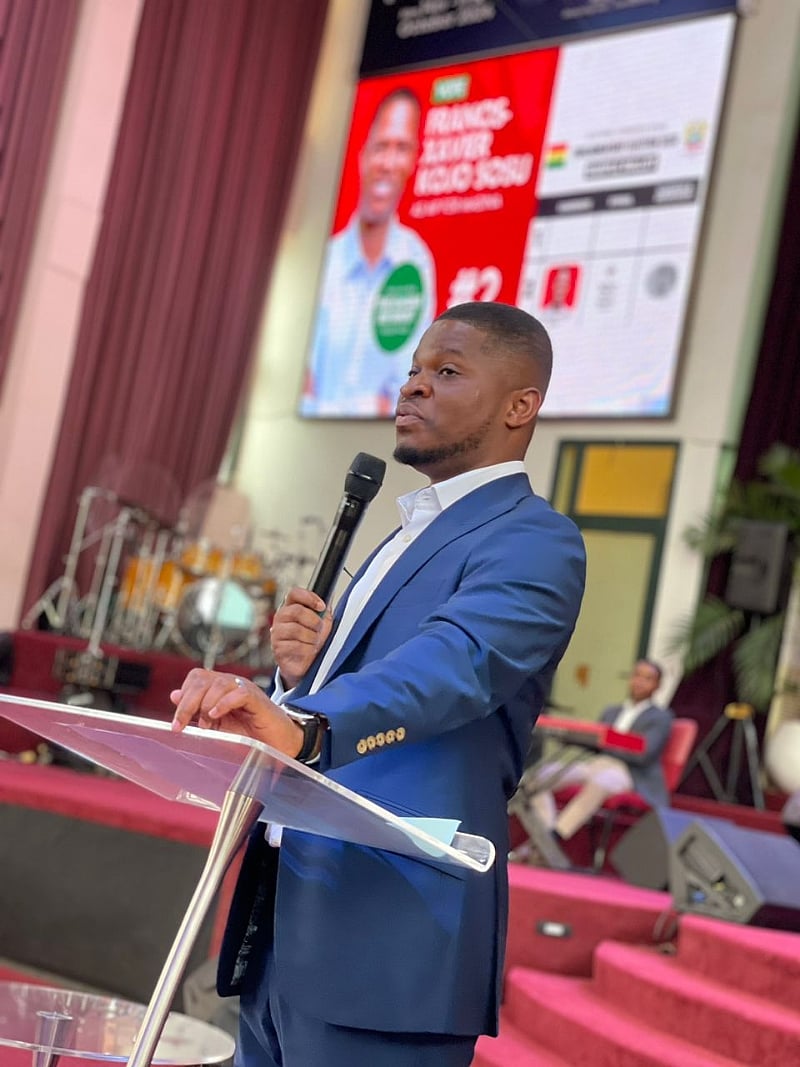
In the lead-up to the 2024 elections, Lawyer Sammy Gyamfi, the National Communications Officer of the National Democratic Congress (NDC), has called on Christian leaders in the Madina Constituency to rally behind their Member of Parliament, Lawyer Francis-Xavier Sosu. During a breakfast meeting at the Charismatic Evangelistic Ministry, Gyamfi highlighted the significance of Sosu’s re-election, particularly in combating corruption and illegal mining, commonly known as galamsey. He contrasted Sosu, whom he described as a ‘righteous man’ dedicated to serving the community, with his opponent who is reportedly profiting from galamsey activities. Gyamfi framed the election not merely as a contest between political parties—NDC and NPP—but as a moral choice between righteousness and darkness.
The breakfast gathering attracted church leaders and pastors from across the constituency, presenting a platform for the MP to connect with religious stakeholders on pressing local issues. Attendees expressed their appreciation for Sosu’s commitment to the Madina community, highlighting his active involvement in church events and initiatives aimed at fostering faith and unity. They recognized his consistent presence at religious functions and his role in leading spiritual activities such as prayer and fasting days. Such interactions underscored Sosu’s dedication to maintaining a strong rapport with the religious community, which is pivotal during election periods.
Expressing gratitude for the continuous backing from the clergy, Sosu emphasized the importance of their spiritual support in his quest for re-election. He took the opportunity to outline his legislative efforts, notably mentioning the Witchcraft Bill. This initiative intends to curb the wrongful accusations against individuals, particularly the elderly, who are often victims of societal superstitions. Sosu clarified that while he does not dispute the existence of witchcraft, he believes that such issues should be resolved through spiritual means rather than through accusations that could lead to violence and abuse, including lynching of the accused individuals.
In addition to discussing his legislative agenda, Sosu acknowledged the clergy’s desire to embark on religious pilgrimages to Israel, which parallels the Muslim Hajj. He admitted his unfamiliarity with the details of organizing such trips but assured the clergy that he would investigate possible avenues to assist them in fundraising efforts for their pilgrimage aspirations. This gesture further solidified his commitment to supporting his constituents not just politically, but also in their spiritual endeavors.
As the election period approaches, the endorsement from the clergy could play a pivotal role in determining the outcome for Sosu, who has established himself as a vocal advocate for social justice and community welfare. His active engagement with the church community has not only reinforced his image as a servant leader but also highlighted the convergence of political and spiritual life in the constituency. Such alliances are critical as voters assess the integrity and intentions of their candidates, especially when faced with contrasting narratives of righteousness and corruption.
As the political landscape in Madina continues to unfold, the emphasis placed on community values and moral leadership by figures like Gyamfi and Sosu illustrates the broader implications of political choices in the context of Ghana’s ongoing fight against corruption and illegal mining activities. With the clergy’s support, Sosu hopes to reinforce his position as a champion for the people of Madina and secure another term in office, facing challenges not just from political opponents, but also from the societal issues that affect his constituents’ lives daily. The message being communicated is clear: choosing the right leader in the impending elections is seen as essential for promoting integrity and fighting the deep-rooted issues plaguing the community.