









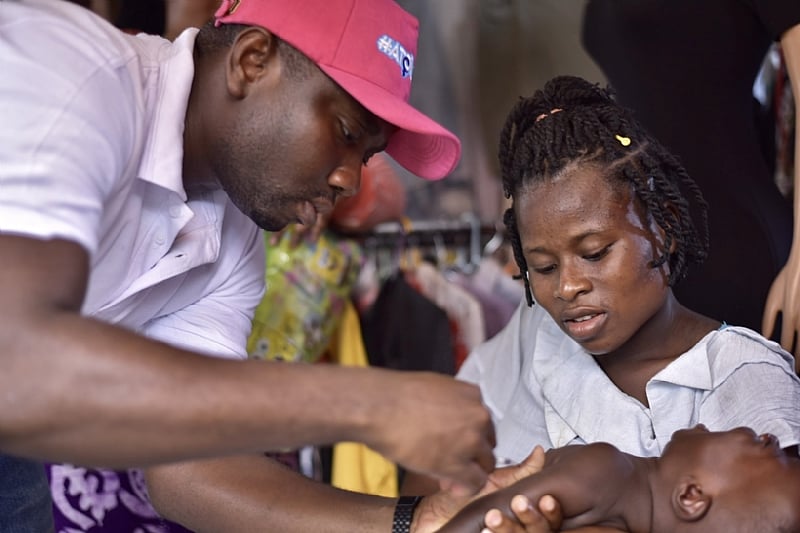
From October 2 to 6, 2024, Ghana undertook a nationwide Integrated Measles-Rubella Vaccination and Vitamin A Supplementation Campaign, targeting children aged 9 months to 5 years. Spearheaded by the Ghana Health Service (GHS) and supported by organizations like WHO Ghana and Gavi, the Vaccine Alliance, the initiative aimed to protect millions of children from preventable diseases while also enhancing their growth and development through vitamin supplementation. The mass distribution of the Measles-Rubella (MR) vaccines adopted an equity-focused approach, ensuring access even for children in remote and underserved communities. This initiative showcased the dedication of health workers, volunteers, and community members who tirelessly worked together to safeguard the health of the future generations.
One of the significant challenges faced during the campaign was in Ada, a coastal district characterized by numerous isolated communities only accessible by boat. Recognizing the limited healthcare access in these areas, the campaign placed a priority on reaching these children. Teams from WHO and local health workers undertook the daunting task of traveling by canoe to these remote settlements. Their unwavering dedication significantly contributed to the campaign’s success, ensuring that every child living in these hard-to-reach locations received life-saving vaccinations. Community engagement was crucial; local volunteers collaborated with health workers to find children in dispersed households and guide them through challenging terrains, emphasizing community ownership in health initiatives.
In Obuasi, a town influenced by mining activities, the campaign experienced an additional hurdle: relentless rainfall that rendered many roads muddy and treacherous. Despite these adverse weather conditions, vaccination teams, equipped with umbrellas and raincoats, remained resolute in their mission to immunize children. Health workers shared their motivations, expressing that no amount of rain could deter them from their purpose. The impressive resolve of the vaccination teams, combined with the community’s involvement, helped bridge the challenges imposed by nature, ensuring that children received their essential vaccinations.
The community’s cooperation played a pivotal role throughout the campaign. Many residents volunteered to assist vaccinators by helping navigate unfamiliar areas and organizing children for vaccination. In Obuasi, locals offered shelter and logistical support to vaccination teams braving the harsh weather. This grassroots involvement demonstrated the strong sense of community that is crucial for the success of healthcare initiatives. By working together with local populations, health teams were able to surmount logistical difficulties and ensure vaccinations reached those who needed them most.
To ensure comprehensive coverage, WHO Ghana and partner organizations employed Rapid Convenient Monitoring (RCM) throughout the vaccination campaign. This real-time tracking system allowed health workers to quickly identify areas that had low coverage and plan targeted rap-up activities in those locations. Teams actively revisited communities, checked vaccination records, and knocked on doors to confirm that every eligible child had received the Measles-Rubella vaccine and Vitamin A supplement. This meticulous approach, combined with technical support from WHO, helped ensure the campaign’s effectiveness in reaching those in need.
The success of Ghana’s vaccination and supplementation campaign illustrates the transformative power of collaboration in public health initiatives. The commitment displayed by health workers, local leaders, and volunteers highlights a unified goal—protecting the health of children in Ghana. WHO Representative to Ghana, Dr. Frank Lule, emphasized that the campaign exemplifies health equity in action. As this initiative concludes, its impacts are expected to resonate for years, providing vital health protections to the vaccinated children and serving as a foundation for future public health endeavors to ensure that no child is ever marginalized in healthcare access.









