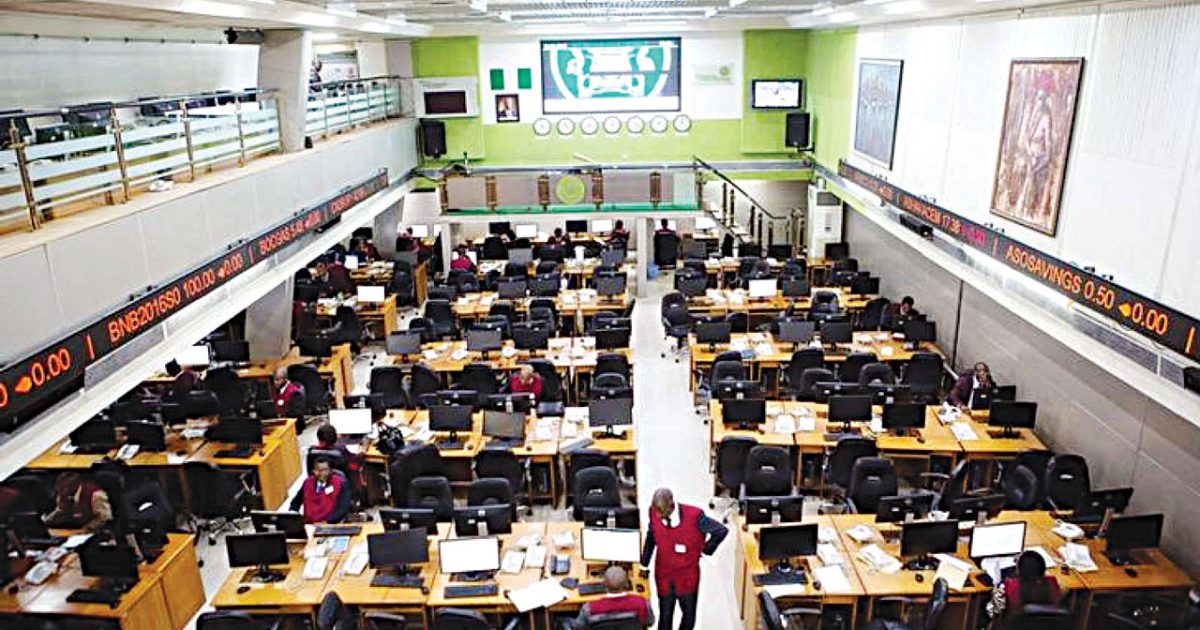
The Nigerian equity market has experienced significant growth in recent years, with a surge in trading activity driven primarily by domestic investors. Total transactions reached an impressive N10.82 trillion by the end of 2024, marking a substantial increase from previous years. This growth trajectory highlights the growing confidence of local investors in the Nigerian economy and the potential of its capital market. The dominance of domestic participation signifies a shift in market dynamics, with local players exerting greater influence on trading volumes and potentially shaping the direction of the market.
The year 2024 witnessed a remarkable surge in equity trading, with total transactions reaching N4.91 trillion. Domestic investors accounted for a lion’s share of this activity, contributing 84.02% of the total volume, equivalent to N4.12 trillion. This left foreign investors with a smaller portion, contributing only 15.98%, or N785.28 billion. The highest monthly transaction occurred in January 2024, reaching N651.52 billion, with domestic investors again dominating, contributing N598.41 billion or 91.85% of the month’s activity. The trend continued throughout the year, with domestic investors consistently maintaining their prominent role. By November 2024, domestic investors had traded N401.40 billion, further solidifying their influence on the market. Within this domestic participation, retail investors contributed N195.38 billion while institutional investors accounted for N206.02 billion, indicating a healthy mix of investor types.
Looking back at 2023, total equity trading stood at N3.58 trillion, demonstrating a healthy growth trajectory leading into 2024. Foreign investors’ contribution amounted to N410.62 billion, representing 11.48% of the total market activity. Domestic investors once again dominated, contributing N3.17 trillion, or 88.52% of the total. July 2023 witnessed the highest monthly transaction volume at N702.98 billion, with domestic investors driving the majority of this activity with N662.44 billion, representing 94.23%. The lowest foreign investor participation was observed in April 2023, where their share was a mere 4.43%, contributing only N8.47 billion compared to domestic investors’ N182.74 billion. This data further reinforces the consistent trend of domestic investor dominance in the Nigerian equity market.
In 2022, total equity trading reached N2.32 trillion, establishing a baseline for the growth seen in subsequent years. Foreign investors contributed N379.23 billion, accounting for 16.32% of the total transactions. Domestic investors continued their dominant position, contributing N1.95 trillion or 83.68% of the total. The highest monthly transaction volume was recorded in May 2022 at N607.45 billion, with domestic investors responsible for N562.15 billion or 92.54%. The lowest monthly total was observed in September 2022 at N81.90 billion, with foreign investors contributing N19.67 billion (24.02%) and domestic investors contributing N62.23 billion (75.98%). Even during periods of lower overall market activity, domestic investors remained a significant driving force.
The consistent growth in domestic investor participation across these three years underscores a growing confidence in the Nigerian equity market. Factors contributing to this trend could include increased financial literacy, accessibility of investment platforms, and potentially a shift in investment strategies within the country. The sustained dominance of local investors suggests a potential shift in market dynamics, where local sentiment and economic factors may play a more significant role than external influences. This signifies a positive development for the Nigerian economy, indicating increasing internal investment and a greater reliance on local capital.
The sustained growth in equity trading, fueled predominantly by domestic investors, paints a positive picture for the Nigerian capital market. The increasing engagement of local investors not only contributes to market liquidity and stability but also indicates growing confidence in the long-term prospects of the Nigerian economy. While foreign investment remains a crucial component of the market, the rise of domestic participation signals a maturing market increasingly driven by internal dynamics. This trend is likely to continue shaping the future of the Nigerian Exchange, highlighting the importance of understanding and catering to the needs of this growing investor base. The data emphasizes the emergence of a more robust and domestically driven capital market in Nigeria.