





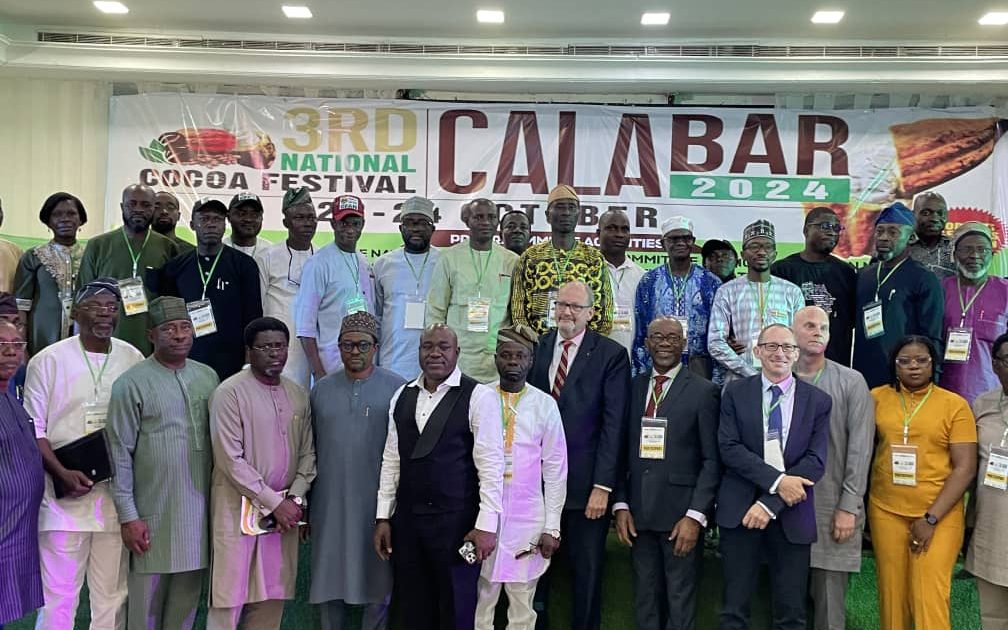
The Cocoa Farmers Association of Nigeria (CFAN) has recently made a compelling call for the Nigerian government to enhance its involvement in the promotion and support of sustainable cocoa production. During its third national cocoa festival, CFAN presented a range of strategies aimed at reinforcing sustainability efforts within the cocoa industry. Led by President Adeola Adegoke, the association emphasized the necessity for the federal government to elevate local processing and consumption of cocoa products to strengthen domestic market dynamics. This move is essential for enhancing the profitability and resilience of Nigeria’s cocoa sector, which has the potential to be a backbone of the national economy.
In the communiqué released following the festival, CFAN advocated for the federal government and the National Cocoa Management Committee (NCMC) to take the lead in updating and harmonizing the available data on the cocoa value chain. Accurate data is critical for informed decision-making and effective policy development. The association also underscored the importance of increased awareness campaigns to educate all stakeholders about the European Union Deforestation Regulation (EUDR) and other pertinent regulations. By fostering a better understanding of these standards, stakeholders can align their practices with international sustainability requirements, thereby ensuring Nigeria’s competitive position in the global cocoa market.
CFAN further urged stakeholders to leverage sustainability initiatives and adopt best agronomic practices that would promote environmental conservation while improving productivity. This entails a concerted effort from the government, NCMC, and National Task Force (NTF) to eliminate adulterated agrochemicals that pose risks to both farmers and the environment. There is a pressing need for expanded capacity-building programs for farmers to enable them to handle agrochemicals responsibly and adopt diversification strategies that enhance sustainability. The completion and publication of a national cocoa policy is also critical to providing a cohesive framework guiding the sector toward sustainable practices in the long run.
To complement these recommendations, CFAN called for the updating of forest cover and land use maps across cocoa-producing states, alongside a review of existing land tenure systems. Implementing a national traceability system in partnership with development organizations and industry experts is also essential to ensure transparency throughout the cocoa value chain. Moreover, the government and research institutions are encouraged to promote Climate Smart Agricultural practices among farmers, which would not only help in adapting to climate change but also in aligning with sustainability goals.
Advocating for the integration of agroforestry practices within cocoa farming, CFAN emphasized the importance of collaboration between government entities, industry players, and private sectors. Creating an enabling environment for private and youth participation is pivotal for sustainable practices and growth in the value chain. Infrastructure development in rural cocoa-growing areas is essential to facilitate operations, while policy interventions should aim to stabilize the currency and enhance farmers’ access to foreign exchange for critical imports. The collaboration between the Nigerian government and leading cocoa-producing nations was highlighted as a strategic move for learning and adopting effective models that contribute to sustainable industry growth.
In the context of Nigeria’s cocoa industry’s significance to its economy, CFAN recognized the pressing challenges posed by compliance with the European Union Deforestation Regulations. The recent gathering at the 3rd National Cocoa Festival, themed “Calabar 2024,” brought together over 300 participants from various sectors to deliberate on these challenges and explore opportunities for growth, particularly focusing on youth entrepreneurship. Such initiatives are crucial not only for fostering compliance but also for promoting innovation and sustainable practices, ultimately strengthening the entire cocoa sector and its contribution to Nigeria’s economy.








