The Federal Government of Nigeria is advancing its infrastructure development initiatives through the strategic Calabar-Abuja superhighway, aimed at enhancing the country’s transportation ecosystem. This project is particularly pivotal for the economic corridors of the South-East and North-Central regions, providing a vital artery for trade, movement, and socio-economic activities. The government recently formalized this commitment by signing a contract for the construction of Section I of the 118.85km Enugu/Abakaliki/Ogoja Highway, which forms part of the larger Africa Trans-Sahara route. This highway will notably cross several states, including Cross River, Ebonyi, Benue, Kogi, and Nasarawa, ultimately connecting to the capital, Abuja.
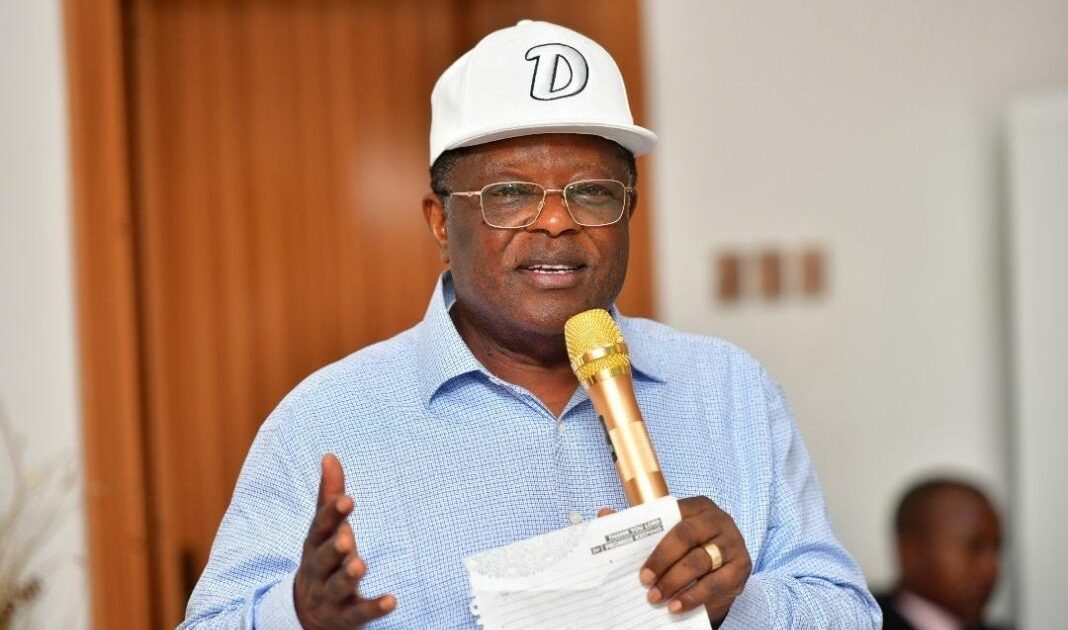
The awarded contract encompasses the reconstruction of an existing stretch from Ndibe beach, navigating through critical market and residential areas such as Eke Market, Abaomege, Onueke, and Umuoghara/Onu Nwafor, before concluding in Ebonyi. The planned construction will utilize Continuously Reinforced Concrete Pavement, emphasizing durability and sustainability. According to the Minister of Works, David Umahi, this initiative constitutes the first segment of the broader Renewed Hope Legacy Project, which is designed to bolster trade and agricultural development across the corridor, while fostering inter-regional connectivity among the various states involved.
Umahi’s remarks underline that the government’s approach is not merely limited to infrastructural expansion; it seeks to link transportation development with economic stimulation and sustainability. He emphasized that the Renewed Hope Legacy Projects are transformational investments that aim to reshape Nigeria’s socio-economic landscape, emphasizing strategic priorities such as economic diversification and a more sustainable transport infrastructure. The government intends to use these projects to not only improve road conditions but also to stimulate trade among the regions, thereby increasing collaboration and cooperation between neighboring states, which is critical for national growth.
The Minister further elaborated on the comprehensive nature of the ongoing projects, pointing out that the current administration is diligent in carrying out previously established road projects. The government is particularly focused on four primary legacy projects, with the Lagos-Calabar highway spanning 750km already underway, despite facing legal disputes and opposition. Umahi expressed firm support for the President’s vision of completing these crucial infrastructures, noting plans to initiate additional projects in states such as Cross River and Akwa Ibom, as well as Ondo State, thereby expanding the overall impact of these initiatives.
Alongside the Lagos-Calabar project, the Sokoto-Badagry Superhighway, which stretches 1,068km across Nigeria, is highlighted as another major undertaking. It is noteworthy for including extensive segments such as the 258km Kebbi section and the 120km Sokoto stretch, both of which are currently under construction. These developments reflect the government’s unwavering commitment to improving national connectivity through infrastructure while inheriting important projects from previous administrations, such as the road connecting Makurdi to the 9th Mile.
In conclusion, the Nigerian government’s investment in the Calabar-Abuja superhighway and associated projects indicates a broader strategy focused on enhancing the country’s transportation framework, driving socio-economic growth, and fostering inter-state collaboration. By prioritizing reconstructive efforts and new highway constructions, the government aims to transform the economy, impacting trade and agricultural development positively. With actions already in motion across various regions, these infrastructure developments promise to usher in a new era of enhanced connectivity and economic opportunities throughout Nigeria.