









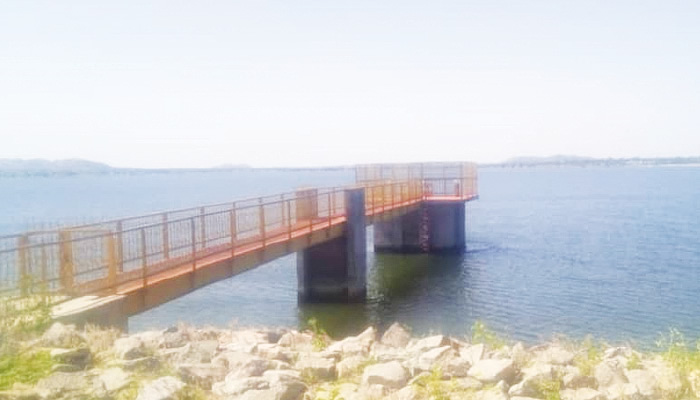
A recent technical sub-committee established by the Federal Government of Nigeria has conducted an evaluation of several dams across the nation, ultimately declaring the Dadin-Kowa Dam in Gombe State and the Gubi Dam in Bauchi State as safe, while deeming the Ogwashi-Uku Dam viable despite some concerns related to siltation. This evaluation stems from a shocking event, where a section of the spillway of the Alau Dam in Maiduguri, Borno State, collapsed, leading to widespread flooding. The incident not only endangered lives but also caused significant property damage and displaced many residents. The need for a thorough inspection of dams nationwide became imperative to prevent similar disasters and ensure public safety.
The Director of Dams and Reservoirs at the Federal Ministry of Water Resources, Ali Ibrahim, emphasized the importance of assessing the safety of critical water infrastructure following the Alau Dam incident. His inspection of the Dadin-Kowa Dam revealed that, as of the preliminary evaluations, the dam appeared to be in a safe condition. However, Ibrahim clarified that further investigations were necessary to understand fully any hidden structural issues that may not be immediately detectable. The committee’s mission began with a focus on the Alau Dam and progressed to dams in the Plateau State before examining facilities in Gombe. The next evaluation is set for Kiri Dam in Adamawa State, continuing the aim of ensuring the integrity and reliability of Nigeria’s dam infrastructure.
At the Gubi Dam in Bauchi, thorough physical examination also provided positive results, indicating no immediate cause for concern. Ibrahim reported the presence of essential features that contribute to the dam’s stability, affirming the overall good condition of this structure. However, he stressed that the committee’s findings were primarily based on surface evaluations, and internal conditions would require more in-depth inspections. The team plans to compile comprehensive recommendations for the Federal Government following the completion of inspections across the country, to address any highlighted issues and implement necessary remedial actions.
Meanwhile, the Ogwashi-Uku Dam in Delta State was identified as viable, although the inspection revealed a noticeable reduction in its water holding capacity due to siltation. Abiola Oluwatosin, Deputy Director in the Dam’s department of the Ministry of Water Resources and Sanitation, led the inspection team and expressed confidence that the findings would inform an action plan tailored to addressing the dam’s specific challenges. The need for operational and maintenance improvements was highlighted, indicating potential areas of focus for the government. Ensuring the dam’s ongoing functionality is crucial, particularly as concerns about water availability in a changing climate become more pressing.
The Ogwashi-Uku Dam is characterized as a 15-meter high and 280-meter long earth-fill structure, which has a reservoir capacity of four million cubic meters and incorporates a one-megawatt hydropower capability. These features underscore the dam’s significance, not only as a water management facility but also as a renewable energy source. Mr. Salin Ahmed, Managing Director of the Benin-Owena River Basin Division Authority, emphasized that while the dam has been completed, responsibility for its management ultimately rests with the state government, particularly concerning the water component.
In summary, the Federal Government’s initiative to conduct thorough evaluations of dams across Nigeria is a vital step in addressing the safety and operational efficacy of key water infrastructure following recent high-profile failures. The declarations of safety for Dadin-Kowa and Gubi Dams, along with the viability of Ogwashi-Uku Dam, are reassuring yet come with significant caveats regarding necessary ongoing assessments and enhancements. Ensuring these dams operate effectively amid potential challenges is crucial for managing water resources and mitigating risks that endanger communities. Recommendations from the sub-committee will be instrumental in shaping future actions aimed at bolstering the integrity and safety of Nigeria’s dams.









