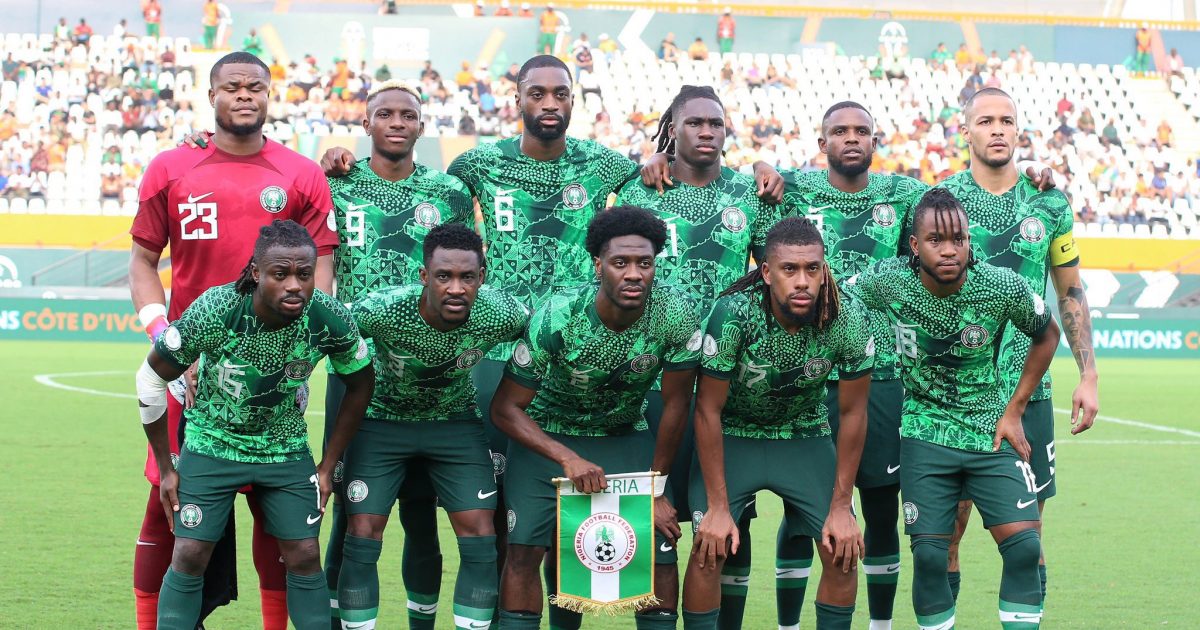
In the October FIFA ranking, the Super Eagles of Nigeria experienced a notable improvement, climbing three spots to secure the 36th position globally. This advancement is attributed to the team’s performance during the review period, where they accumulated a total of 1503.29 points. A pivotal moment occurred on October 11, when the Nigerian national team triumphed over their Libyan counterparts in the first leg of the Africa Cup of Nations qualifiers, winning by a narrow margin of one goal in Uyo. This successful outing not only boosted Nigeria’s overall ranking but also had a significant impact on their standing in the African continental context.
In terms of continental positioning, Nigeria’s rise to the fourth spot in Africa is a marked improvement from the sixth position held in September. The leading teams on the continent remain Morocco, Senegal, and Egypt, and Nigeria’s progress is indicative of their growing competitiveness in African football. The recent international football window proved to be eventful, with numerous matches played, including 32 qualifiers for the FIFA World Cup 2026, 47 for the CAF Africa Cup of Nations 2025, and various Nations League and friendly matches. This surge of games contributed to a dynamic shift in rankings as teams vied for better positions.
Globally, the top three teams—Argentina, France, and Spain—remain closely contending, with Argentina holding onto the first position, though their lead has been slightly reduced. Meanwhile, England, Brazil, and Belgium have maintained their respective fourth, fifth, and sixth places in the rankings. The only notable movements within the top ten include Portugal and Italy, both of which improved their rankings, while the Netherlands and Colombia slipped one spot. Notably, Germany has shown significant improvement, moving up two places and positioning themselves just outside the top ten.
Significant advancements were observed among several teams in the broader football landscape, including Algeria, which rose to 37th, Peru at 38th, and Greece at 42nd. Additionally, Cameroon made a commendable return to the top 50, climbing four spots. African teams have shown a vibrant competitive spirit with further progress seen from Equatorial Guinea at 88th, Zimbabwe at 117th, The Gambia at 128th, and Botswana at 140th. Botswana, known as the Zebras, recorded the most significant increase in points overall, gaining 38.30 points in this ranking cycle.
As the football season progresses, the shifts in the FIFA rankings illustrate the evolving landscape in international football, where even slight changes in performance during match windows can lead to substantial changes in team standings. The competitive nature of the teams, especially in Africa, reflects the ongoing development and determination within the continent’s football scene. The successes and movements of teams in this ranking cycle provide motivation for others to strive for improvement and recognition on both continental and global platforms.
In conclusion, the Super Eagles’ rise in the October FIFA ranking highlights not only a notable achievement for Nigeria but also serves as a reminder of the competitive dynamics in global football. The performances of other teams, especially from Africa, demonstrate the increasing competitiveness and potential for growth within the continent. As teams continue their preparations and compete in various international fixtures, the rankings will further evolve, and they will likely influence the strategies and expectations for the forthcoming tournaments, including the FIFA World Cup 2026 and the CAF Africa Cup of Nations 2025.