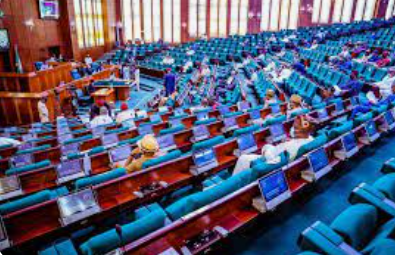
On Tuesday, the House of Representatives advanced a pivotal bill aimed at overhauling the management of Nigeria’s federal government assets by repealing the Ministry of Finance Incorporated Act of 1959 and introducing the new Ministry of Finance Incorporated (Establishment) Act of 2023. The bill, proposed by Ademorin Kuye, who represents the Shomolu Federal Constituency in Lagos State, seeks to create a legal framework that ensures enhanced ownership, accountability, and efficiency in the handling of federal assets. By addressing the considerable shortcomings of the existing 1959 Act, which consists of only six sections, this new legislation aims to provide a much-needed response to the current mismanagement of government properties and resources.
Kuye’s rationale for this legislative overhaul hinges on the inadequacies of the existing framework, which has led to severe issues such as misappropriation, neglect, and outright abuse of federal assets. He pointed out that over the years, the Ministry of Finance Incorporated (MOFI) has consistently fallen short of public expectations, being unable to effectively manage and oversee the extensive assets owned by the government. The proposal to establish a more comprehensive law with 49 sections is a reflection of the need for a robust institutional framework capable of meeting modern governance challenges and ensuring that federal assets are utilized effectively and sustainably.
If the bill becomes law, it aims to completely revitalize MOFI by instituting better corporate governance practices and an improved organizational structure. Kuye emphasized that the new legislation would provide a solid legal foundation for a genuinely national corporation responsible for managing and optimizing assets valued at over N300 trillion. The proposed law envisages an empowered MOFI that can identify and classify government assets effectively, maximizing their productivity and sustainability through a proactive national asset management strategy. Such a framework is expected to empower the Ministry to play a pivotal role in advising the Federal Government on matters related to asset management and investment, ultimately leading to greater fiscal responsibility.
A key component of the bill is the establishment of a national asset register, which would serve as an accurate and detailed account of government assets, their values, locations, and the intricacies of their management. This not only enhances transparency but also aims to create a comprehensive database that can inform future government investment decisions. Kuye pointed out that the current asset valuation of N18 trillion under MOFI is outdated. By implementing the proposed national asset register, this figure could potentially rise to about N350 trillion. Such an increase is expected to significantly contribute to national wealth and economic stability.
The miscellaneous provisions within the bill grant the Minister of Finance the authority to issue guidelines and policies for the effective realization of MOFI’s investment objectives. Importantly, it delineates the jurisdiction of the Federal High Court regarding legal proceedings related to MOFI, enhancing clarity in the management of conflicts that may arise. Additionally, the bill empowers MOFI to create regulations that govern asset management, allowing for a structured approach to both the use and the eventual disposal of government properties, addressing concerns over inefficiency and misappropriation.
Ultimately, the bill carries considerable potential benefits, including increased revenue generation, reduction of financial leakages, and the overall enhancement of the national asset portfolio’s value. By transitioning to a more accountable and organized system of federal asset management, the bill, if enacted, stands to revolutionize how the Nigerian government handles its physical and financial resources. In conclusion, Ademorin Kuye’s proposed legislation represents a significant step toward addressing the chronic issues plaguing federal asset management in Nigeria and aims to institute a foundation for greater financial accountability and economic growth. The implications of this bill are far-reaching, positioning the country towards a more sustainable and transparent fiscal future.