





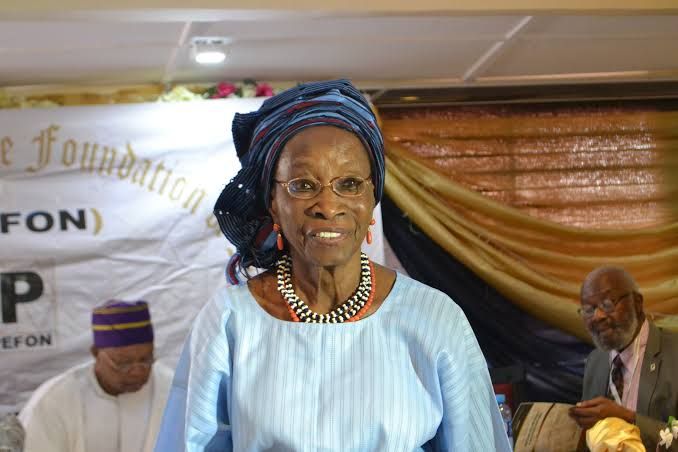
Adenike Ebunoluwa Oyagbola, a pioneering figure in Nigerian politics and education, passed away at the age of 94, leaving behind a legacy of groundbreaking achievements and unwavering dedication to national development. President Bola Ahmed Tinubu, in expressing his profound condolences to her family and the people of Ogun State, hailed Oyagbola as a “trailblazer and a beacon of inspiration for women in Nigeria.” Her appointment as the first female minister of cabinet rank, serving as Minister of National Planning from 1979 to 1983, shattered glass ceilings and paved the way for generations of women to aspire to leadership roles. Oyagbola’s impact extended beyond her ministerial duties, encompassing a deep commitment to youth development, empowerment, and the promotion of arts and culture, leaving an indelible mark on the nation’s creative landscape.
Oyagbola’s tenure as Minister of National Planning coincided with the implementation of Nigeria’s Fourth Development Plan, a critical period in the country’s economic and social development trajectory. Her leadership during this time played a significant role in shaping the plan’s objectives and strategies, contributing to the foundation for sustainable growth and progress. President Tinubu acknowledged her “significant contributions to national development,” emphasizing the lasting impact of her efforts in laying the groundwork for future advancements. Beyond her official responsibilities, Oyagbola’s unwavering focus on youth empowerment and the promotion of arts and culture solidified her position as a champion for social progress and cultural enrichment.
As the first female minister of cabinet rank, Oyagbola not only broke barriers but also became a symbol of empowerment for women across Nigeria. Her presence in the male-dominated political landscape challenged traditional norms and inspired countless women to pursue leadership positions, demonstrating that gender should not be a barrier to achieving one’s full potential. Tinubu highlighted this pioneering spirit, stating that she “paved the way for countless women to aspire to and achieve leadership roles in the country.” Oyagbola’s legacy extends far beyond her individual achievements, serving as a testament to the transformative power of representation and inclusivity in leadership.
Beyond her political career, Oyagbola’s contributions resonated deeply within the cultural sphere. Her dedication to promoting arts and culture contributed significantly to the enrichment of Nigeria’s creative landscape, nurturing talent and fostering artistic expression. President Tinubu recognized this enduring impact, stating that her “legacy will continue to inspire generations, particularly in the creative industry, where her impact remains deeply felt.” Oyagbola understood the importance of preserving and celebrating cultural heritage, and her efforts in this area left a lasting legacy that continues to shape the nation’s artistic identity.
Oyagbola’s commitment to ethical leadership stands as a particularly relevant example in a time when such principles are often challenged. President Tinubu underscored the importance of her integrity, noting that “in an era where threats to ethical standards are increasing, we shall miss Mrs. Oyagbola’s steadfast commitment to these principles.” Her unwavering adherence to ethical conduct served as a powerful reminder of the importance of integrity in public service, setting a standard for future generations of leaders to emulate. Her absence will be deeply felt not only for her contributions but also for the moral compass she provided.
Ogun State Governor, Dapo Abiodun, echoed the sentiments of President Tinubu, mourning the loss of an illustrious daughter of the state. He described Oyagbola, also known as the Iyalode of Yewaland, as a model of “shrewdness, courage, humility, and an unwavering passion for service.” Abiodun praised her as a worthy ambassador of Ogun State who brought pride to the region during the Second Republic, highlighting her role as a trailblazer for African women in the pursuit of gender equality and political participation. Her legacy will undoubtedly continue to inspire both within her home state and across the nation as a testament to a life dedicated to service, integrity, and the advancement of women in leadership.








